
Find Columbia Death Index
Columbia Death Index research is tied closely to Maury County because the county seat, the archives, and the courthouse offices all sit in the same record network. That makes the city a strong place to start when you need a death certificate, a public historical record, or a paper trail that shows what happened after a death. Recent requests usually need a county office. Older requests often need the archives or TSLA. If you know the name, the rough year, or the family line, you can usually choose the right office quickly. Columbia is useful for death research because the city and county records overlap instead of competing with each other.
Columbia Death Index Records
The Maury County Clerk is the downtown starting point for many Columbia Death Index searches because it sits at 10 Public Square in Columbia and keeps the county record system in motion. The clerk provides birth certificates, death certificates, and marriage records, which makes it the most direct local office for recent record work. Even when the office is not the final stop for a death record, it gives you the local door into the Columbia search. The county seat setting matters because it keeps the request close to the courthouse square instead of sending you to a distant office first.
The county office chain matters because Columbia researchers often need more than a certificate. The Maury County Archives at 201 East Sixth Street preserves 19th Century government records, marriage records, wills, chancery court papers, and Daily Herald newspaper archives. The register of deeds at 1 Public Square, Room 108, protects the land record side of estate work, and the Clerk and Master at 41 Public Square keeps probate and court records that can point to the right family. Those offices give Columbia a deep county trail, not just a single vital record stop.
The archives page at Maury County Archives is especially useful because it describes the original county document collection and the family history material that sits beside it. For many Columbia searches, the right answer is spread across more than one office. A death record may start in the clerk's office, then lead into probate or land work, then end in the archive when the record becomes public.
The first state image at the Tennessee Office of Vital Records fits here because Columbia Death Index work often starts with a recent certificate request before it moves into county history.
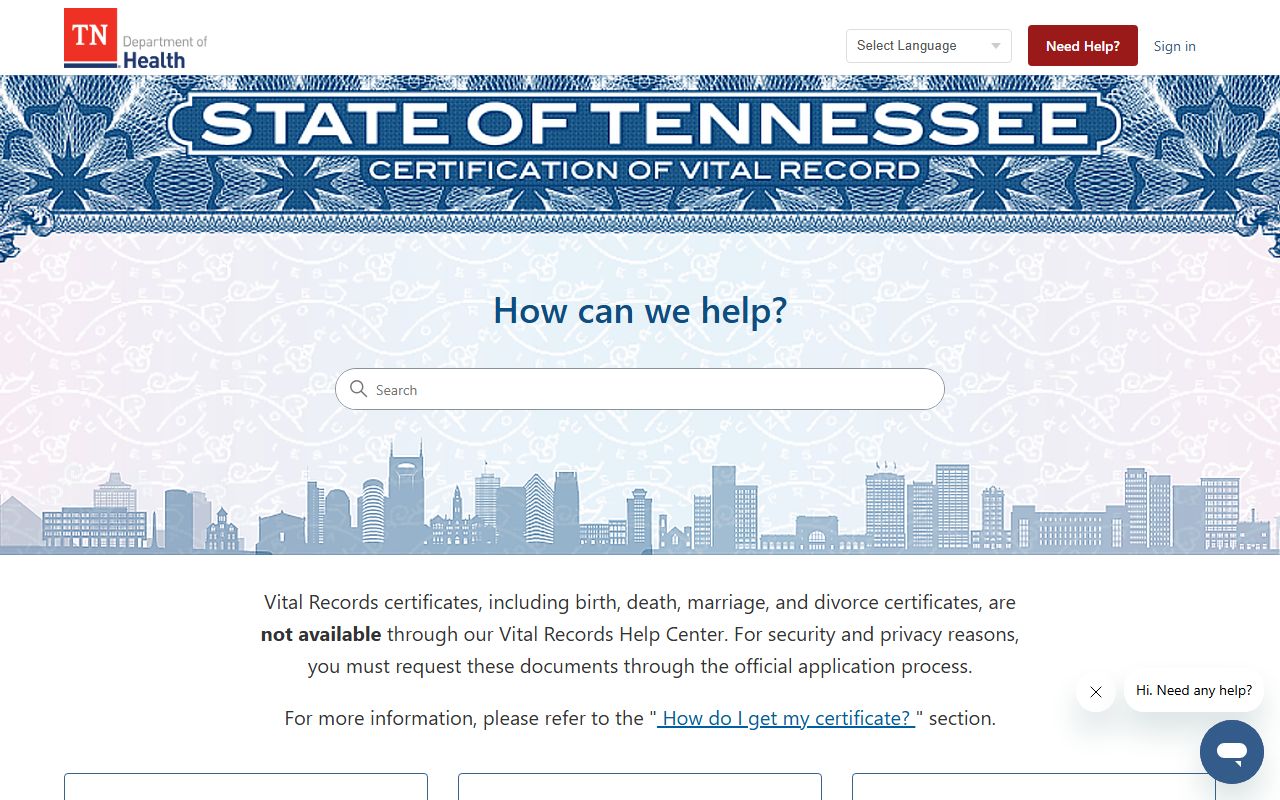
That state office is the right place when the death is still recent enough to remain in the certificate system.
Columbia Death Index and Archives
The Maury County Archives is a major reason Columbia stands out for death research. Its mission is to collect, conserve, and make available the county's original documents. That helps when a Columbia Death Index search needs more than a certificate. The archives page at Maury County Archives is the right local source for 19th century government records, newspapers, wills, and chancery materials. The genealogical research page adds even more detail, including death records on microfilm for Tennessee deaths from 1908-1912 and 1914-1956. Those dates fit the middle of the Tennessee registration era and give Columbia a solid public-record bridge when the certificate itself is no longer restricted.
That local archive is paired with a strong county record stack. The register of deeds page at Maury County Register of Deeds covers land records that often matter in estate work. The Clerk and Master page at Maury County Clerk and Master covers divorce, probate, and court records that can help connect a death to a family estate. Those offices do not replace the death certificate, but they add the paper trail that often makes a Columbia search complete.
The archive is also useful when the family file is messy. Daily Herald newspaper archives can help confirm a death date, a burial note, or a surviving relative when the certificate index is thin. In Columbia, that mix of records often answers the question faster than a single county request.
The second state image at TSLA vital records guide works well here because TSLA is where Columbia's older public death records eventually land.
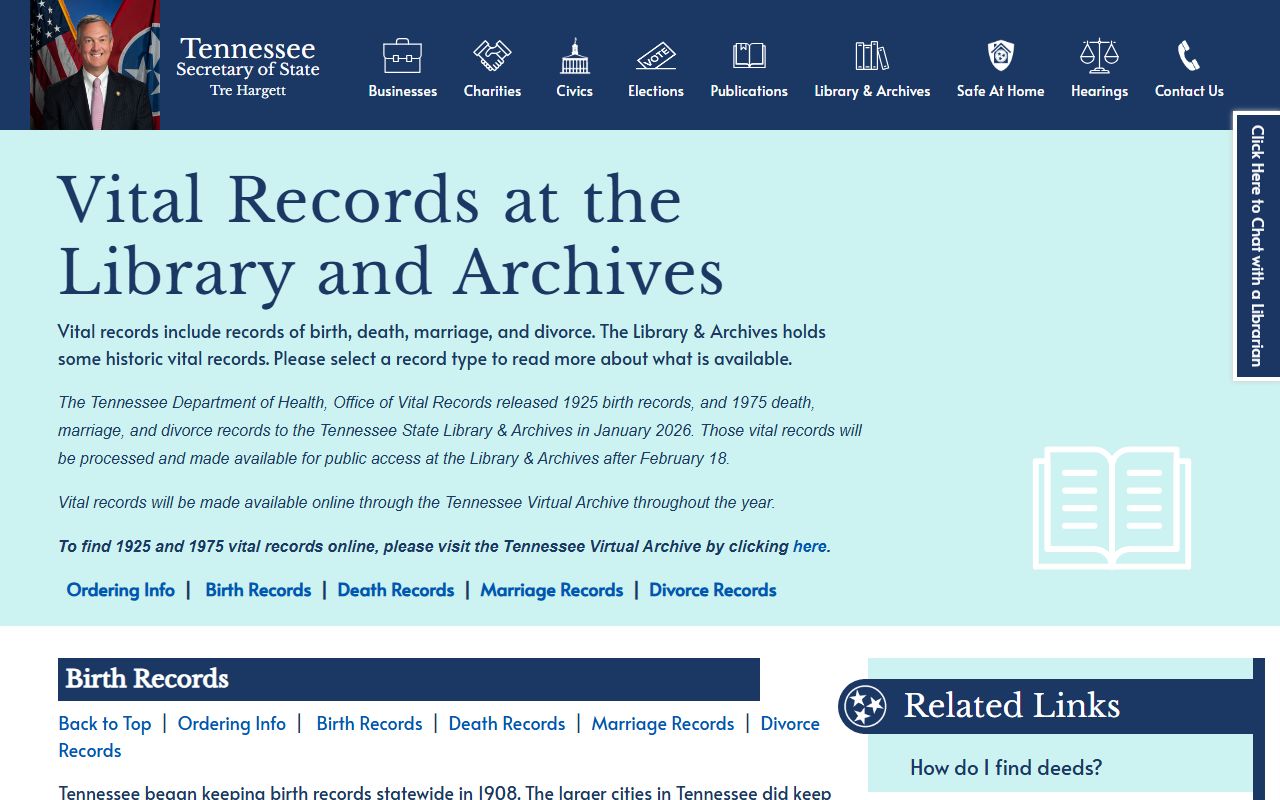
That guide is a good match for the historical side of the Columbia search.
How to Search Columbia Death Index
Begin with the name, the year, and the county. Columbia Death Index searches work best when you keep the date range broad enough to catch spelling drift and family memory gaps. If the person died recently, the county clerk or state vital records path may be enough to get a certificate request moving. If the death is older, the archives and TSLA become much more useful. That split is what makes Columbia practical for both legal and family-history work. The city seat gives you one place to work, but the record itself may be sitting in a clerk file, an archive box, or a probate packet.
The Tennessee State Library and Archives can search historical records when the date is old enough to be public, and the state office explains the modern request path at the Tennessee Office of Vital Records. If you already know the record is public, TSLA's guide at the library and archives gives you the clearest next step. That is important because Columbia Death Index work often jumps from current office to historical archive with very little warning. A short call to the clerk or archive can save time when the office location is clear but the record age is not.
If the first search misses, check the 1913 gap and widen the year band. A small adjustment can turn a dead end into a certificate number.
Columbia Death Index and Maury County
Maury County is the real framework for Columbia Death Index research. The county clerk, archives, register of deeds, and Clerk and Master each hold a different kind of paper trail. That is useful because deaths often connect to probate, land, cemetery, or newspaper records rather than to a certificate alone. The county clerk page at County Clerk is the easiest downtown reference, while the archives and Clerk and Master pages give you the deeper record routes. Columbia works well because those offices are all close enough to walk between when a search needs a second document.
Columbia is also where the local genealogy trail is strongest. The Maury County Archives keeps the county's original documents and a broad research collection, and that helps when you are trying to confirm whether a death belongs to a certain family branch. If the city and county records disagree, the archive is often the tiebreaker. It can show which name, date, or spouse fits the family line best. That is especially true when the Daily Herald archive or a chancery file adds the detail that the death index entry left out.
Note: Tennessee death records stay restricted for 50 years, so Columbia researchers should separate current certificate requests from historical archive searches before they start.
Historical Columbia Death Index
Older Columbia work usually ends at TSLA after the county archive has done its part. That makes sense because the state archive holds the public death records once the confidentiality period ends. For Columbia Death Index research, the archive chain is the feature that matters most. It lets you move from a downtown courthouse office to a historical repository without changing the county focus. The record path stays local in Columbia even when the final copy becomes a state-held public record.
That structure is why Columbia works so well for long family lines. You can use the Maury County Clerk for the local office path, the archives for original documents, the register of deeds for estate and property context, and TSLA for the public historical copy. Each office does a different job, but all of them belong to the same search. In practice, that means a Columbia researcher can start at 10 Public Square, gather a probate clue at 41 Public Square, then finish in the archive at 201 East Sixth Street.