
Search Tennessee Death Index
The Tennessee Death Index brings together the main places people search when they need a death certificate, an older death record, or a historical death listing. Tennessee keeps newer death records through the state Office of Vital Records and county health departments, while older public files move to the Tennessee State Library and Archives. This page helps you sort out where to start, what years are covered, which offices hold the strongest Tennessee Death Index material, and how to move from a name search to a certified or historical copy.
Tennessee Death Index Quick Facts
Tennessee Death Index Search Basics
A Tennessee Death Index search often turns on the year of death. That is the first split. Records from 1976 forward are mainly handled through the Tennessee Office of Vital Records and through county health departments that use the statewide electronic issuance system. Records that are more than 50 years old move into the public research side of the Tennessee system, which means the Tennessee State Library and Archives becomes a key source for a Tennessee Death Index search tied to family history, probate work, and local archive review.
That split matters because Tennessee does not treat all death records the same. Under the state vital records statutes collected at Title 68, Chapter 3, a recent certificate is restricted, while older records are opened for research after the 50-year point. Tennessee also has a known 1913 gap. The first statewide registration law expired after 1912, and the stronger law did not take effect until 1914. A good Tennessee Death Index page needs to say that plainly because many searches fail for 1913 even when the death did occur in the state.
Before you begin, gather:
- The full name used at death
- The county or city where the death likely occurred
- An estimated year or short date range
- The name of a spouse, parent, or informant if known
- Proof of relationship if you need a recent certificate
Tennessee Vital Records is the best first look for newer certificates, and this image shows the state portal many people use to start a Tennessee Death Index request.
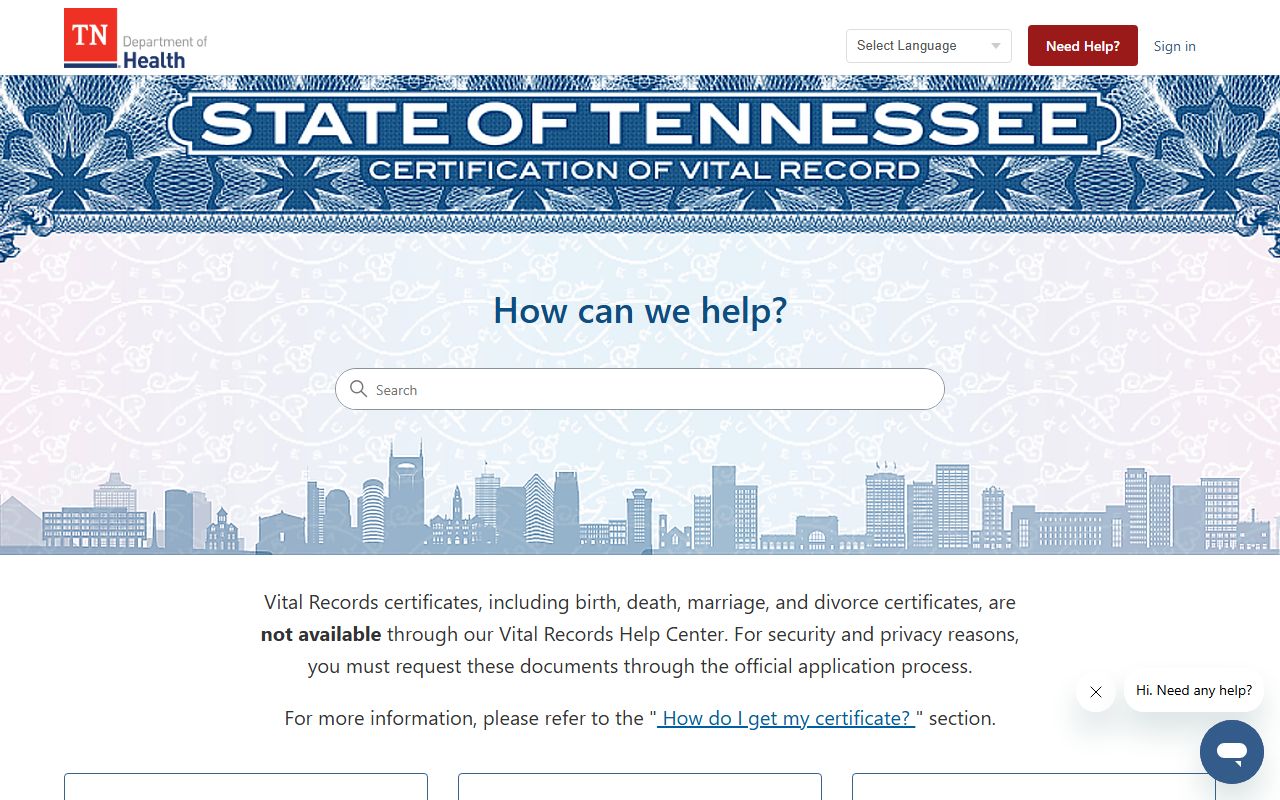
The state portal is not just for Nashville. It supports Tennessee Death Index requests across all 95 counties when the death falls inside the restricted period.
Tennessee Death Index Records By Year
The public side of the Tennessee Death Index is strongest for 1908-1912 and 1914-1975 because those records are routed through the archives system after the waiting period ends. The Tennessee Department of Health vital records portal explains the modern side, while the archives guide explains how older Tennessee death records and Tennessee Death Index collections are searched. If your search reaches into the nineteenth century, the best route may be a city collection or county archive rather than the standard state certificate track.
Tennessee's larger cities kept their own records well before statewide registration. Nashville began in 1874. Memphis began in 1848. Chattanooga began in 1872. Knoxville began in 1881. That is why a Tennessee Death Index search for a city death may still succeed before 1908 if you use the right archive. The Tennessee State Library and Archives holds those older city materials and can often help when a statewide certificate never existed.
TSLA's vital records guide is one of the core Tennessee Death Index resources because it ties dates, access rules, and search methods together in one place.
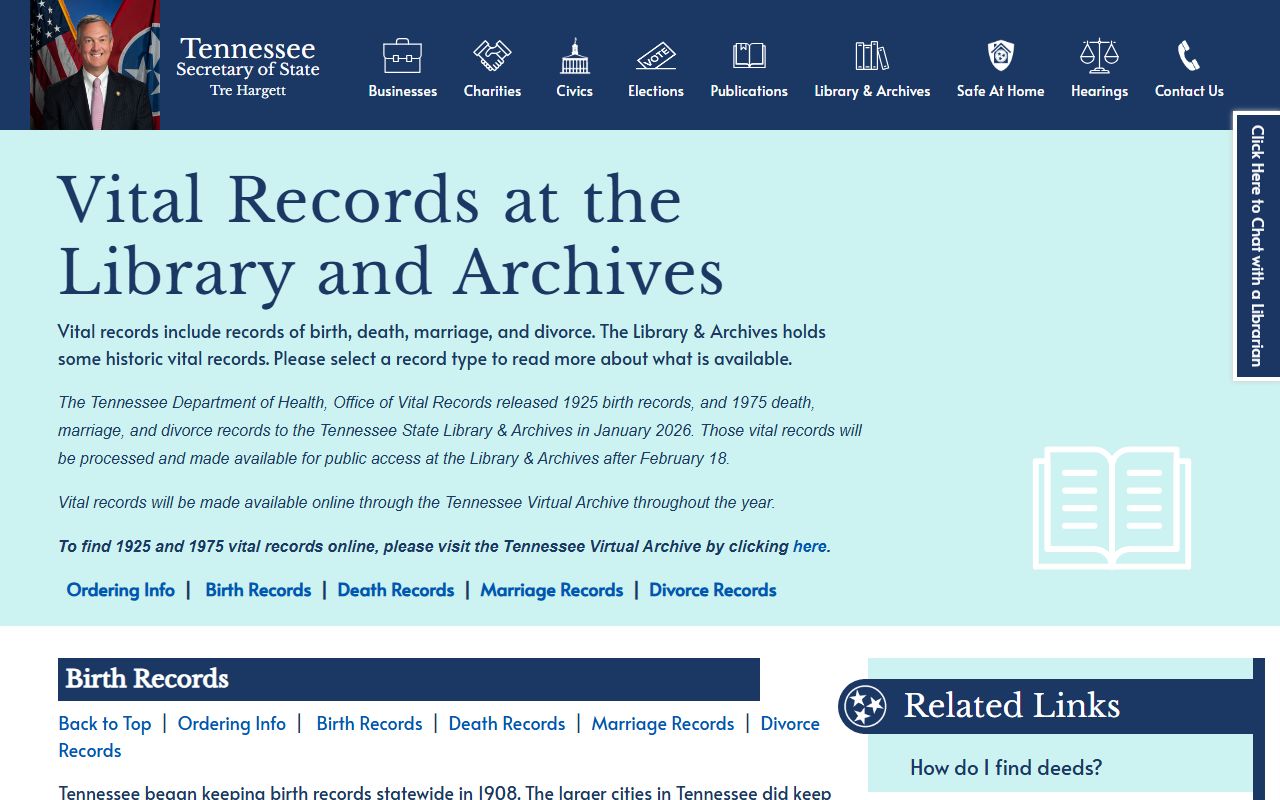
Use the guide when you need to decide if a Tennessee Death Index lead belongs with a state office, an archive request, or a city history collection.
The Tennessee Department of Health page also helps confirm which office handles a current Tennessee Death Index certificate request.
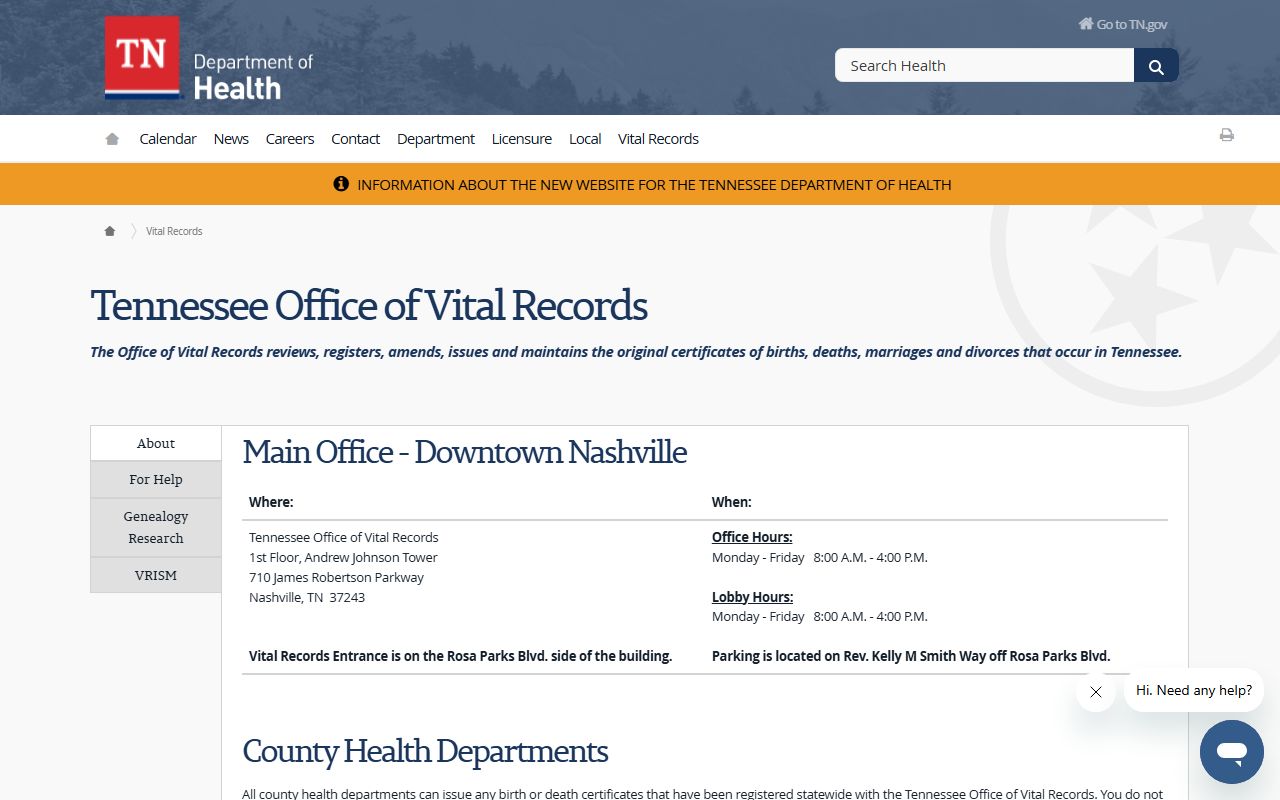
That state page is useful when county information is thin because Tennessee lets county health departments issue certificates for deaths that happened elsewhere in the state.
Ordering A Tennessee Death Index Certificate
If you need a certified copy, the ordering rules are tighter than the research rules. Tennessee keeps death certificates closed for 50 years, and the state release rules are narrower when cause of death is requested. The official ordering route is through the state office, a county health department, mail service, or VitalChek, which Tennessee names as the authorized online vendor. That matters because many third-party pages advertise certificates without actually serving as the official Tennessee Death Index access point.
Tennessee uses a statewide electronic issuance system, so a county health department can often issue a Tennessee death certificate even if the death occurred in another county. That saves time. It also means local county pages are still useful on this site even when the final certificate comes from a shared Tennessee system. For some people, the fastest route is in person at a county health department. For others, a Tennessee Death Index order through the state office or VitalChek is easier when distance or probate timing is the real issue.
VitalChek is the state's online ordering vendor, and this image shows the Tennessee Death Index ordering path used for online requests.

VitalChek adds service charges, but it remains the standard online route named by Tennessee for newer certificate orders.
The Tennessee entitlement guide helps sort out who may request a recent Tennessee Death Index certificate and when more proof is needed.
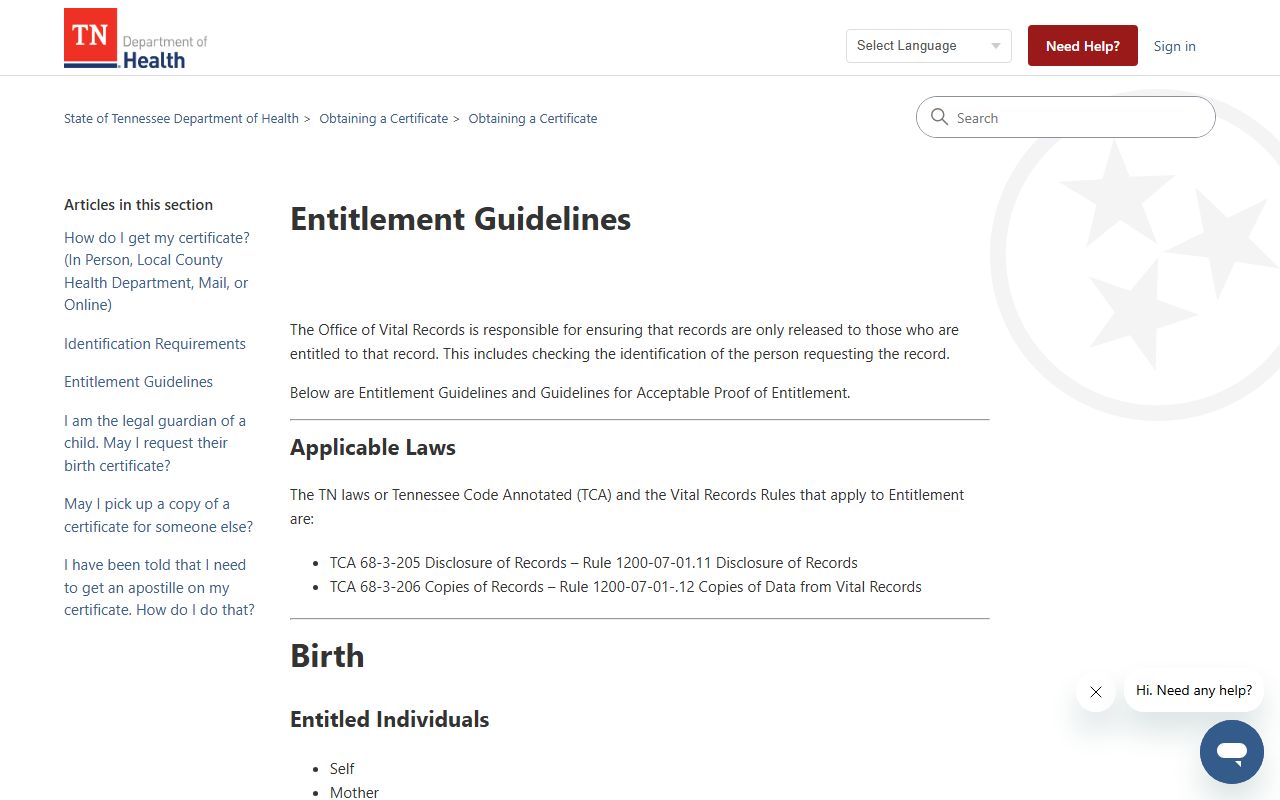
That page is especially useful for estate work, beneficiary claims, and cases where the requester is not the spouse, parent, or child of the person who died.
The Tennessee how-to page lays out the in-person, mail, and online steps for a Tennessee Death Index certificate request.
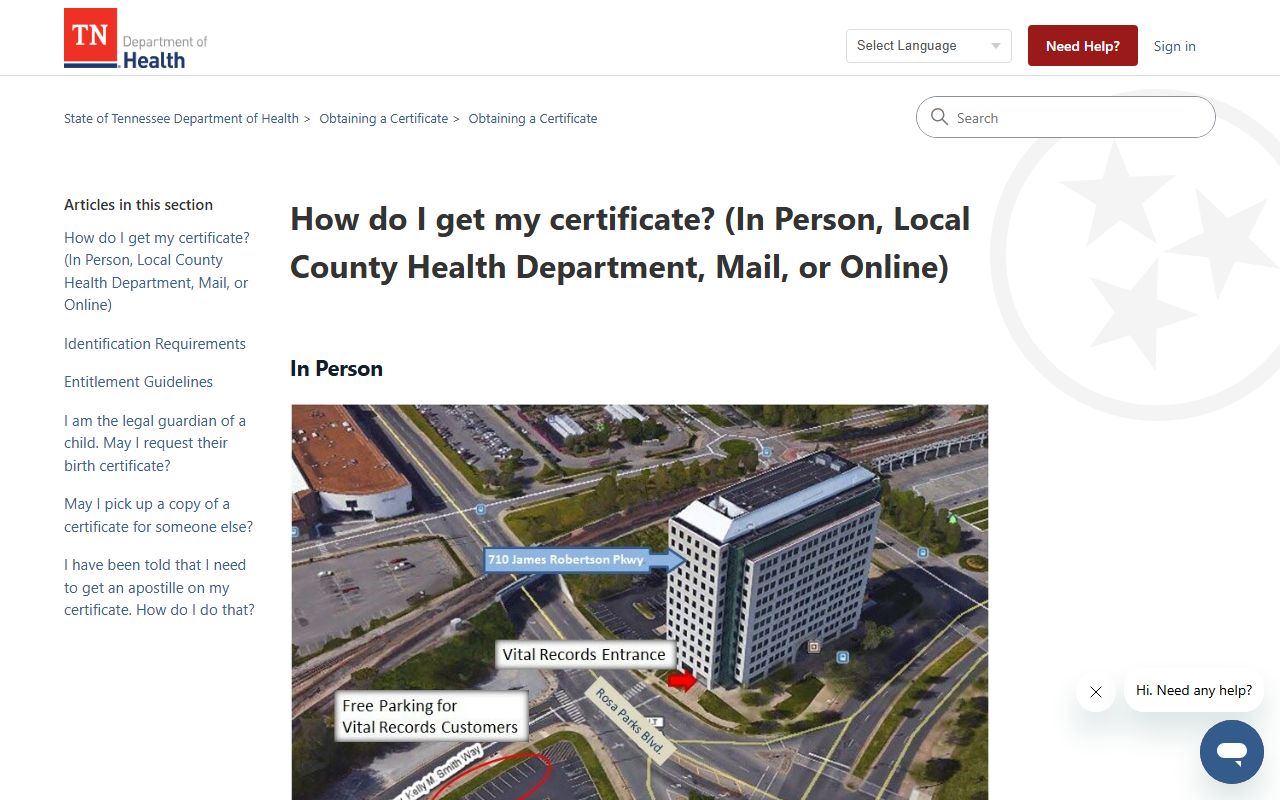
It is the best page to check when you need mailing details, office access notes, or a reminder about identification requirements.
Tennessee Death Index At The Archives
Historical research in Tennessee often shifts from a certificate request to an archive search. The state genealogy research page, the Tennessee Virtual Archive, and the TSLA guide all support that move. A Tennessee Death Index search at the archives can lead to more than a simple date. Older certificates may show birthplace, occupation, cause of death, parents' names, burial details, and the informant. That is why Tennessee Death Index pages should serve both legal users and genealogy users instead of treating the topic as only a certificate form.
TSLA also notes that it can search some unindexed city material for one year only when you provide strong details. That is a narrow but useful service. It matters most for Chattanooga and Knoxville, where early city records exist but are not always indexed the same way Nashville and Memphis are. A Tennessee Death Index search can fail if you search too broadly. The better move is often to narrow the year, name variations, and city before asking the archives to review an older record set.
The genealogy research page helps explain when a Tennessee Death Index search becomes a historical records project.
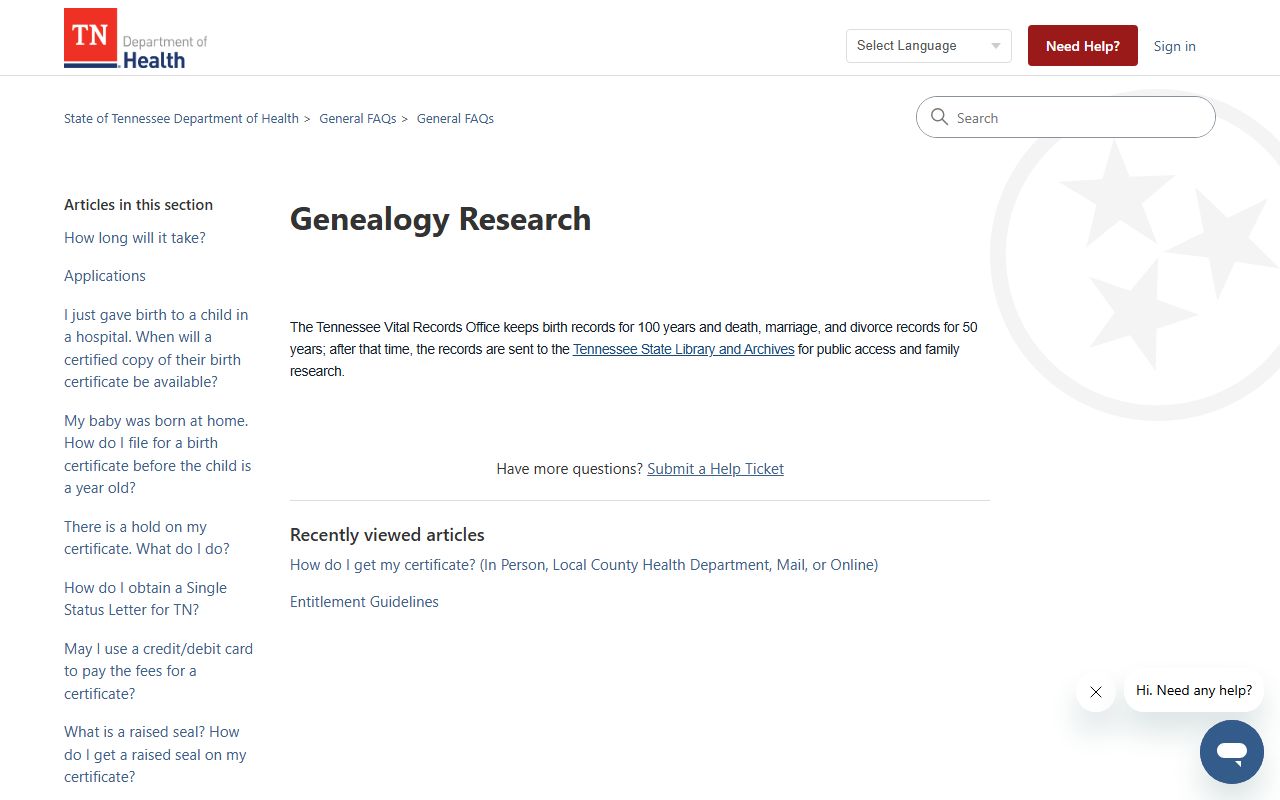
That page supports archive users who need older Tennessee death records, family-history leads, or released certificate copies after the 50-year mark.
The Tennessee State Library and Archives site is central to the historical Tennessee Death Index because it ties public access, city death records, and older county death materials together.

Use it when you need older Nashville, Memphis, Chattanooga, or Knoxville death records that sit outside the modern county health department workflow.
Tennessee Death Index Access Rules
Tennessee treats death records as confidential for 50 years. That is the key access rule on almost every page in this project. The legal framework appears in the vital records statutes and in public-records guidance that explains why recent Tennessee death certificates are exempt from general open-records access. The practical result is simple. A Tennessee Death Index search may tell you a record exists, but the right to obtain a certified copy still depends on entitlement, the age of the record, and whether cause of death information is included.
The Tennessee vital records law at Title 68, Chapter 3 governs disclosure and copies. The broader Tennessee public-records discussion at the CTAS public records guide helps explain why this is an exception to normal county or municipal disclosure rules. Those rules do not stop a Tennessee Death Index search. They shape what the search turns into. Sometimes it becomes a public archive request. Sometimes it becomes a restricted certificate request with proof attached.
The Tennessee Code page is a useful reference when you need to confirm why a recent Tennessee Death Index certificate is limited.
It is also a good citation point when a family, executor, or attorney needs to explain why release rules differ for public archives and current certificates.
The Tennessee public-records statutes guide adds context for the public side of Tennessee Death Index access.

That context matters because many people expect all government death records to be public, but Tennessee separates restricted certificates from older public archive files.
County Examples For Tennessee Death Index Use
County pages matter because Tennessee Death Index access is practical, not abstract. A county health department is often the closest walk-in route. Local archives can add cemetery, obituary, or probate leads. Some counties also maintain strong indexes or local records portals. The state examples in this project show that clearly. Knox County explains its walk-in rules and timing. Shelby County provides one of the strongest online death index tools in the state. Hamilton County makes its vital-records process easy to read, and Nashville-Davidson County gives a clear city-county example inside the Tennessee system.
Those county examples also help when a page has thin local research. The Tennessee model allows local pages to remain useful because the statewide certificate system still runs through local health offices. A Tennessee Death Index page for a smaller county can explain how the county office fits into the shared state process and then point users to TSLA for older material. That is a better service than forcing every county page into a false promise of online search tools that do not exist.
Knox County Health Department shows how a local office handles Tennessee Death Index certificate requests in practice.
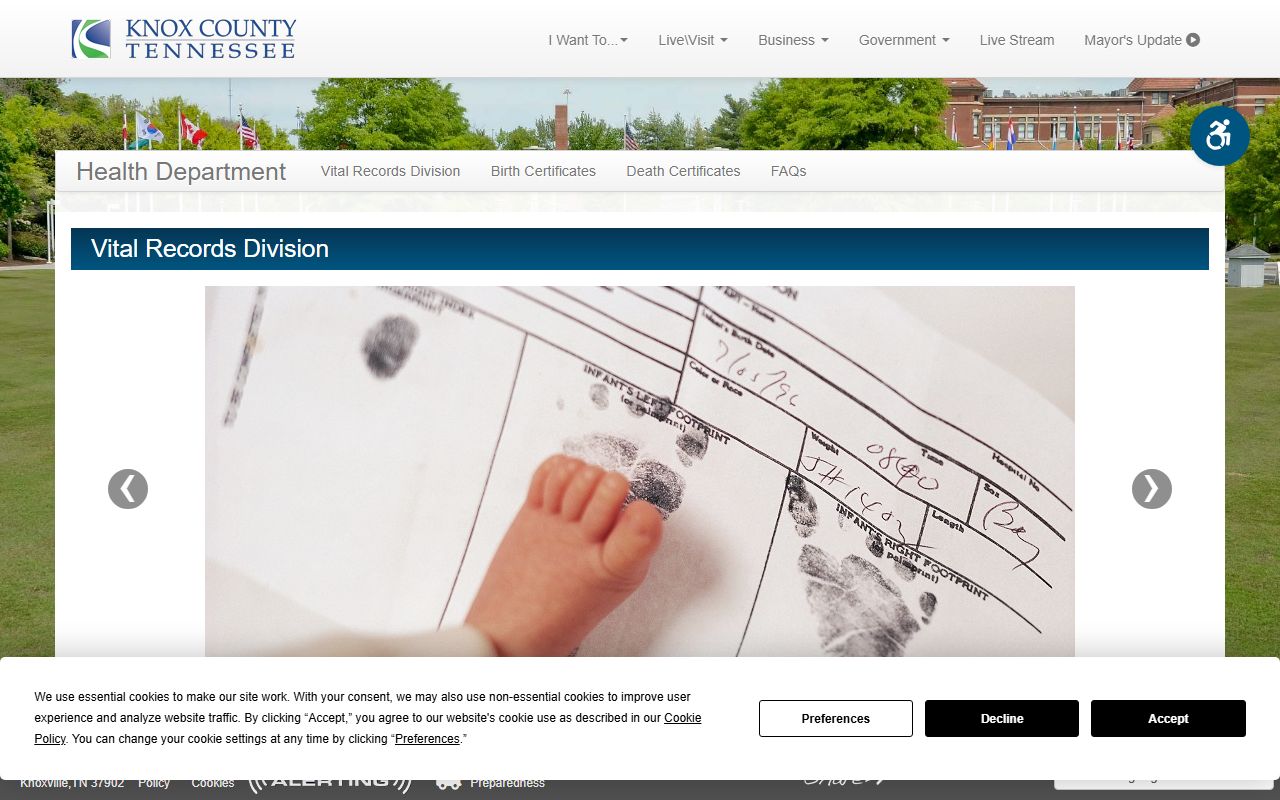
Knox County is useful as an example because it spells out office access, recent-death timing, and who may request a certificate.
Shelby County Register of Deeds is one of the strongest Tennessee Death Index tools for public research because it maintains online death index coverage for a broad date range.

Shelby County is especially important for Memphis research because local death recording began there in 1848, well before statewide registration.
Hamilton County Vital Records gives another strong local model for Tennessee Death Index use.
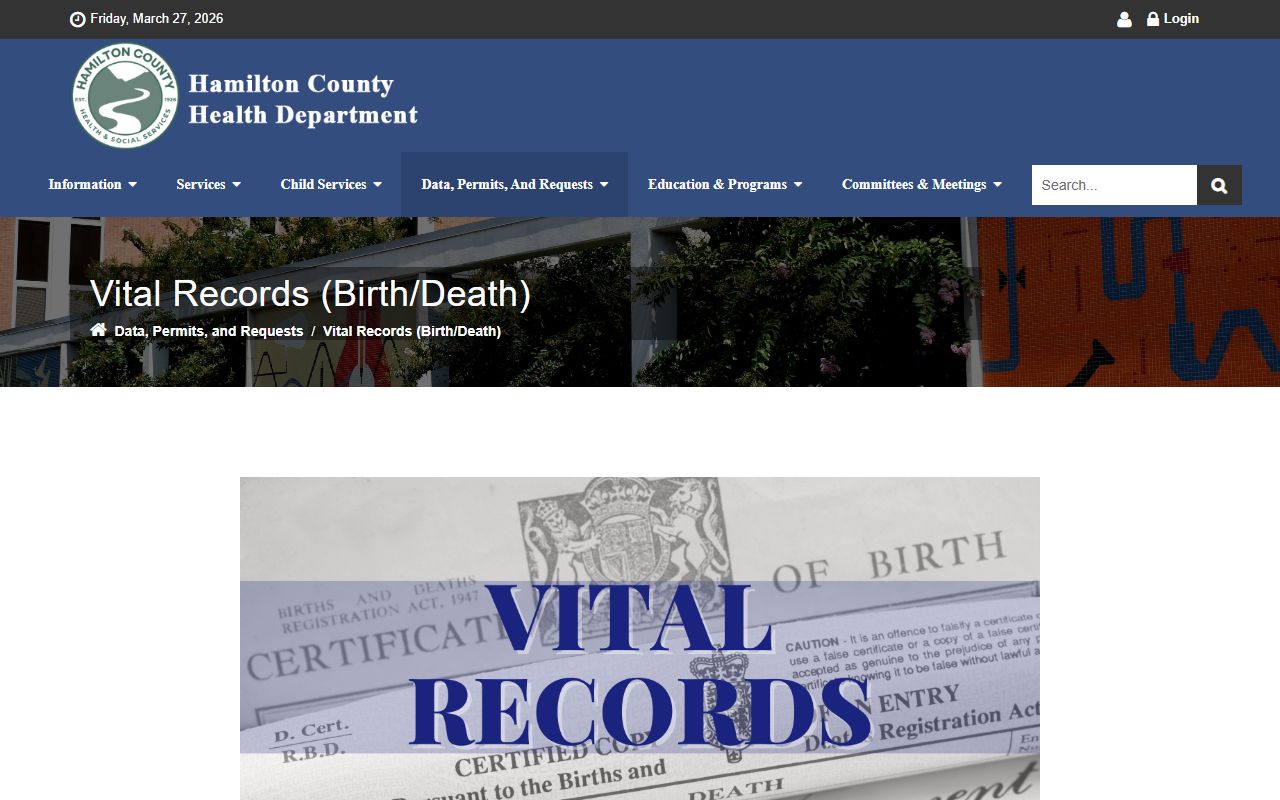
That page helps users who need Chattanooga-area records and want a direct county route rather than a statewide office stop.
Nashville-Davidson County Vital Records shows how a city user can move from a Tennessee Death Index search into a local health department request.
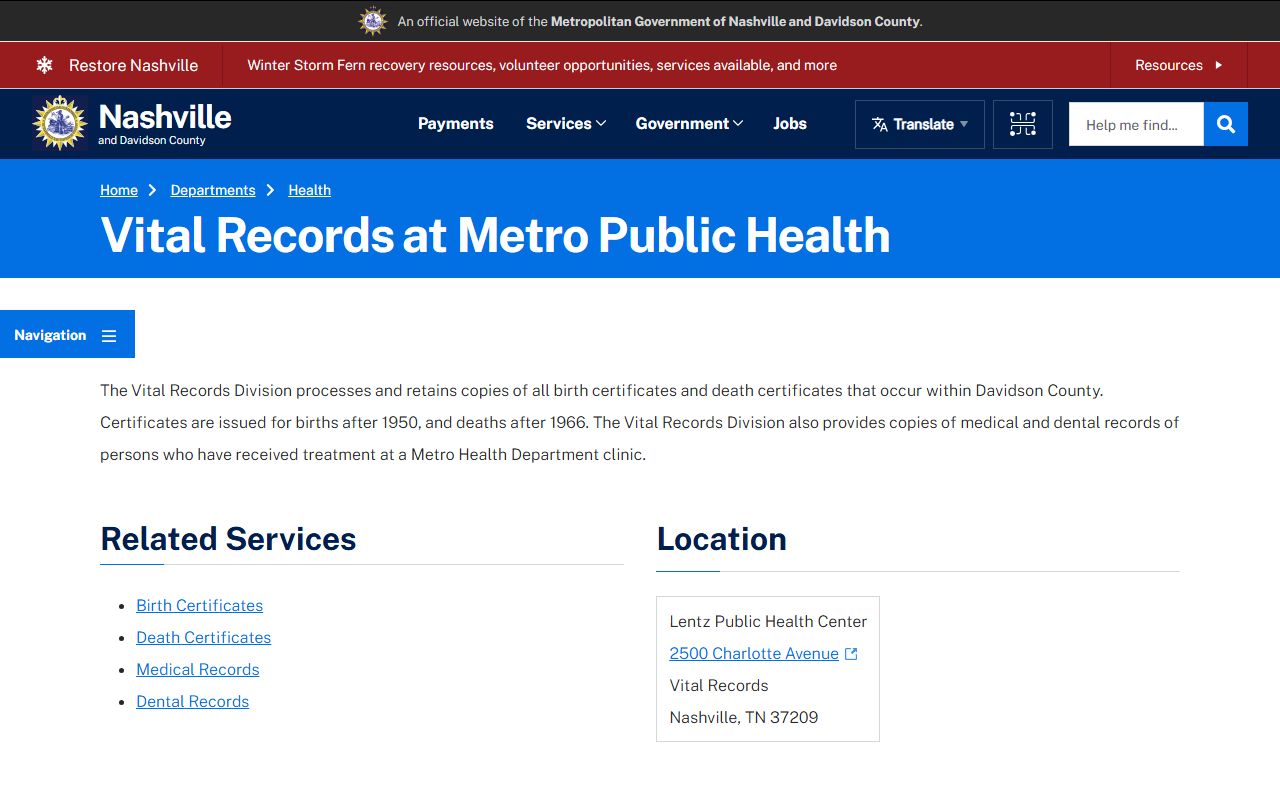
Nashville also matters on the archive side because city death records began in 1874 and are part of the older Tennessee Death Index research story.
What Tennessee Death Index Records Show
A Tennessee Death Index result can lead to several kinds of records. A recent certified death certificate may be needed for estate administration, insurance claims, Social Security work, or title issues. An older public certificate can be used for lineage, cemetery work, and family reconstruction. A city death record may bridge the years before statewide compliance. Archive collections may also connect you to probate material, burial records, or local obituary files. That range is why the Tennessee Death Index is broader than a single database page.
Older Tennessee death records may show the decedent's full name, date and place of death, age, occupation, birthplace, parents, spouse, burial location, and cause of death. Some records are fuller than others. Early entries can be sparse. Names may be misspelled. Women may appear under a married name or as a spouse reference. Infants may appear with only a family surname. These are ordinary Tennessee Death Index issues, not signs that the record is wrong.
A Tennessee Death Index search can lead to:
- A certified death certificate for a recent death
- An archive copy of an older Tennessee death record
- A city death register from Nashville, Memphis, Chattanooga, or Knoxville
- A county archive lead tied to probate, cemetery, or obituary research
- An online index result that points to a certificate number or date
Note: When a Tennessee Death Index search turns up nothing, test spelling changes, shorten the date range, and check whether the death falls in 1913 or before statewide registration.
Browse Tennessee Death Index By County
County pages explain the local office, archive, and historical record options that support a Tennessee Death Index search in each part of the state.
Tennessee Death Index In Major Cities
City pages focus on the local office people know by name while still tracing the Tennessee Death Index back to the right county and archive system.