
Search Nashville Death Index
Nashville Death Index searches usually begin with the Metro Public Health Department, the Metropolitan Clerk, and the Tennessee State Library and Archives. That mix matters because Nashville has both live certificate access and a long historical record trail. A recent request may belong at the health department. An older search may belong at TSLA. If you are tracing a family line across Davidson County, the city records office can add context that a certificate alone will not show. The best path depends on the date, the name, and whether you need a certified copy or a public historical record.
Nashville Death Index Records
The Metro Public Health Department's Vital Records Division processes and retains copies of all birth and death certificates occurring in Davidson County, which includes Nashville. That office is located at the Lentz Public Health Center on Charlotte Avenue, and it is the best local stop for a recent Nashville Death Index request. The city office can issue certified copies of original certificates on file with the Tennessee Department of Health, so the search stays local without losing the statewide record trail. That makes Nashville a strong city for both legal requests and family-history work.
The Metropolitan Clerk's Office adds another layer. It keeps city records and archives for Nashville, and that matters when a death search needs more than a certificate number. A city file may point to a burial record, a municipal note, or a related record that gives the search more shape. The Metropolitan Clerk page at the city clerk office is a useful companion for anyone trying to connect a death record to broader Nashville records.
The Nashville Metropolitan Clerk image at the official city office works well here because the clerk is part of the record path that helps a Nashville Death Index search move from a name to a usable city reference.
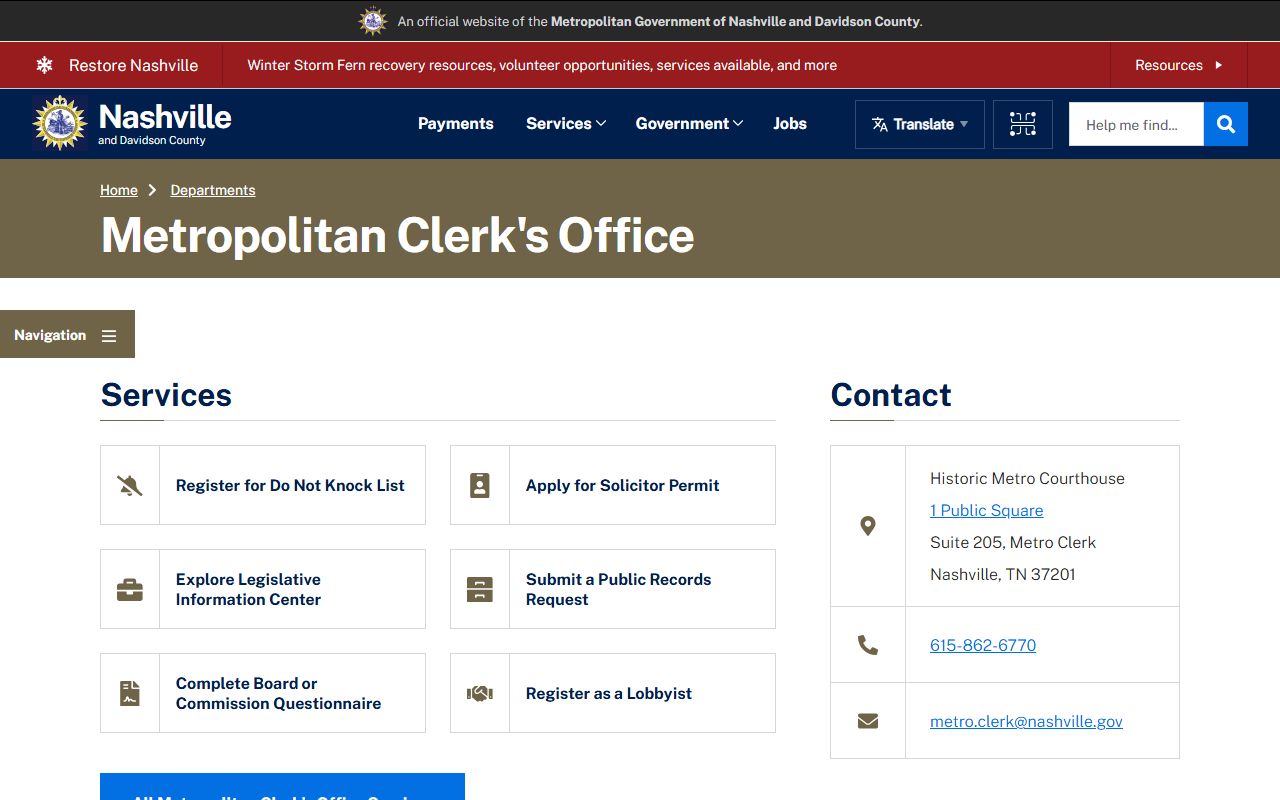
That office is especially useful when you need city context before you place a county or state request.
How to Request Nashville Death Index
For a recent Nashville Death Index request, the Metro Public Health Department is the most direct local option. Nashville death certificates are available for deaths in Davidson County from January 1, 1966 to the present. Bring a photo ID, the decedent's full name, and the date or best estimate you have. If you need cause of death information, be ready to show entitlement because Nashville follows the same Tennessee access rules that apply statewide. The city office can issue the certified copy, but it still checks who is entitled to receive the record.
If you cannot visit in person, the state office gives you the mail and online methods. Mail requests go to Tennessee Vital Records in Nashville with the application, ID copy, and payment. Online requests go through VitalChek, the authorized vendor. The Nashville page at Get Copy of Death Certificate is the best city-side guide for current request steps, while the Tennessee Office of Vital Records remains the state starting point when the request moves beyond the city office.
The Nashville search works best when you match the request method to the record age. If the death is recent, use the city or state certificate path. If it is older, move toward TSLA. That keeps the search from wandering between offices that are each doing a different job.
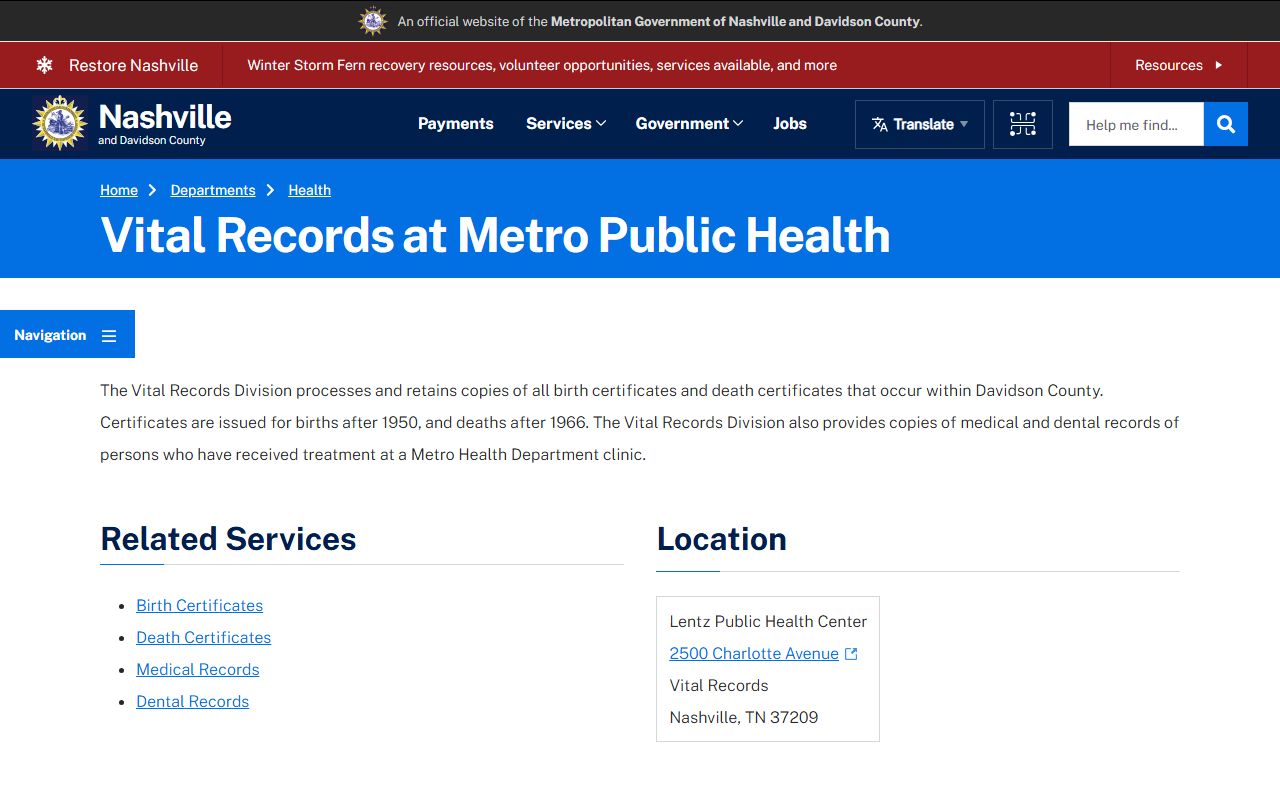
That state image is a good reminder that Nashville records sit inside a larger Tennessee system.
Nashville History
Nashville began keeping death records in 1874, which makes the city one of Tennessee's earliest record keepers. Those early records are indexed and available through the Tennessee State Library and Archives. TSLA can search them when given the name, date of death, city, and spouse name if known. That is a major help for researchers because the city record trail predates statewide registration by decades. A Nashville Death Index search can therefore work in two time bands: the modern city certificate system and the older historical city records at TSLA.
That history also explains why Nashville research often feels more complete than a simple certificate request. The Metro Archives maintains historical records for Nashville and Davidson County, including some early death records and burial records that supplement the state record set. For family history, that kind of overlap is useful. It gives the searcher more than one way to connect a death to a person, a place, and a date. The city archive and TSLA are not competing sources. They are two sides of the same Nashville Death Index story.
When you need a historical Nashville copy, use the Tennessee State Library and Archives guide at TSLA. It is the most direct public path once the record is old enough to leave the restricted system.
Tennessee Death Index Rules
Tennessee death records are confidential for 50 years, and that rule governs every Nashville Death Index request. The Tennessee Department of Health explains the current process, while TSLA handles the historical files that have become public. That is why a recent request may need proof of entitlement, but an older request can be routed to the archive. If you need a certified copy for legal use, start with the current certificate path. If you need a public historical copy, start with the archive path. The office you choose depends on the age of the death, not just the city name.
For Nashville researchers, this split is practical. A family may know the person died in Davidson County, but the right copy can still live in a state repository if the date is old enough. The Nashville city office can help with recent records, while TSLA helps with public historical records. Note: 1913 remains the missing year in Tennessee death records, so Nashville researchers should always check the years on both sides of that gap when the trail looks incomplete.
Davidson County Death Index Records
Nashville sits inside Davidson County, so the city search and the county search overlap. The county page adds the broader courthouse and record context, while the city page focuses on Nashville-specific death records. If you need the county-side detail, the Davidson County page can help: Davidson County Death Index. That pairing matters because a Nashville death may be cited in city records, county court files, or state archives depending on the year and the type of copy you need.
The Metropolitan Clerk, the Metro Public Health Department, and TSLA cover most Nashville Death Index needs. If the first office does not settle the question, move to the next one. City record work usually gets easier when you bring a date, a spouse name, and a clear idea of whether you need a certificate or a public historical record. The city, county, and state paths fit together when you treat them as one search.
Nearby City Death Index Records
Nashville is often part of a larger Tennessee search. If the person lived or died elsewhere, it can help to compare the city record trail with nearby city pages. Those pages use the same Tennessee rules, but each one points to a different local office and historical record set. Try the city pages for Memphis, Knoxville, Chattanooga, and Clarksville if you need a different city context or a second search path.
That comparison can be useful when a family moved, a hospital death happened away from home, or a city record was created before statewide registration was complete. Nashville Death Index research often works best when you stay open to one more office and one more date range.