
Search Davidson County Death Index
Davidson County Death Index research usually begins in Nashville because the Metro Public Health Department, the Metropolitan Clerk, and the Metro Archives each cover a different part of the local record trail. That is useful for a county with both recent certificates and a long historical run. If the death is recent, the health department or the Tennessee Office of Vital Records is usually the right start. If the death is older, TSLA or the Metro Archives may be the better fit. Davidson County is large enough to support all three paths, so the best search depends on the year and the kind of copy you need.
Davidson County Death Index Records
The Metro Public Health Department's Vital Records Division processes and retains copies of all birth and death certificates occurring in Davidson County, which includes Nashville. The office is located at the Lentz Public Health Center on Charlotte Avenue, and it issues certified copies of original certificates on file with the Tennessee Department of Health. That makes it the right local starting point for a recent Davidson County Death Index request. Death certificates from January 1, 1966 to the present are available there, and they can be used for estate administration, insurance claims, Social Security benefits, and property transfers.
The Metropolitan Clerk's Office adds a city record layer. It maintains municipal records and archives for Nashville, which can help when a death search needs extra context. The Metro Archives also maintain historical records for Nashville and Davidson County, including early death records and burial material that may supplement the state record set. The Metropolitan Clerk page at the official city office and the Metro Archives page at the city archive are both useful when a Davidson County Death Index search needs more than one office.
The county image at the Nashville death certificate page works well because it points directly to the office that handles recent records.
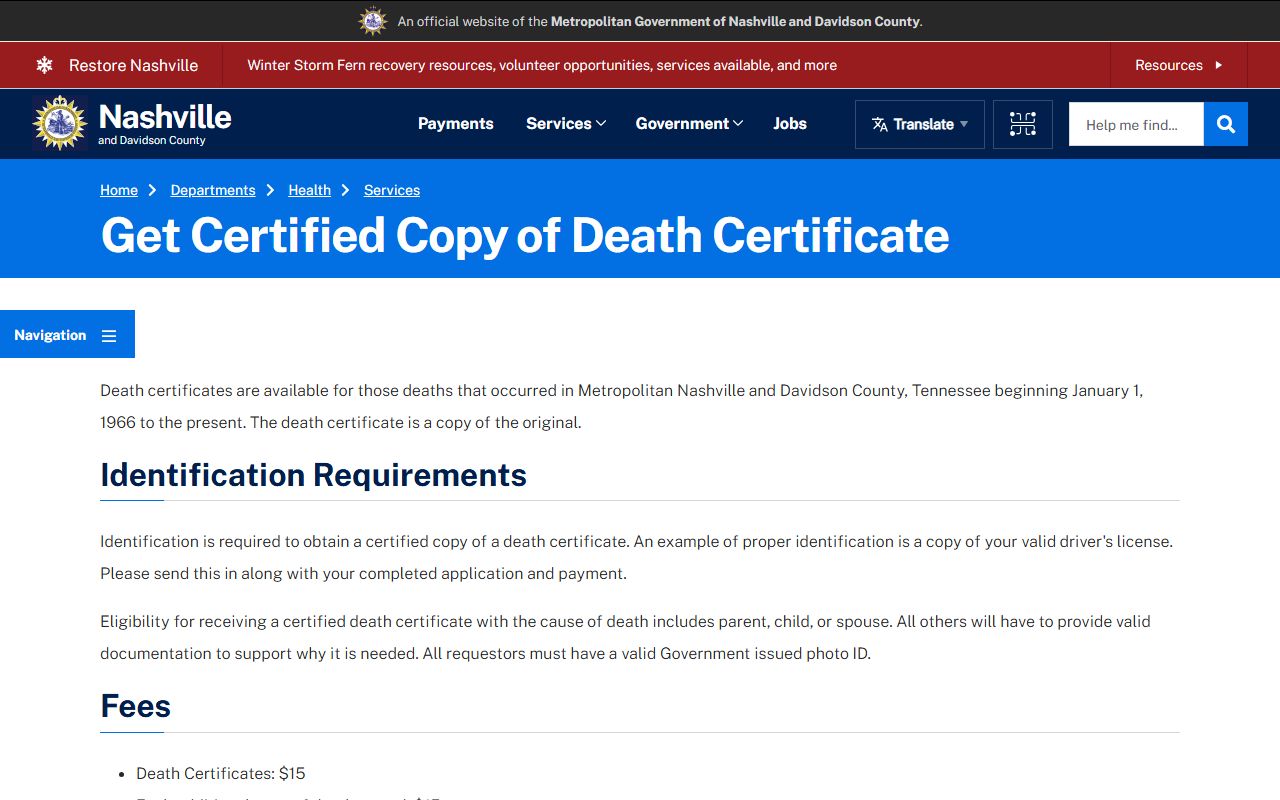
That local page is the most direct starting point when the death is still inside the restricted window.
How to Request Davidson County Death Index
For a recent Davidson County Death Index request, the Metro Public Health Department is the best local option. Death certificates are available for deaths occurring in Davidson County from 1966 to the present, and the office accepts applications in person on Charlotte Avenue. Bring a photo ID and enough detail to identify the decedent. If you need cause of death information, expect entitlement checks because Tennessee keeps that part of the record more tightly controlled. A recent request stays local, but it still follows the statewide rules that protect death records for 50 years.
If you want to request from home, use the official state options. The Tennessee Office of Vital Records at the state portal handles mail requests, while VitalChek handles authorized online ordering. The Nashville page at Get Copy of Death Certificate gives the city-level instructions, and the Metro Public Health Department page at the vital records division keeps the current office information in one place.
Older Davidson County Death Index work usually moves from the city office to TSLA. Nashville began keeping death records in 1874, so the city has an unusually long record run. That is helpful, but it also means a search may need exact dates or spouse names if the record is not yet indexed.
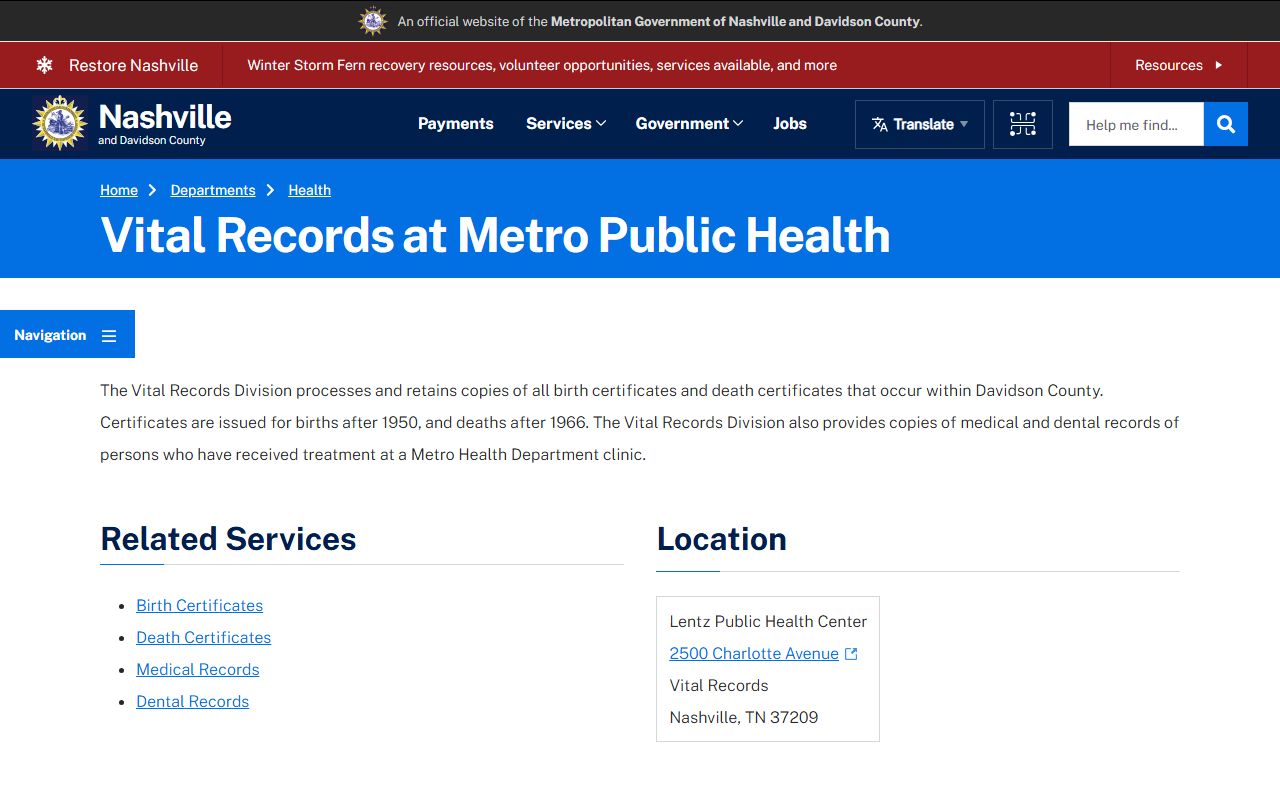
That state image fits the request path because it shows the larger Tennessee certificate system behind the local office.
Davidson County History
Nashville began keeping death records in 1874, 34 years before statewide registration began. Those early records are indexed and available through the Tennessee State Library and Archives. TSLA can search them when given the name of the person, the date of death, the city, and the spouse name if known. That makes Davidson County a strong county for historical death research because the city record run starts so early. A Davidson County Death Index search can therefore move from the modern certificate system into the historical city record set without changing counties.
The Metro Archives add another layer. They maintain historical records for Nashville and Davidson County, including some early death records and burial records that predate or supplement official state registration. That is useful when a family needs more than one clue to confirm identity. In Davidson County, the city archive, the Metro Public Health Department, and TSLA work together in a way that keeps the local record trail deep and practical.
For a public historical copy, TSLA remains the most important archive source. The guide at the Tennessee State Library and Archives explains the historical record split and is the best match once the death is old enough to leave the restricted system.
Tennessee Death Index Rules
Tennessee death records remain confidential for 50 years, and that rule shapes every Davidson County Death Index request. Recent records are controlled by the state vital records system, while older records move to TSLA once the confidentiality period has passed. That is why a request for a recent death may need proof of entitlement, but a request for an older record may lead straight to the archive. The right office depends on the age of the death and the kind of copy you need, not simply on the county name.
That matters in Davidson County because Nashville has both a modern certificate path and a long historical record trail. If you need a certified copy, use the Metro Public Health Department or the state office. If you need a public historical record, use TSLA or the Metro Archives. Note: 1913 remains the missing year in Tennessee death records, so Davidson County researchers should always check the adjacent years when the record trail is thin.
Nashville Death Index Records
Nashville is the county seat, and the city record trail is part of the Davidson County search. The Metro Public Health Department handles recent certificates, the Metro Clerk keeps city records, and the Metro Archives preserve historical materials that may support a death search. If you want the city side of the same record trail, Nashville is the key local reference point because the county seat and the state capital are the same place. That gives Davidson County an unusually dense record structure.
A Nashville record search often starts with the city office and ends with TSLA if the death is old enough. That is normal. The search becomes easier when you bring the name, a date range, and one family clue. Davidson County Death Index research is strongest when you use the city office for current records and the archive for old ones instead of expecting one office to hold everything.
Davidson County Notes
Davidson County gives researchers a strong and layered death record path. The Metro Public Health Department handles recent certificates. The Metro Clerk and Metro Archives help with city records and older material. TSLA handles the historical public copy. That makes Davidson County one of the most complete places in Tennessee to search when you need both modern and early death records. The county page is useful because it keeps those pieces together in one local search path.
If the first search does not finish the job, move outward one step at a time. Start with the Metro office for recent records, then the state office if needed, then TSLA or the Metro Archives for historical work. Davidson County Death Index research is usually clearer when you treat Nashville as both a city and a county seat, since the record trail can go through both.