
Knoxville Death Index Lookup
Knoxville Death Index searches usually start with Knox County Health Department, then move to the county archives, the Register of Deeds, or TSLA depending on the age of the record. That works well because Knoxville has both a modern certificate path and a long historical record trail. If you need a recent certificate, the health department is the first stop. If you need an older public record, the archives and TSLA are the better fit. Knoxville also has a deep local record culture, so a death search can often pick up useful context from county records even when the certificate itself is not the first thing you find.
Knoxville Death Index Records
The Knox County Health Department's Vital Records Division provides birth and death certificates on a walk-in basis at 140 Dameron Avenue in Knoxville. That office is the best local place to start when a Knoxville Death Index request is still inside the restricted period. The main office handles both birth and death certificates, while the West Clinic offers birth certificates only. That detail matters because the Knoxville search should go to the main office when the goal is a death record. If the death is recent, the health department can often give you a clear answer quickly.
The Knox County Records Management office adds a historical layer. It keeps limited birth and death records, not certificates, for Knoxville dating back to 1881. That makes the office especially useful when a death search needs a local clue instead of a modern certificate. The Knox County Records Management page at the county historical records page is a useful companion because it points to the older Knoxville record set and explains why the city has such a deep local trail.
The Knoxville Knox County Records image at the official county records office fits here because the record management office helps tie the city death search to the older county material.
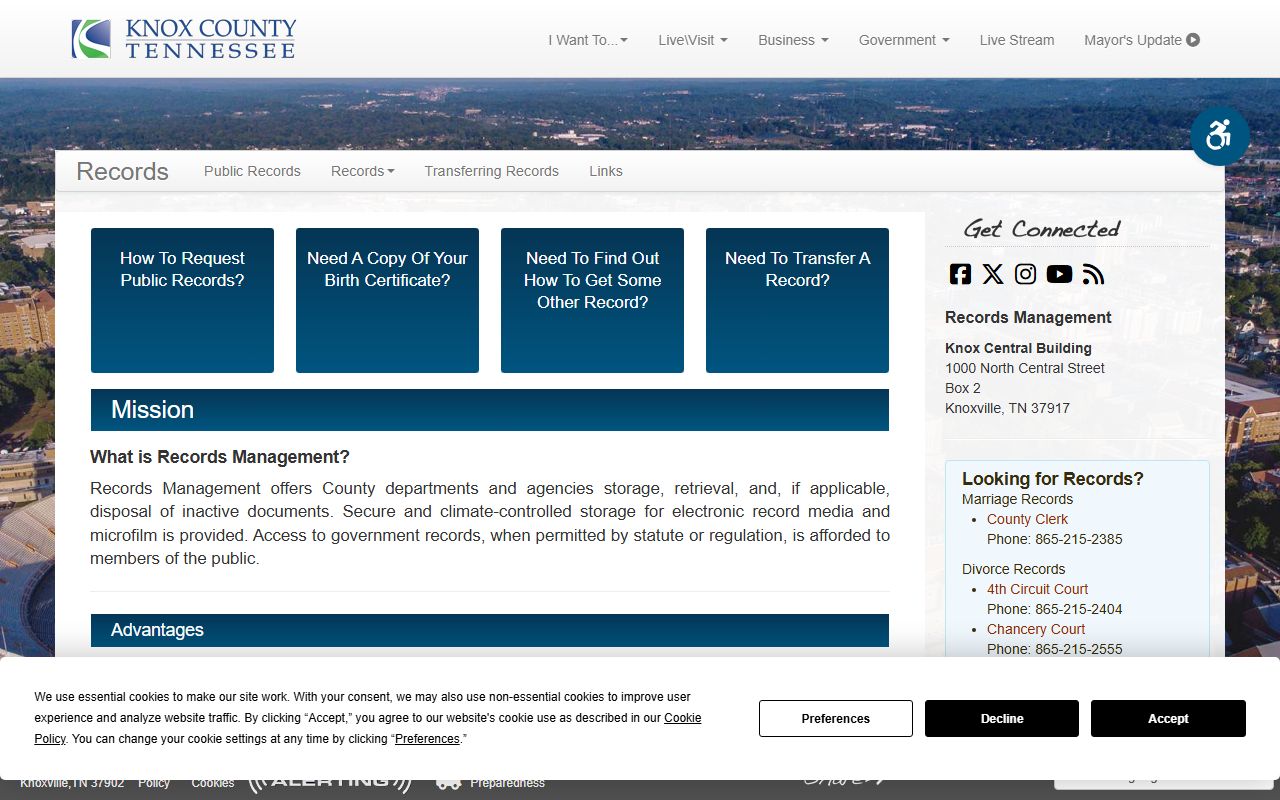
That office is a practical bridge between recent certificates and older local records.
How to Request Knoxville Death Index
For a recent Knoxville Death Index request, the main office at the Knox County Health Department is the fastest local route. Death certificates are available for any Tennessee death within the last 50 years, and the office serves walk-in customers at the main location on Dameron Avenue. Requestors must be immediate family members, funeral homes, or legal representatives, and others must show documentation of need. That makes the Knoxville process straightforward, but it still depends on who is asking and what kind of copy is needed. If the death is recent, the health department is the place to begin.
If you need to work from home, the state office gives you mail and online options. The Tennessee Office of Vital Records at the state portal handles statewide requests, and VitalChek is the authorized online vendor. Recent deaths should be given enough time to be processed before you request a copy. The Knox County Health Department page at the official vital records division is the best city-side reference for current request methods and office details.
When the Knoxville record is older, the request path changes. The archives and TSLA become more important because the historical record is public and often easier to work with than a live certificate request. That shift is normal and is what makes Knoxville Death Index research flexible.
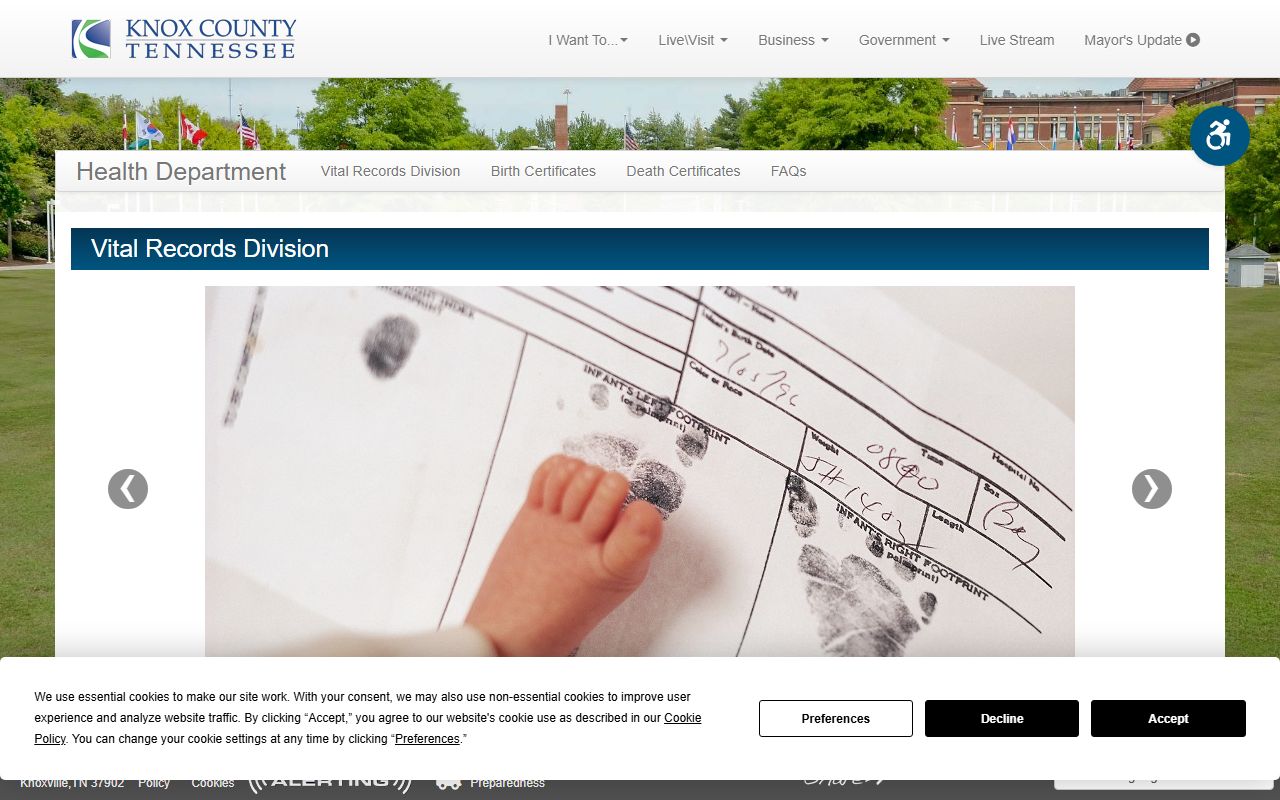
That state-linked image is a good reminder that Knoxville records sit inside Tennessee's broader vital records system.
Knoxville History
Knoxville began keeping death records in 1881, before statewide registration became routine. Those early records are available, but they are not indexed at TSLA. That means a Knoxville Death Index search can move more slowly if you are looking for a specific older person. TSLA can search unindexed records for one year only when given the name of the individual, date of death, city, and spouse name if known. The county archives also hold limited local records, which gives Knoxville a strong historical base even when the record is not fully indexed.
That early record history makes Knoxville a good place for family research. A death can surface in the archives, in the county health system, or through TSLA depending on the year. The city page works best when you think of it as a layered search rather than a single lookup. If you have a spouse name, a burial clue, or a rough year, the older Knoxville records can become much easier to use.
The TSLA death records guide at the Tennessee State Library and Archives is the best historical resource for older Knoxville Death Index work.
Tennessee Death Index Rules
Knoxville Death Index requests still follow Tennessee's statewide confidentiality rules. Recent death records are restricted for 50 years, and the state vital records system controls certified copies. Older records move to TSLA once the confidentiality period has passed. That is why the same Knoxville search may start with the county health department and end with the archives. The office you need depends on the date of death and the type of copy you want, not just on the city.
That rule matters in Knoxville because the city has both strong current records and strong historical material. If you need a certified copy for legal use, stay with the health department or the state office. If you need a public historical record, use TSLA. Note: 1913 remains the missing year in Tennessee death records, so Knoxville researchers should test the year before and after when the trail is not complete.
Knox County Death Index Records
Knoxville sits inside Knox County, and the county page deepens the search. The county archives, the register of deeds, and the health department give you three useful directions at once. If you want the county view, the Knox County page is a useful companion: Knox County Death Index. The county register of deeds can help with estate-related property records, while the archives can add local death and burial context that the city certificate does not show.
A Knoxville Death Index search often works best when you move from the city office to the county archive and then to TSLA. That sequence helps when the name is common or the death happened before full statewide registration. It also gives you the local context that makes a historical record more useful than a simple date hit.
Nearby City Death Index Records
Knoxville is often part of a wider Tennessee search, especially if the family moved, used a different hospital, or had records in more than one county. If you need another city path, compare Knoxville with Nashville, Memphis, Chattanooga, and Clarksville. Each city page points to a different local office and a different historical trail, but the Tennessee rules stay the same.
That comparison can save time when a search stalls. Knoxville Death Index research is strong on its own, but nearby city pages can add one more office or one more date range when you need it.