
Lebanon Death Index Records
Lebanon Death Index searches are anchored in Wilson County because Lebanon is the county seat and the main county offices are all there. That makes the city useful for both recent death certificates and older death records. A Lebanon search often starts with the county clerk, then moves to the archives or the register of deeds if the record is older or if the death index entry needs supporting family details. The city police records office is also a local records contact, though it does not handle vital records. Once you know the record age, the next step is usually clear.
Lebanon Death Index Facts
Lebanon has a strong county records network. The Wilson County Clerk provides death certificates, the Wilson County Archives keeps historical microfilm from 1802-1965, and the register of deeds maintains death records from 1913 forward. That gives Lebanon researchers several ways to move from a death index entry to a certified copy or an older historical file. The city is the county seat, so the record trail is concentrated rather than scattered.
That concentration matters when the death index is thin. If a death certificate is recent, the clerk can handle it. If the record is old, the archives may have the line you need. If the search turns into property work, the register of deeds can help. Lebanon gives you a lot of county history in one place, which is useful for family research and estate work alike.
Lebanon also has a police records office for city incidents and reports. That office is not a vital records office, but it can still help with local public records when a death search needs city paperwork alongside the county record trail.
Search Lebanon Death Index
Start with the full name, the city, and a likely year of death when you search the Lebanon Death Index. Historical Tennessee indexes can usually narrow the search to a county, year, or certificate number. If the first pass does not work, widen the range and try another spelling. That is especially important in older records, where the name may not match the family version exactly.
Recent records follow the Tennessee vital records system. The county clerk can issue death certificates, and the state Office of Vital Records remains the backup source for recent copies. Older records move to TSLA after the confidentiality period. That split lets Lebanon residents choose the right office without needing to guess.
The Tennessee Office of Vital Records page at vitalrecords.tn.gov/hc/en-us explains the state request process, while the Tennessee health page at tn.gov/health/health-program-areas/vital-records.html explains the statewide system that governs death certificates.
Note: Lebanon Death Index searches are easier when you start broad and let the county office narrow the result after the first pass.
Lebanon Death Index in Wilson County
The Wilson County Clerk at 228 E Main St. in Lebanon provides death certificates, birth certificates, marriage licenses, and divorce records. That makes it the first stop for many Lebanon residents who need a recent death certificate. The office also confirms that Lebanon is the county seat, which helps when the city and county names are used interchangeably in family memory.
Wilson County archives are equally important. The archives on South College Street maintain historical records on microfilm from 1802-1965 and offer research services. For a Lebanon Death Index search, that can mean a county clerk request for a recent certificate or an archive search for an older family record. Both are local to the city.
The Wilson County Clerk details in the research notes make Lebanon a straightforward county seat search. Once you know the person lived or died on the Wilson County side, the records trail stays close to home.
The clerk office is the practical first stop, while the archives are the better second stop when the death index points to older family history.
Lebanon Death Index Archives
The Wilson County Archives are a key part of Lebanon death research because they keep microfilm records from 1802-1965 and provide research help. That is useful when a death index entry is old or when you need supporting records like marriage, probate, or property material. The register of deeds also helps because it maintains death records from 1913 forward, which can be useful when the search spans county and state lines.
The archives page at wilsoncountytn.com/archives.htm is the main county link for Lebanon historical research. It fits well with the death index because it gives a clear place to go once the death is old enough to be a historical record rather than a recent certificate.
Lebanon families often use the archives when the death index is only part of the story. A file might confirm an estate, a marriage, or a burial reference that helps connect the person to the right family line. That is the kind of detail the archive is best at providing.
When the death is recent, the county clerk is the faster route. When it is old, the archive is usually better.
Lebanon Death Index Certificates
Recent Lebanon death certificates still follow Tennessee's confidential records rules. For a modern request, the Wilson County Clerk is the main local office, and the state Office of Vital Records is the backup route. For older records, TSLA is the better source. The Tennessee vital records chapter at law.justia.com/codes/tennessee/title-68/health/chapter-3/ explains the access rules behind that split.
Online ordering through VitalChek is another option when you need a recent certified copy. That can be the fastest route if you already know the name and date. Lebanon works well because the county seat puts the clerk, archives, and deed office close together, so the search rarely has to start over from scratch.
The key is to match the record age to the office. Once that is clear, Lebanon death research is efficient and local.
The city records side can also help with a non-vital lead. The Lebanon Police Department Records section at lebanonpd.org/169/Records handles incident reports, accident reports, arrest reports, and municipal citations, which can support a broader records search even though it does not issue death certificates.
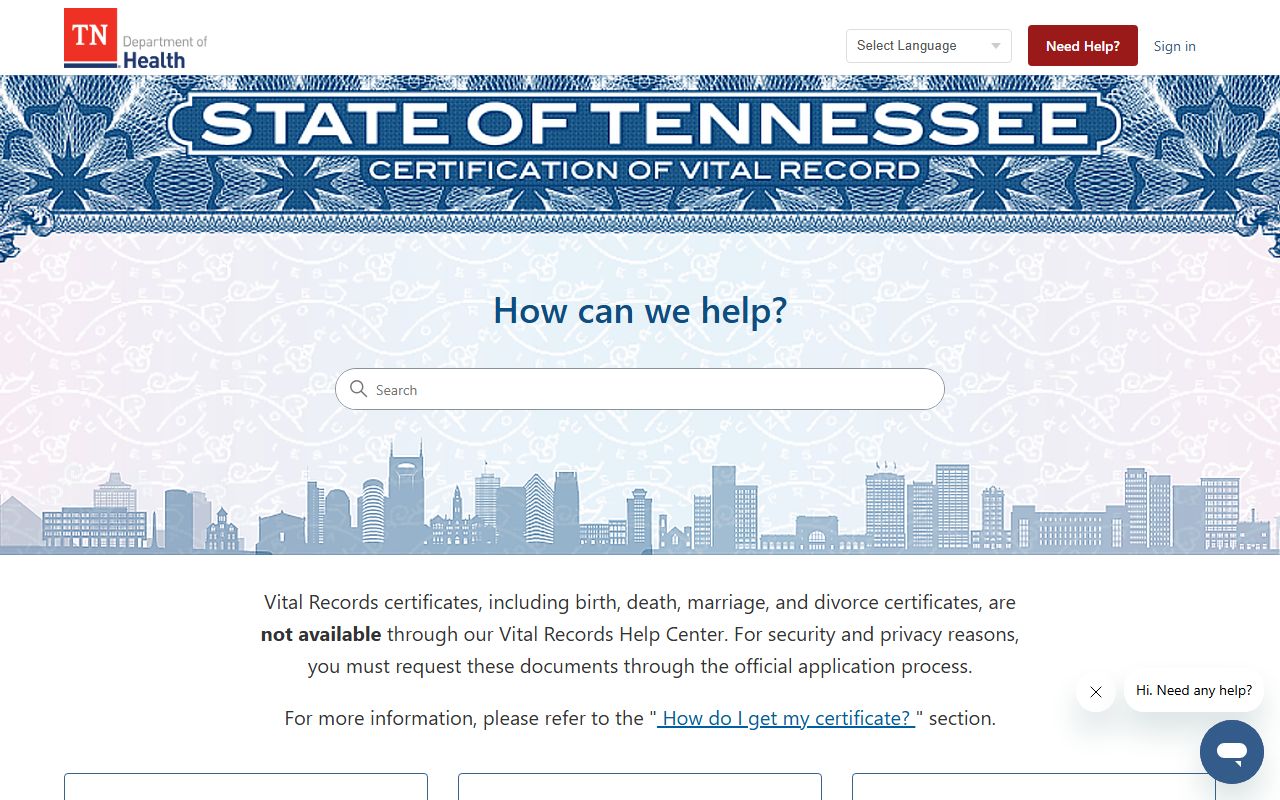
That state image fits the modern certificate route when a Lebanon search needs a recent copy rather than an archive file.
The Tennessee State Library and Archives guide at sos.tn.gov/tsla/guides/vital-records-at-the-library-and-archives is the best follow-up for older Lebanon death records.
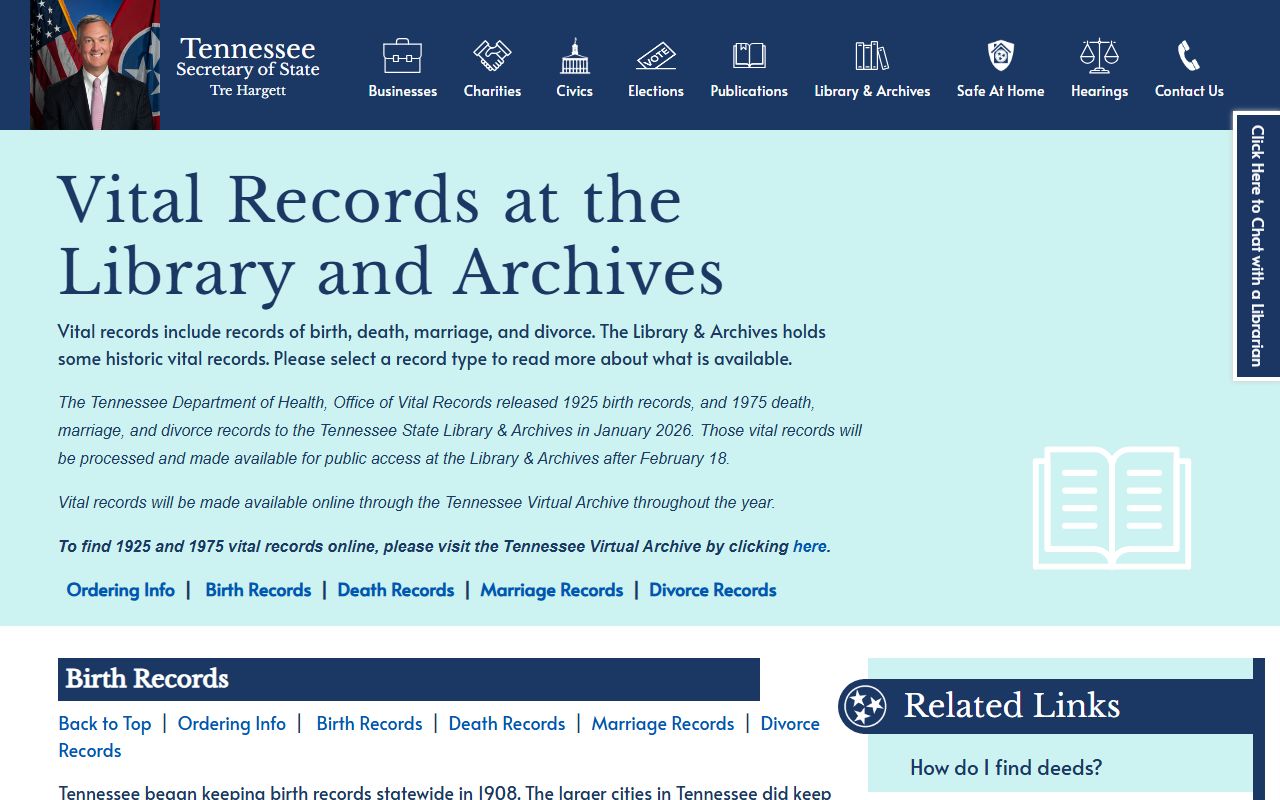
That image fits the historical search path, which is common when Lebanon researchers move beyond the county clerk and into older records.