
Spring Hill Death Index Records
Spring Hill Death Index searches are a little different because the city spans Maury and Williamson counties. That means the right office depends on which side of town the person lived in or where the death was registered. Spring Hill residents in the Maury County portion work through Columbia, while the Williamson County portion uses Franklin. That split matters for recent certificates, older county records, and local public records requests. Once you know the county side, the search gets much easier and the death index can point you to the right office without wasting time.
Spring Hill Death Index Facts
Spring Hill is unique because it sits in two counties. The Maury County Clerk serves the Maury side, and the Williamson County Clerk serves the Williamson side. That split shapes every death index search in the city. A family may live only a few streets apart and still need a different county office for a certified death certificate or an older record. The city recorder also handles municipal records requests, which can help when a death index search spills into city paperwork or public records work.
Spring Hill does not keep death certificates at the city level. The city helps with records requests, but vital records still live with the counties and the state system. That makes the death index useful as a guide. It tells you whether the record belongs to Maury County, Williamson County, or a historical archive. Once that is clear, the rest of the search is mostly about the right office and the right date range.
- Spring Hill spans both Maury and Williamson counties.
- The city recorder handles public records requests, not vital records.
- County clerk offices in Columbia and Franklin serve the two sides of town.
- Older Tennessee death records move to TSLA after the confidentiality period.
Search Spring Hill Death Index
Start with the full name, the city, and a likely death year when you search the Spring Hill Death Index. Because the city spans two counties, the first task is to figure out whether the record belongs in Maury County or Williamson County. Historical Tennessee indexes can still help, but the county side of the city matters before you make the request. If the first search does not fit, widen the year and check the family's address or burial location for a county clue.
Recent records follow the Tennessee vital records system. The county health department can issue certificates through the statewide electronic system, and the Tennessee Office of Vital Records in Nashville remains the central state source for recent death records. Older records shift to TSLA. That split is normal for Spring Hill and helps the search move in the right direction faster.
The state office page at vitalrecords.tn.gov/hc/en-us explains the request process, and the Tennessee health page at tn.gov/health/health-program-areas/vital-records.html gives the overall framework for death certificates in Tennessee.
Note: Spring Hill Death Index searches are easiest when you decide the county first. Maury or Williamson tells you where to go next.
Spring Hill Death Index in Maury County
The Maury County side of Spring Hill uses the Maury County Clerk in Columbia for vital records services. Maury County also has a health department and archives that can help with the local record trail. The Maury County Archives maintains 19th century government records, marriage records, wills, chancery court papers, and newspaper archives, which can all support a Spring Hill Death Index search when the record is old or when the family needs more than a certificate.
For the Maury County side, a death index hit may lead to a county certificate request, an archive file, or a probate record. That is why the city split matters so much. If the death was recorded on the Columbia side of town or if the family lived in Maury County, the Maury office is the place to start.
The Maury County Clerk at 10 Public Square in Columbia and the Maury County Archives at 201 East Sixth Street are the local names to keep in mind. Even without a city-issued death record, Spring Hill residents on the Maury side have a clear county path.
Spring Hill Death Index in Williamson County
The Williamson County side of Spring Hill uses the Williamson County Clerk in Franklin for vital records services. The county clerk provides death certificates, marriage licenses, and other record services. Williamson County also has an archives program and a health department that can help with the county side of a death index search. For Spring Hill residents on the Williamson side, that is the correct route when a recent death certificate is needed.
The Williamson County Clerk information in the research notes shows that the clerk provides death certificates, and the county archives supports historical research through the county museum and records access. That combination matters when the death index search is not just about one copy, but about the larger family story. A cemetery clue, a probate file, or a county clerk record can help fix the right county side of Spring Hill.
Williamson County is also important because it is one of the easiest places to confuse with Maury County in Spring Hill. Checking the address, burial place, or family office history before you request the record saves time.
Spring Hill City Records and Death Index
The Spring Hill City Recorder handles city public records requests through the city records form at springhilltn.org/186/Records-Requests. That is not a vital records office, but it matters when a death index search leads to city documents, utility records, or other municipal files that may help prove identity or residence. The city records route can be useful when you need a local paper trail before moving to county records.
City records are not the same as death certificates. Still, they can help with dates, addresses, and other small clues that point a Spring Hill search to the right county. When the city spans two counties, those little clues can matter a lot. A city record may tell you where the family was, while the county office tells you where the death record was filed.
The Spring Hill page at springhilltn.org/186/Records-Requests is the city source for public records requests and is the most direct city-level official link available for this search path.
For the image trail, the manifest points to the Spring Hill Records Requests page at springhilltn.org/186/Records-Requests.
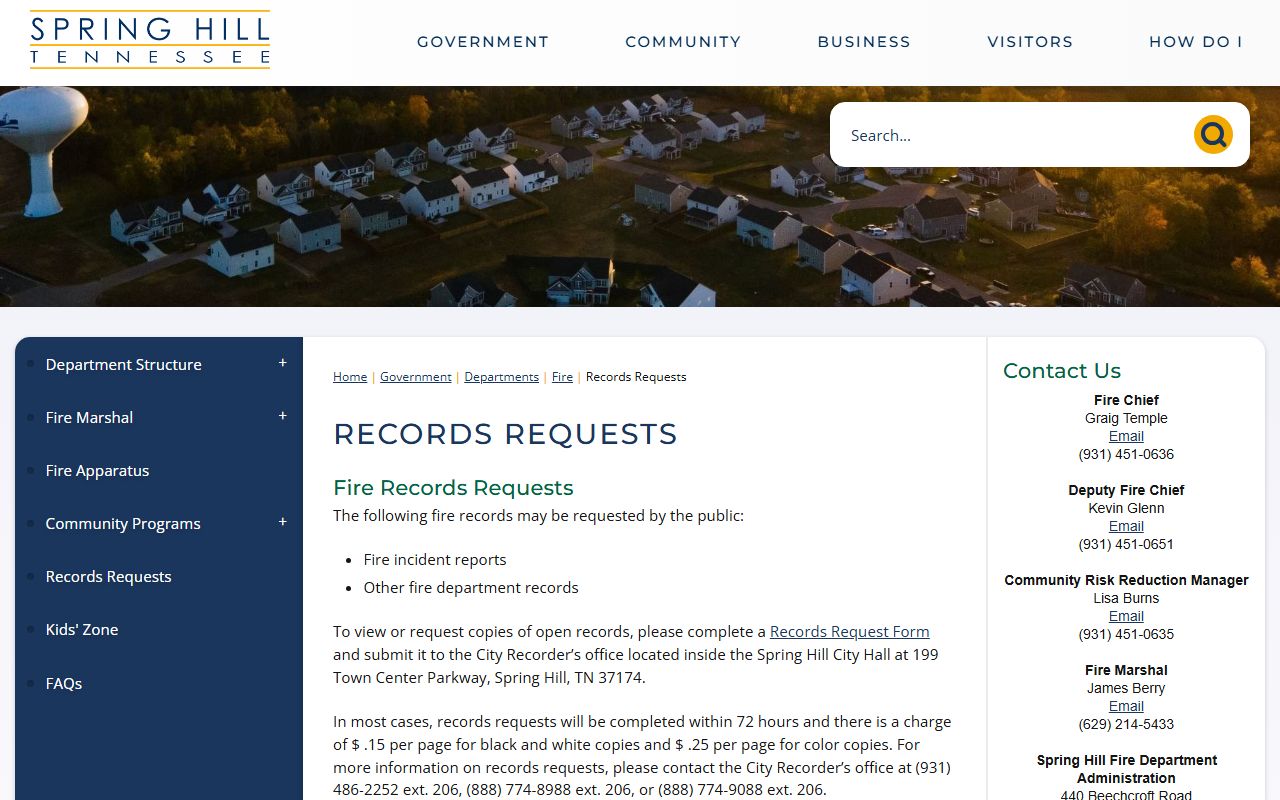
The city image fits the records-request side of the search, which is often where Spring Hill searches begin before they move to the correct county office.
When a death is old enough to be public, TSLA is the better next stop. The archive guide at sos.tn.gov/tsla/guides/vital-records-at-the-library-and-archives explains how the older records move out of the confidential period and into public research.
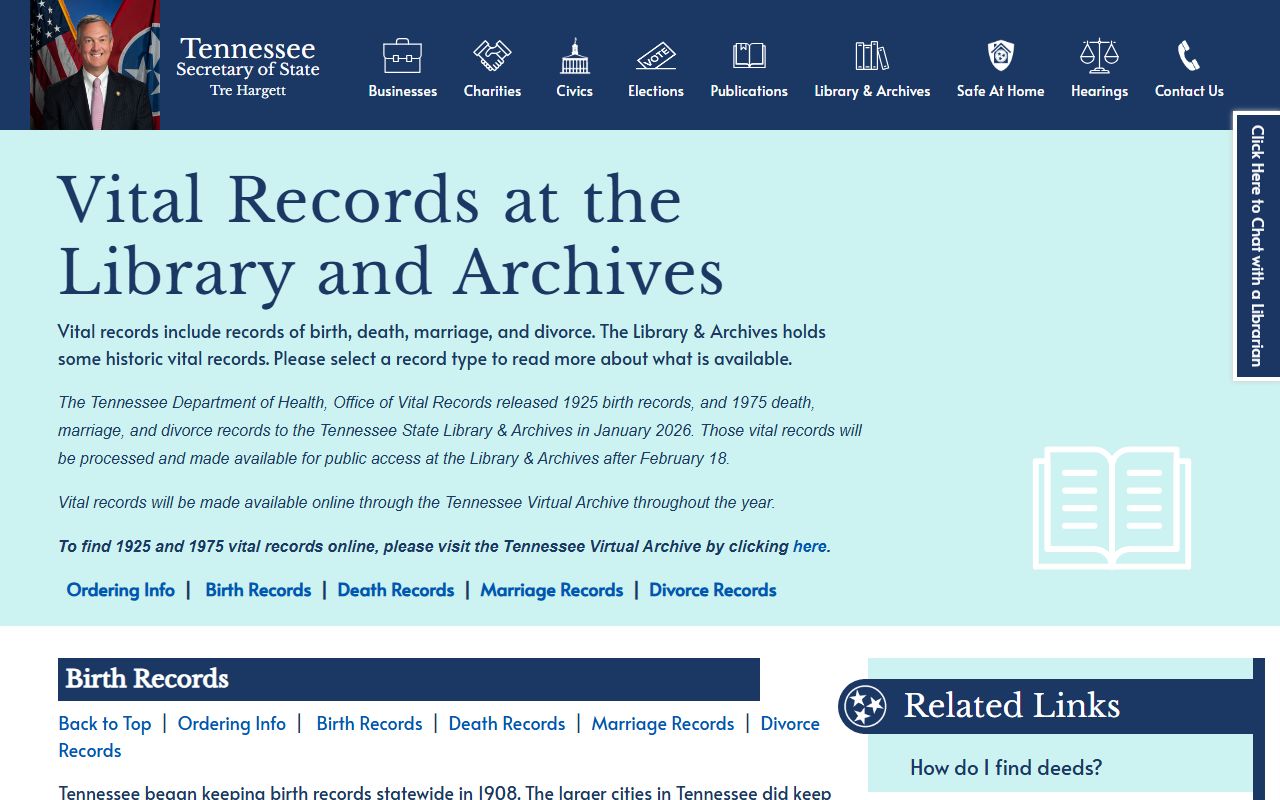
That state image is a good match for the historical side of a Spring Hill search, especially when the record has passed the 50-year line.
Spring Hill Death Index Certificates
Recent Spring Hill death certificates are still subject to Tennessee's confidentiality rules. That means the county office or the state office controls access until the record is old enough for TSLA. If the record is recent, the right office depends on whether the death belongs to Maury County or Williamson County. If the record is old, the search usually shifts to the archive. The Tennessee vital records chapter at law.justia.com/codes/tennessee/title-68/health/chapter-3/ explains the law behind that split.
For online ordering, VitalChek is the authorized vendor. It is the quickest route for a modern certificate once the county side is known. Spring Hill works best when you match the address to the county first, then use the death index to confirm the year and the office.
That keeps the city search practical. It also keeps you from asking the wrong county office for a record that belongs on the other side of town.