
Search Gibson County Death Index
Gibson County Death Index searches usually start with the health department in Trenton, then move to the Circuit Court Clerk, the Register of Deeds, or the county archives when a family line needs more depth. That matters because recent certificates, older public files, and local history material do not sit in one place. If you are tracing a death across Trenton, Milan, or the smaller communities in Gibson County, the best route depends on the date and the kind of copy you need. Use the search box below to begin with the most direct county and state paths.
Gibson County Death Index Records
The Gibson County Health Department can issue death certificates through Tennessee's electronic vital records system, which means a county search is not limited to deaths that happened inside the county office itself. For recent records, that is the fastest local place to start. The Gibson County Circuit Court Clerk at the Justice Building on N College Street keeps civil and criminal court records, including divorce files that often help confirm names, dates, and relationships around a death. The Register of Deeds in Trenton handles deeds and property transfers, and those files can also help tie a person to an address or estate trail.
The county archive adds the historical side. Gibson County Archives in Trenton keeps local records that can point a search toward funeral notices, family folders, or other record sets not found in the death index itself. The Mildred G. Fields Library in Milan is another useful local stop, especially when a death index search needs one more clue before a statewide request is made. For a recent Tennessee death, the Tennessee Office of Vital Records remains the main state repository, and the county office route is often the easiest way to get there.
The Tennessee Office of Vital Records page at the state portal is the central starting point for recent Gibson County Death Index requests that need a certified copy. The office information on that page also helps if you want to compare the county path with the state path before you file a request.
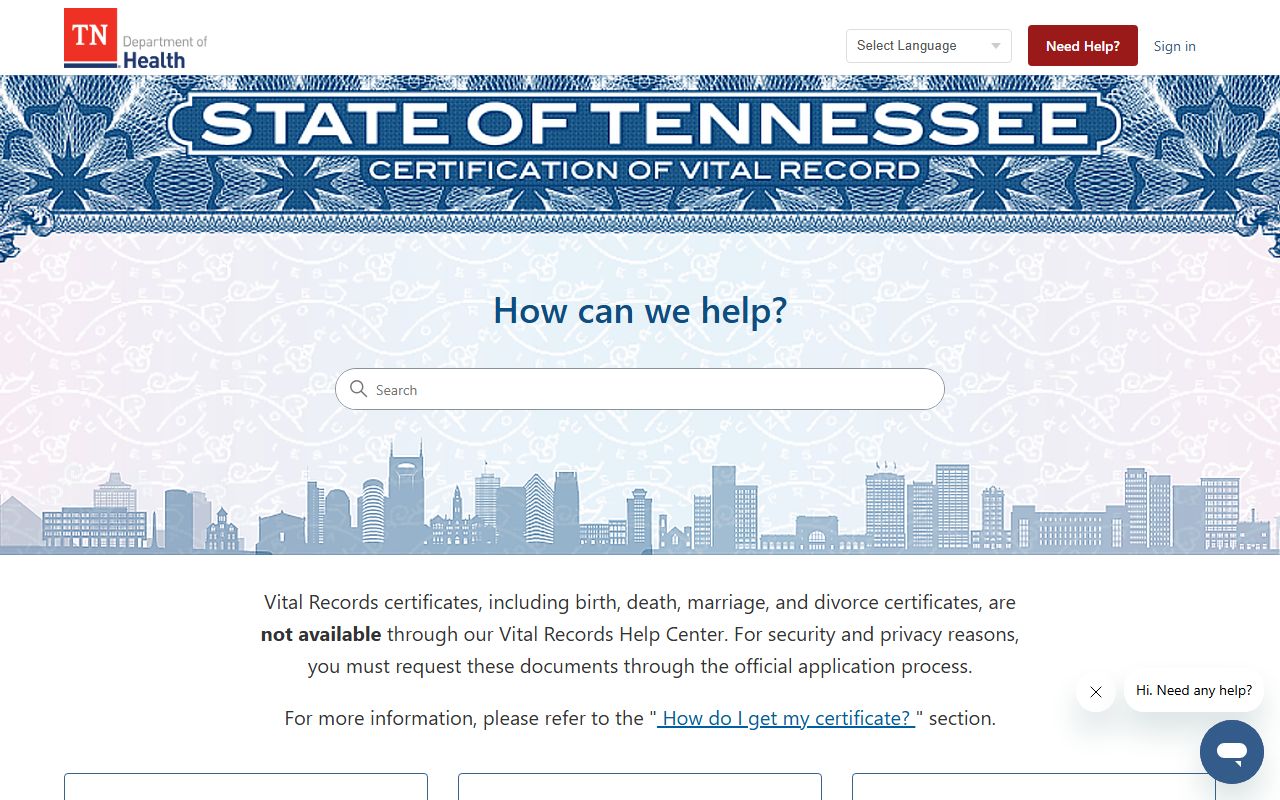
That portal is especially useful when a search needs to move from the county level to the statewide system without losing time.
How to Request Gibson County Death Index
For a recent Gibson County Death Index request, the county health department is usually the first in-person stop. Tennessee's electronic issuance system lets county health departments issue death certificates for any Tennessee death, so the office in Gibson County does not need to be the exact county where the death happened. Bring a photo ID, know the decedent's full name, and be ready with the date or approximate year. If you are not a qualified requester for a recent record, bring proof that shows your right to the certificate. That may be a court paper, a beneficiary document, or a letter that explains your need.
If you cannot visit in person, the state portal explains the mail and online paths. Mail requests go to Tennessee Vital Records in Nashville with the application, ID copy, and payment. The Tennessee Department of Health vital records page confirms the main contact rules and points you to the current process. Online orders go through VitalChek, the authorized vendor. The TSLA ordering information page is also helpful when a request turns historical and you need a public copy from the archives instead of a recent certificate.
Gibson County History
Historical Gibson County Death Index work often shifts from current certificates to TSLA. The Tennessee State Library and Archives holds Gibson County death records for 1908-1912 and 1914-1975, which covers the years that matter most once a death is older than the 50-year confidentiality window. The year 1913 is still the gap year that can trip up a search, so do not assume a missing record means the person was not recorded anywhere. A family might show up in a cemetery list, a probate file, or a local newspaper before the index itself gives a clean answer.
The TSLA death records guide is the best match for that kind of historical search. It explains the record groups, the index years, and the way older Tennessee death material moves from restricted files into public access. For Gibson County, that is especially useful when a record is tied to Trenton but the family also lived in Milan or used a nearby church burial ground. The county archive and the local library work well together here because one office can point to a name while the other can often explain the local paper trail.
The Tennessee State Library and Archives image at the TSLA guide page is a good reminder that Gibson County Death Index research does not end at the courthouse. It often ends in Nashville, where the oldest public files are kept and where the search can be compared against other county and city sources.
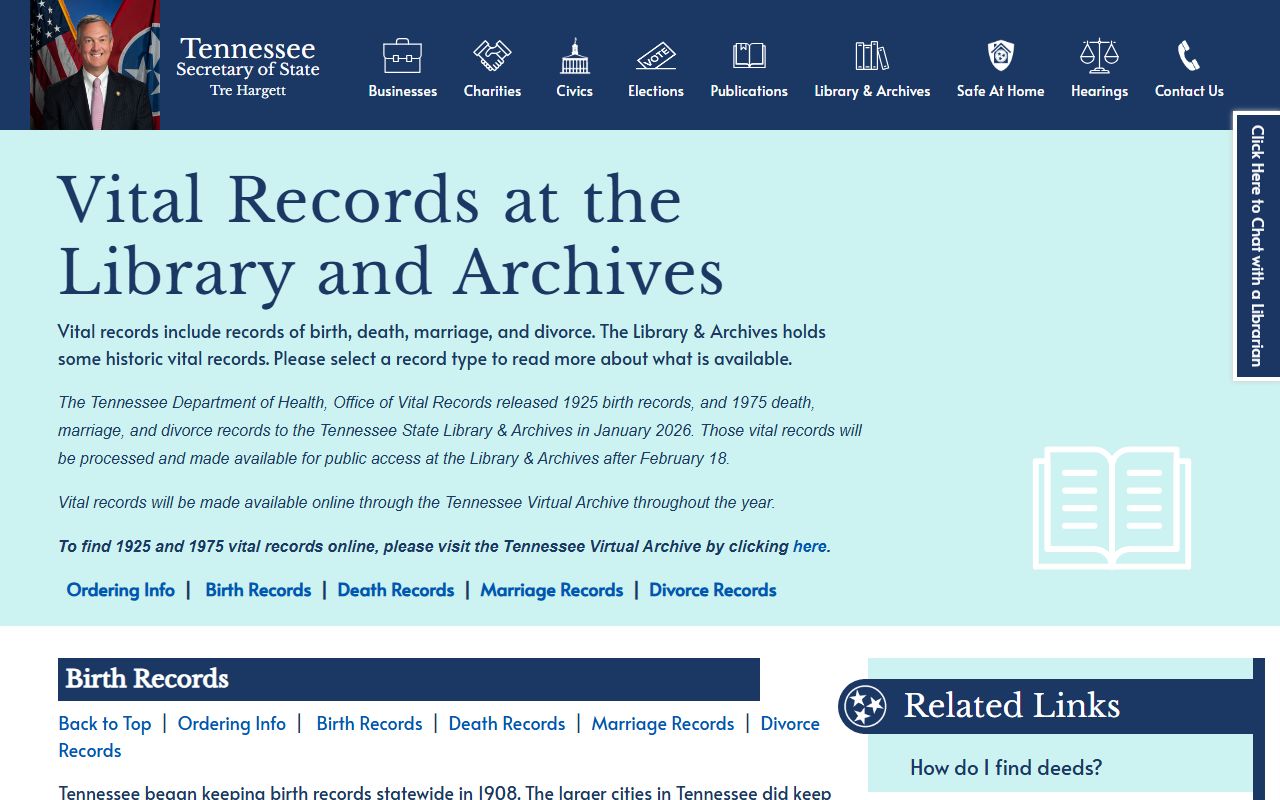
When the county offices do not settle the question, TSLA is the next practical step for Gibson County researchers.
Tennessee Death Index Rules
Tennessee's death records become public after 50 years, but the short version of that rule still has a lot of detail behind it. The County Technical Assistance Service public records guide explains how county offices should respond to public requests, while Tennessee Code Annotated Title 68 supplies the vital records rules that control disclosure. That split matters in Gibson County because a death index search may lead you to a public historical file, a restricted recent certificate, or a version of the record with the cause of death withheld.
For that reason, a Gibson County Death Index search should always begin with the date of death, then move to the right office. Recent records belong in the state vital records system. Older records are more likely to be public at TSLA. If you are only trying to confirm that a death happened, the index may be enough. If you need the full certificate, you may need a certified copy. Note: 1913 remains the missing year in Tennessee death records, so a clean county search may still need a statewide check before the trail makes sense.
Gibson County Notes
Gibson County has a compact but useful local research network. The archive, the courthouse offices, and the Mildred G. Fields Library in Milan all support the same basic goal: help a researcher move from a name to a date, then from a date to the right copy. That makes Gibson County Death Index work practical for both family historians and anyone who needs a recent certificate for legal use. The key is to match the office to the record age instead of assuming the county clerk or archive will hold every answer.
If the first search does not fit, try a different route. A death that looks missing in Trenton may still appear in TSLA, in a state vital records order, or in a local clue file that was created for another purpose. Gibson County searches tend to improve when you bring a spouse name, a rough year, and the place where the family lived. Those details can turn a dead end into a usable Gibson County Death Index lead without adding guesswork.