
Grainger County Death Index Lookup
Grainger County Death Index research works best when you start in Rutledge and keep the statewide system in view. The county health department sits on Highway 11W, and the county clerk is close enough to make a quick records check possible, but Grainger County still depends on Tennessee's broader vital records network for older deaths and certified copies. That makes the search feel simple on the surface and more layered once you start matching dates, family names, and record age. The sections below keep the county path clear while showing when the state route is faster.
Grainger County Death Index Records
The Grainger County Health Department at 2480 Highway 11W in Rutledge can issue Tennessee death certificates through the statewide electronic system, so a recent death search can stay local even when the death happened somewhere else in Tennessee. That is useful in a county where people often keep records close to home and then look outward only when the date gets older. The county clerk at P.O. Box 116 in Rutledge provides administrative services, which can help a searcher pin down family names, property references, or other clues that make a Death Index search easier to finish.
Grainger County is a good place to use a layered search method. First, confirm the person and the county. Then decide whether the record is recent enough for the health department or old enough for TSLA. If you are trying to line up a death with an estate, land transfer, or marriage history, the county clerk can still help you build the frame around the record. If the record is purely historical, the state archive is often the better fit. That split is what keeps a Grainger County Death Index search moving instead of stalling at one office.
The Tennessee Office of Vital Records page at the state portal is the central place to start when a Grainger County Death Index request needs a certified copy rather than a public historical image.
That portal is the most direct way to see how recent records, state requests, and county health department service fit together.
How to Request Grainger County Death Index
For a recent Grainger County Death Index request, a visit to the health department in Rutledge is often the fastest route. Bring a photo ID, the decedent's name, and the best date estimate you have. If you are asking for a recent certificate, be ready to show entitlement if the office needs it. Tennessee limits access to some recent records, and the county health department follows that rule even when it can issue the certificate through the electronic system. The search is usually smoother when the request is specific and the name is spelled the way it appears in family papers.
If you do not want to visit Rutledge, use the state methods. The Tennessee Department of Health vital records page explains the mail and in-person options. Online ordering goes through VitalChek, and the TSLA ordering information page becomes the better fit once the record is old enough for public archive access. The county office, the state office, and the archive each solve a different part of the same death index problem.

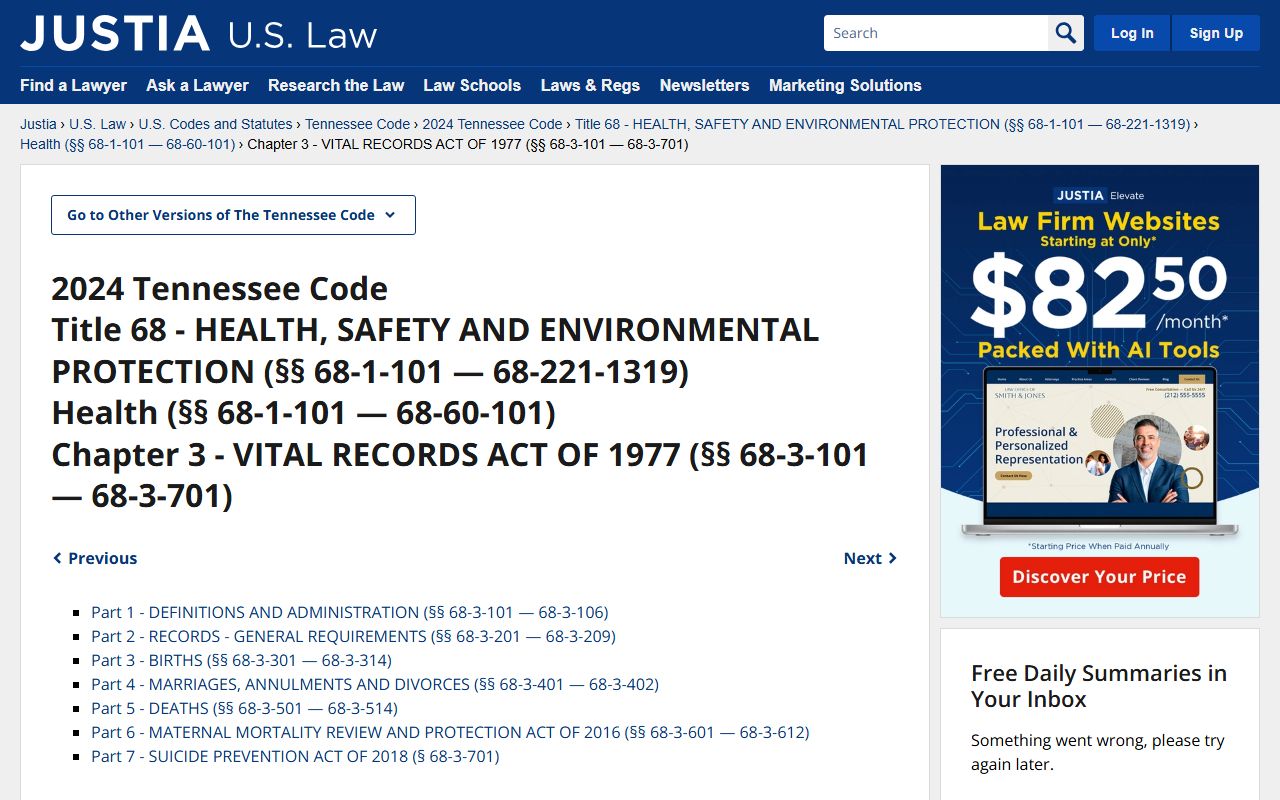
That statutory guidance is useful when you want to know why one office can release a record and another office has to hold it back.
Grainger County History
TSLA is the key historical source for Grainger County Death Index work. The Tennessee State Library and Archives holds Grainger County death records for 1908-1912 and 1914-1975, which gives researchers a long public run once the 50-year rule expires. The missing 1913 year still matters, and that gap can make a search look broken when it is really just incomplete. In that case, use a wider date range, check family names, and look for a burial or probate clue that can bridge the missing year.
The TSLA death records guide is the best companion for that work. It explains what is indexed, how public access changes over time, and how TSLA handles older death material. For Grainger County, that is important because a rural county search can reach the state archive faster than it reaches a court file or a local family paper box. The archive is the place where a clean historical copy is most likely to show up after the county offices have done their part.
Tennessee Death Index Rules
Tennessee's death index rules are not hard to state, but they matter more than they look. Death records stay confidential for 50 years, and the legal basis for that rule is in Tennessee Code Annotated Title 68. County request rules and records-response timing are explained by CTAS public records guidance. Put together, those sources tell you why a recent Grainger County Death Index search may need proof of entitlement while an older search can move more freely.
That rule also explains why certified copies and public images are not always the same thing. A person may be able to view an older index entry but still need a formal certificate for insurance, probate, or a family file. Note: 1913 remains the missing year in Tennessee death records, so Grainger County researchers should always test 1912 and 1914 when a family story seems to skip a year.
Grainger County Notes
Grainger County searches reward patience, especially when the first office only gives part of the answer. Rutledge gives you the local health department and the clerk in one small county seat, which helps when you need a quick check on a name or a date. But the real strength of a Grainger County Death Index search is that it does not force you to stay local. Once you have the name, the date, and the family line, Tennessee's statewide system can usually finish the job.
If you are dealing with a name that changes spelling, try the county clerk first, then TSLA, then the state request path. That order usually catches the most likely places where a record can surface. A Grainger County Death Index search is rarely about one office alone. It is about using the county office for the live request and the state archive for the older public record.