
Hancock County Death Index Lookup
Hancock County Death Index searches are usually straightforward once you know the date range. The health department in Sneedville is the local access point, the county clerk can help with county records, and TSLA holds the older historical death files. That mix gives Hancock County researchers a clean path from recent certificate requests to public historical records. The county is rural, so the state system matters a lot when the family wants a fast answer or the first office visit does not fully solve the search.
Search The Death Index
Hancock County Death Index Access
The Hancock County Health Department at 1860 Old Highway 63 in Sneedville provides public health services and access to Tennessee's vital records system. The research does not give a county-specific death certificate fee or a separate county portal, so the state system is the practical route for a Hancock County Death Index request. For recent records, that means the local health department is the first place to check, especially because Tennessee counties can issue certificates through the electronic system for deaths anywhere in the state.
The county clerk at P.O. Box 346 in Sneedville provides administrative services that can support a family search. It does not issue death certificates, but it can still matter when the search is tied to marriage, probate, or a name change in the family file. That kind of side record is often what helps a Hancock County Death Index request become more than a name on a page.
For statewide direction, the Tennessee Office of Vital Records at the state vital records portal explains the recent record process and the 50-year confidentiality rule. In Hancock County, that rule determines whether the search stays with the health department or moves to the historical side of the system. A good first step is to decide whether the death is recent enough for a certified copy or old enough for TSLA.
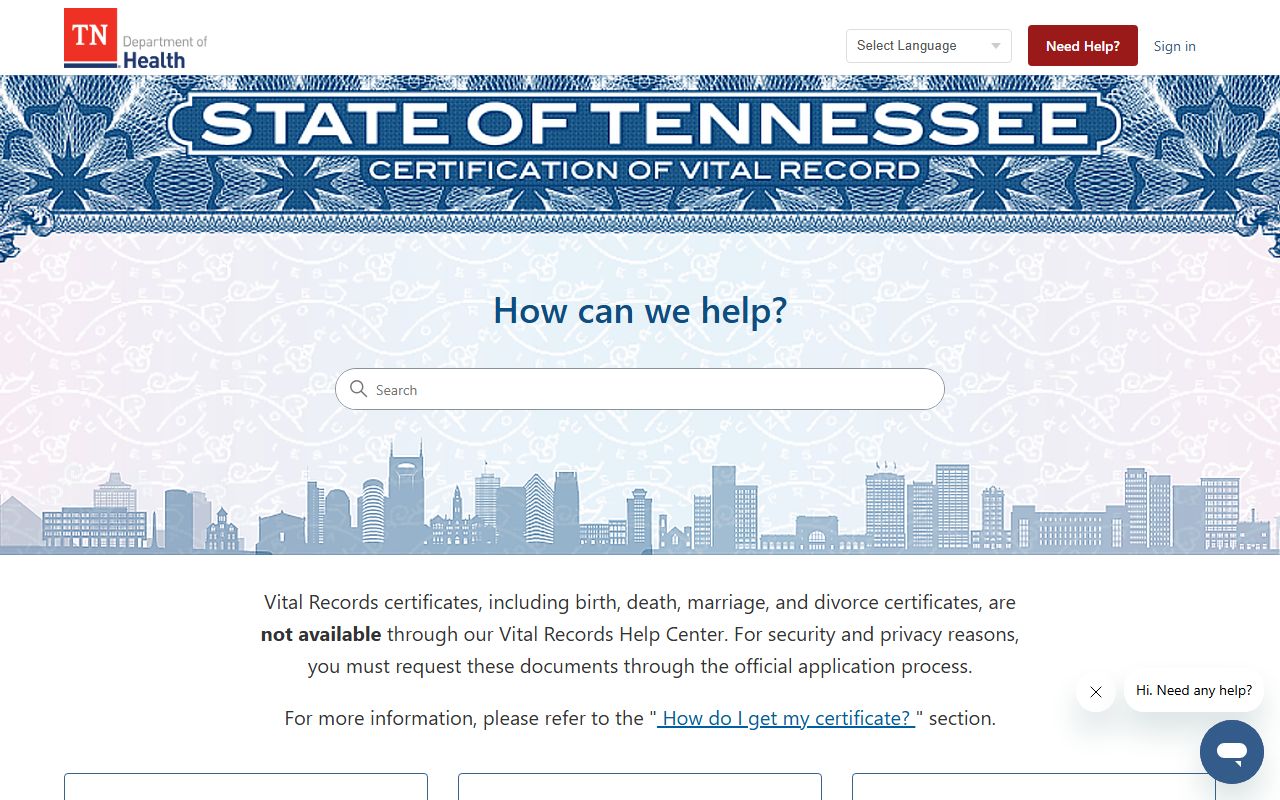
That state image shows the main office behind recent Hancock County Death Index requests and the place that sets the rules for certified copies.
Hancock County Death Index at TSLA
For historical research, TSLA holds Hancock County death records from 1908-1912 and 1914-1975. That range matters because it covers the public historical records that are old enough to leave the restricted file but still recent enough to be useful for family history. The county research points directly to TSLA for those years, so the archive is the key historical path for Hancock County Death Index work. If the death falls in 1913, you still have the Tennessee gap year problem, which means the record may not exist in the statewide system at all.
The TSLA county guide at Vital Records at the Library and Archives is a good overview of what the archive holds and how the state death record timeline works. It is especially helpful in a county like Hancock, where local research can be sparse and the archive may be the only broad public source for older records. If you know the county and can estimate the year, TSLA can usually narrow the search better than a generic web search.
The Tennessee genealogy page at Genealogy Research gives another useful reminder. Death records become public after 50 years, and county courthouses may have access to TEVA for released records. That means Hancock County Death Index work can move from county office to archive to digital release as the record ages. The system is layered, but it is consistent once you know the cutoff.

This state image is useful because it points the reader from the county search to the historical archive side of Hancock County Death Index work.
Request A Death Index Copy
A Hancock County Death Index request follows the same Tennessee entitlement rules as every other county. Immediate family members are the most direct requestors, and others must show a legal or tangible interest. Cause of death information is more limited than a basic death certificate. If you need to know whether your request qualifies, the state page at Entitlement Guidelines explains the standard.
The state also gives a practical how-to page at How Do I Get My Certificate. That page covers in-person, mail, and online requests, including the fact that local county health departments can issue Tennessee death certificates through the electronic system. If you prefer online ordering, VitalChek is the approved vendor named by the state.
The reason this matters in Hancock County is simple. The local office may have the certificate fast, but the right to receive it still depends on the statewide rules. A good Hancock County Death Index request starts with the right date, the right relationship, and the right office. That keeps the process short and avoids a denial that could have been prevented with better details.
Note: A Hancock County Death Index request is usually easier when you decide in advance whether you need a certified copy or only the historical index entry.
Hancock County Death Index Notes
Because Hancock County is a smaller county, the clerk and health department often play supporting roles rather than competing ones. The health department handles current death certificate access, the clerk keeps county administrative records, and TSLA stores the older public record side. That makes the Hancock County Death Index a layered search, but not a hard one if you follow the date. It is the date that tells you whether to stay local or move to the archive.
When a search stalls, use the county facts you already have. A spouse name, a burial location, or a rough year can be enough to point you toward the right record bucket. In Hancock County, the main mistake is staying too long in the wrong time period. Once you move from recent records to historical ones at the right moment, the search gets much easier.
That is the practical shape of death research in rural Tennessee. Local first, archive second, and always with the 50-year rule in mind.