
Find Henry County Death Index
Henry County Death Index searches begin in Paris, but they often reach farther because the county clerk, the health department, and the local genealogy community all support the same kind of work. That makes Henry County a good place to search when you need both a recent certificate and older family context. The county clerk keeps marriage records from 1835, which is useful when a death search needs a spouse link or a family anchor. The health department can issue recent death certificates through the state system. TSLA handles the older public records. Together, those sources cover most Henry County death research without making the search feel scattered.
Henry County Death Index Records
The Henry County Clerk at P.O. Box 24 in Paris keeps marriage records from 1835 and provides limited vital records services. The clerk does not issue death certificates directly, but that marriage history still matters when you are building a Henry County Death Index search. A spouse name can make the difference between a strong match and a weak one. The Henry County Health Department can issue death certificates for deaths occurring in Henry County within the past 3 years through the state electronic system, and all county health departments can now issue Tennessee death certificates registered statewide. That is the recent-record path most people need first.
Because Henry County has a long family history, it can serve both practical and genealogical searches well. A recent death might be handled by the health department. An older death might be found in TSLA. A marriage record from the clerk can help tie the names together before you order anything. That is why Henry County Death Index searches often feel more complete than a simple certificate request. The local offices give you context, not just a number.
The Tennessee Office of Vital Records page at the state portal is the best statewide starting point when a Henry County Death Index request needs a recent certificate.
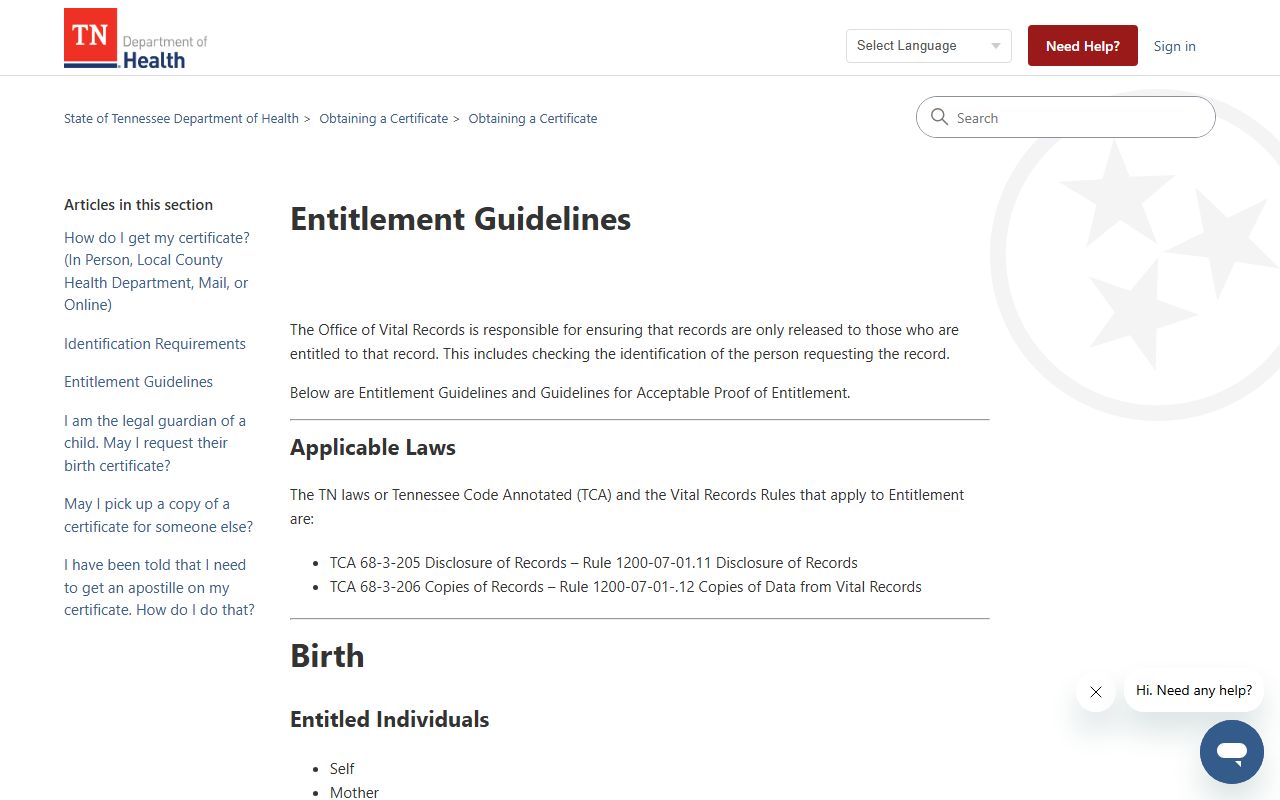
That page is useful when you need to know who may request a recent record and what proof the office may ask for.
How to Request Henry County Death Index
For a recent Henry County Death Index request, the county health department is the most direct local option if the death occurred in Henry County within the past 3 years. Bring a photo ID, the name of the decedent, and the date or year if you know it. If the record is recent, entitlement rules may still apply. Tennessee's electronic system makes the county health department more flexible than older local systems were, because the office can issue any Tennessee death certificate that has already been registered in the statewide database.
If you need to work from home, the state office offers mail and online options. Mail requests go to Tennessee Vital Records in Nashville with the application, identification, and payment. Online requests go through VitalChek. The Tennessee Department of Health vital records page explains the current system, and the TSLA ordering information page is the better choice when the record has moved into the historical public range.
Henry County searches can also benefit from the county clerk's long marriage record history. A spouse name or a marriage date can help narrow the death search before you place a request. That kind of context matters when the name is common or the family lived in Paris for a long time.
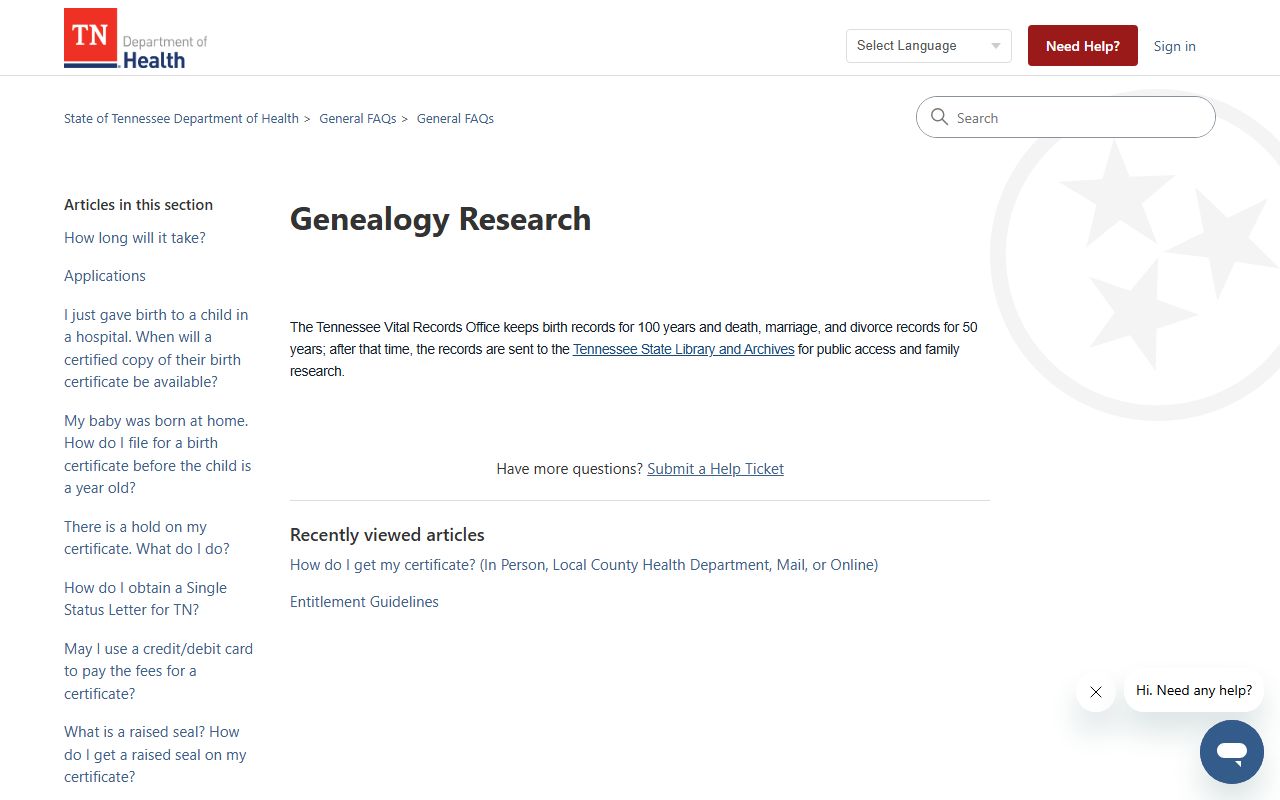
That genealogy page helps connect the Henry County death search to the broader Tennessee historical record set.
Henry County Death Index History
The historical side of Henry County Death Index research lives at TSLA. The Tennessee State Library and Archives holds Henry County death records from 1908-1912 and 1914-1975. That covers the public record range once the 50-year period ends. The 1913 gap still matters here, so if a family story points to that year, check the years around it instead of assuming the record was never created. A search may look incomplete only because the statewide system has the familiar missing year.
The Henry County Genealogical Society and Rhea Public Library add local depth. The society can help with family research in Paris, while the library has microfilmed court records, funeral home records, church records, and census data. Those resources are not a replacement for TSLA, but they can give you the clue that makes the archive search easier. In Henry County, that local layer is especially valuable because marriage history and death history often connect quickly.
The TSLA county guide at the Henry County page is the historical anchor for Henry County Death Index work.
Henry County Death Index Rules
Henry County Death Index requests still follow Tennessee's statewide access rules. Recent death records stay restricted for 50 years, and the state vital records office controls how they are released. That is why a local health department can issue a certificate but still ask for identification or entitlement proof. The rule is simple, but it matters. A county office does not become a free archive just because the county name is on the door.
Older Henry County Death Index records are easier because TSLA can provide public access after the confidentiality period ends. That makes the county, the state office, and the archive part of one system. If the death is recent, use the county or state vital records route. If it is older, use TSLA. Note: 1913 remains the missing year in Tennessee death records, so Henry County researchers should always check the adjacent years when the search gets thin.
Henry County Notes
Henry County is one of the better counties for a broad family research path because the clerk's marriage records go back to 1835 and the local genealogy group gives you a second layer of help. That matters when a death index search needs more than a certificate. A family history search often starts with a death and ends with a marriage, a probate clue, or a church record. Henry County gives you those routes in one place.
If you need a recent Henry County Death Index request, stay with the health department or Tennessee Vital Records. If you need the older public record, use TSLA. If you need the family context first, try the clerk or the local genealogy resource. The county works well when you think of it as a set of connected records rather than one file drawer.