
Lawrence County Death Index Search
Lawrence County Death Index research works well when you start in Lawrenceburg and keep the county offices in the right order. The health department can issue recent death certificates through Tennessee's statewide system, the clerk provides county administration, and the archives hold historical material that can help when a death moves out of the modern file set. Lawrence County is a good place to search if you already know the family name and the rough date. The county gives you both the current certificate path and the older paper trail, so a single search can move from a quick check to a deeper family record review without leaving the county.
Lawrence County Death Index Sources
The Lawrence County Health Department at 1100 West Gaines Street in Lawrenceburg provides public health services and can issue death certificates through Tennessee's electronic vital records system. That makes it the first local stop for a recent Lawrence County Death Index request. If the death is within the restricted period, the health department is the office that can handle the certified copy request. If the death is older, the search often moves to TSLA or the county archives instead of stopping at the health department desk.
The Lawrence County Clerk at 100 Public Square gives administrative support and helps keep the county record trail organized. The Lawrence County Archives is especially useful because it maintains historical records for the county, including marriage records up to 2000. Marriage records do not replace a death certificate, but they can help prove the family link behind a Lawrence County Death Index hit. If the surname is common, that extra family record often helps confirm the right person.
The county image comes from the Lawrence County Archives, which is the place most likely to add context after a death index hit turns into a family research question.
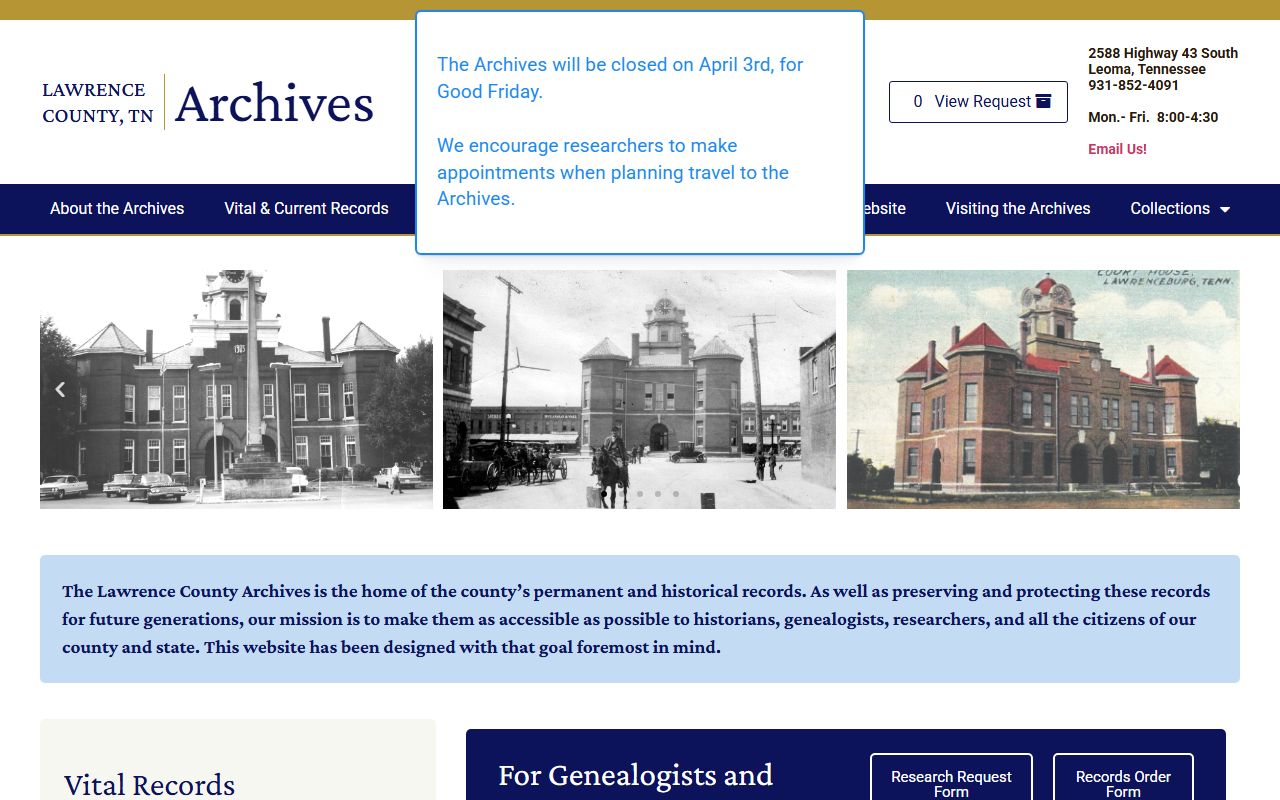
That archives page is useful because it gives the county a historical layer beyond the current certificate system.
Lawrence County Death Index at TSLA
Historical Lawrence County Death Index work moves to the Tennessee State Library and Archives. TSLA says death records for Lawrence County from 1908-1912 and 1914-1975 are available in its holdings. That range is the backbone of a historical search. It covers the years when death records are public and when many county searches still need a statewide copy. The 1913 gap still matters, so if the death falls there you will need another record source to bridge the hole.
The TSLA path is also useful because it tells you how to search. A name, county, and narrow year range are much easier to work with than a broad family guess. The TSLA vital records guide explains the historical record set and the kinds of records TSLA can search. For Lawrence County Death Index work, that guide is the fastest way to decide whether to search the county, the archive, or the state historical collection first.
Lawrence County Death Index Requests
For a recent certificate, the Tennessee Office of Vital Records main portal is the statewide starting point. The state explains in-person, mail, and online request options in its certificate guide. Tennessee also allows county health departments to issue death certificates through the electronic system, so a Lawrence County Death Index search can often stay local if the record is recent and the requester meets entitlement rules.
The standard fee is $15.00 per certified copy, and the state will still check entitlement before release. The guidelines spell out who qualifies and what proof may be required. That is especially useful in Lawrence County because the archives and the health department often work together in the search story. If the death is recent, use the health department. If it is old, use the historical route. If you need family context, the archives can fill in the gap.
Lawrence County Death Index and Public Records
The public records side of a Lawrence County Death Index search is controlled by the same Tennessee law that governs the rest of the state. The CTAS public records guide says county records are presumed open unless another statute keeps them confidential. Death certificates are one of the records with a confidentiality rule, so a county index entry may be public long before the full certificate is. That is one reason the index is so valuable.
CTAS also says county offices should answer requests within seven business days. That helps when you ask the clerk, the archives, or the health department about a Lawrence County Death Index matter. You can expect a clear answer even if the answer is that the file is restricted or must be requested another way. For county researchers, that simple structure saves time and keeps the search from turning into a guessing game.
What Lawrence County Death Index Records Show
A Lawrence County Death Index entry usually gives you the decedent's name, county of death, year, and certificate number. Once you move to the full certificate, the record may show age, sex, place of death, burial details, informant, and sometimes cause of death. Those details matter because Lawrence County families often appear in both the county archives and the state vital records system. A good index hit can connect those two worlds.
The county archives add another layer. Because the archives keep marriage records up to 2000, they can help you prove family links around a death. A marriage record can help identify a spouse, a parent line, or a household that a death record only hints at. In Lawrence County Death Index research, the certificate tells you what happened, while the archives help explain who the person belonged to in the county record set.
More Lawrence County Death Index Clues
Lawrence County gives researchers a good mix of current and historical records. The health department handles modern death certificates, the clerk supports county administration, the archives add history, and TSLA fills the statewide gap for older public records. If you are working a common surname, move through those sources in order. Start with the county death index, then check whether the record age pushes you into the archives or TSLA.
That approach keeps the search grounded. It also helps when a family story is spread across more than one office. A death may show up in a certificate, a marriage record, and a land transfer all at once. Lawrence County Death Index work is strongest when you gather those pieces and keep them tied to the same name and year before you move on.