
Lincoln County Death Index Records
Lincoln County death index research usually starts in Fayetteville, where the health department and county clerk give you the first local leads before a search moves to state records. That matters because many Lincoln County families need the same basic proof, a death certificate, a probate file, or an older death record tied to the same name. Tennessee keeps recent death certificates restricted for 50 years, so a Lincoln County search often splits into two paths. One path handles the recent certificate. The other reaches into TSLA for older death records that are already public and ready for family history use.
Lincoln County Death Index Facts
Lincoln County sits in south central Tennessee and has a simple county record setup that still takes a little local knowledge to use well. The health department can issue death certificates through the state's electronic system. The county clerk handles marriage licenses and related administrative work. TSLA then holds the older public death records that researchers rely on once the 50-year confidentiality period has passed. That makes Lincoln County useful for both modern certificate requests and older family searches.
The county clerk note about marriage licenses is worth keeping in mind. A marriage record can help confirm a spouse's name when a death index entry is weak or when the certificate lists a married woman in a way that is not obvious at first glance. Lincoln County death research often works best when the search moves back and forth between family records and vital records instead of treating the death index as a one-line answer.
Lincoln County researchers should also remember that the public side of the death record trail is stronger after the record ages out of the restricted period. A modern certificate and a historical death record are not the same thing. The county office can point you to the right side of that line.
Search Lincoln County Death Index
Start with the full name, a likely death year, and the county when you search the Lincoln County death index. Historical Tennessee indexes usually give back a year, county, or certificate number that makes the next request easy. If you are not sure about the spelling, search with a wide date range first. Older records can list a married woman under a husband's name, and that can hide a match if the search is too tight.
The Tennessee State Library and Archives is the main public home for older Lincoln County death records. TSLA notes that its death record holdings include the 1908-1912 and 1914-1975 periods, with searchable indexes for the early years. For a Lincoln County family search, that means the county death index can point you toward a historical file even when you do not have the certificate number in hand.
If the death is more recent, the search shifts from history to access rules. A recent death certificate requires a qualifying requestor and a proper application. That is the line that separates a simple county clue from the record you can actually order.
Note: Lincoln County death index searches are often easier when you keep the first pass broad. A year, a county, and one extra family name can be enough to break the search open.
Lincoln County Health Department
The Lincoln County Health Department at 1000 Washington St. W. in Fayetteville is the local place to ask about recent Tennessee death certificates. The office can issue death certificates through Tennessee's electronic vital records system, which means Lincoln County residents do not have to guess which office holds the record before they start. For a recent death, that local help matters because it keeps the request close to home and saves time.
Even when the county office cannot issue the record itself, it can still explain what you need for the request. That includes the basic application, proof of identity, and the kind of entitlement the state asks for on restricted death records. The health department is often the fastest way to confirm whether a record belongs in the county workflow or whether the request should go straight to Nashville.
The Tennessee Department of Health explains the statewide vital records system at tn.gov/health/health-program-areas/vital-records.html. For Lincoln County, that page helps show how the local health department fits into the larger death certificate process.
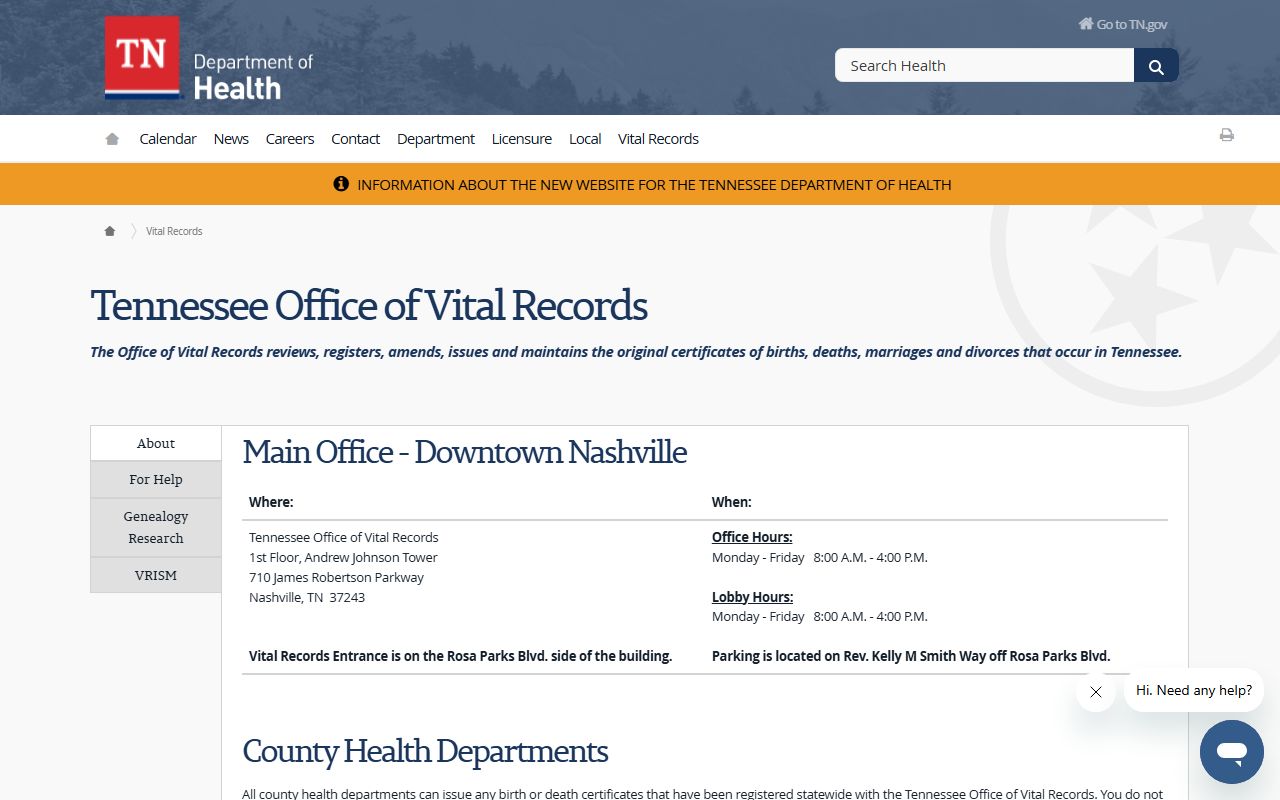
The state health page is useful because it confirms that Lincoln County requests still sit inside the Tennessee death record system. Local help and state rules work together on the same certificate.
Lincoln County Death Index and Clerk Records
The Lincoln County Clerk at P.O. Box 545 in Fayetteville does not issue death certificates, but the office still belongs in a Lincoln County death index search. The clerk handles marriage licenses and related administrative records. Those records can matter when you need to prove a spouse, confirm a family line, or make sense of a death certificate that uses a name variation. That is common in older county death work.
Lincoln County clerk records also help when the death index leads into estate questions. A marriage record may connect the dead person to a spouse, and that can matter in probate, property, or benefit work. When the county office is thin on direct vital records, these supporting files often become the key to moving the search forward.
The clerk's office is also part of the practical local route because it keeps the search grounded in Fayetteville. That saves time when the record trail has already split into county and state pieces.
Lincoln County Death Index at TSLA
TSLA is the historical home for Lincoln County death records that have passed the 50-year cutoff. The Lincoln County records guide at sos.tn.gov/tsla/history/county/factlincoln is the best place to begin when a death index search turns old. TSLA is where county researchers can check the public index years, compare names, and find the record details that are not visible in a modern certificate request.
Older Lincoln County death work often depends on the same pattern again and again. Search the index, find the year, then use that year to pull the right record or request. If the name is common, look for spouse, child, or place-of-death clues that narrow the result. TSLA is especially useful when family history needs proof and the county death index alone is too thin.
Historical death records do more than prove a death. They can show a burial lead, a parent name, an occupation, or a place of birth. That kind of detail is why Lincoln County death research still starts with the index but often finishes in the archives.
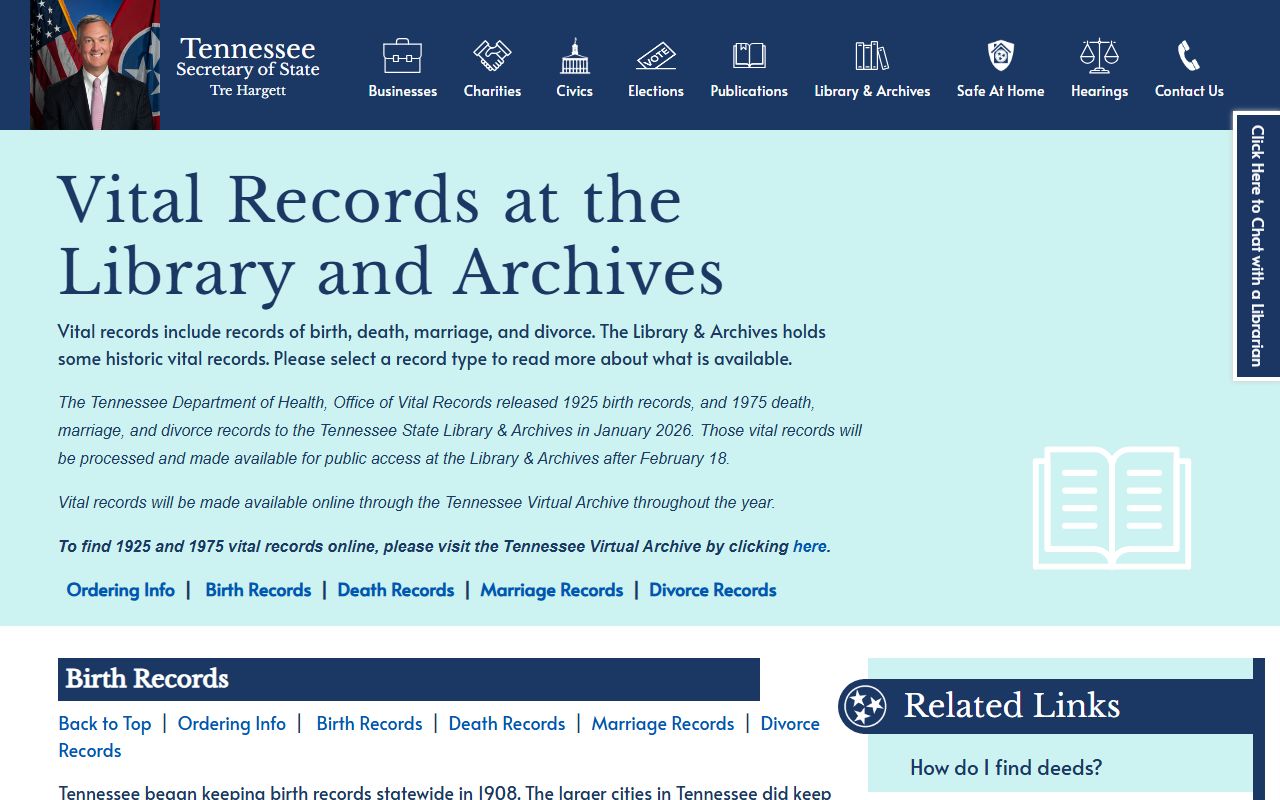
The TSLA guide helps connect Lincoln County names to a real public record set. That is often the cleanest path for older cases.
Lincoln County Death Index Certificates
Recent death certificates in Lincoln County follow Tennessee's confidentiality rules. Death records stay restricted for 50 years, then move into the public historical stream. That is the key distinction for Lincoln County researchers. If the death is recent, the record belongs with the health department or the Office of Vital Records. If it is older, TSLA is usually the better place to search. The Tennessee vital records chapter at law.justia.com/codes/tennessee/title-68/health/chapter-3/ explains the legal framework behind that access rule.
The Tennessee Office of Vital Records in Nashville also keeps the recent state certificates. The office page at vitalrecords.tn.gov/hc/en-us explains how to request a certified copy. If you need online ordering, VitalChek is the authorized vendor. Those are the practical options once a Lincoln County death index hit turns into a certificate request.
For older requests, the historical record set is the better fit. For recent requests, the state system controls access. That is the core difference a Lincoln County search has to keep straight.
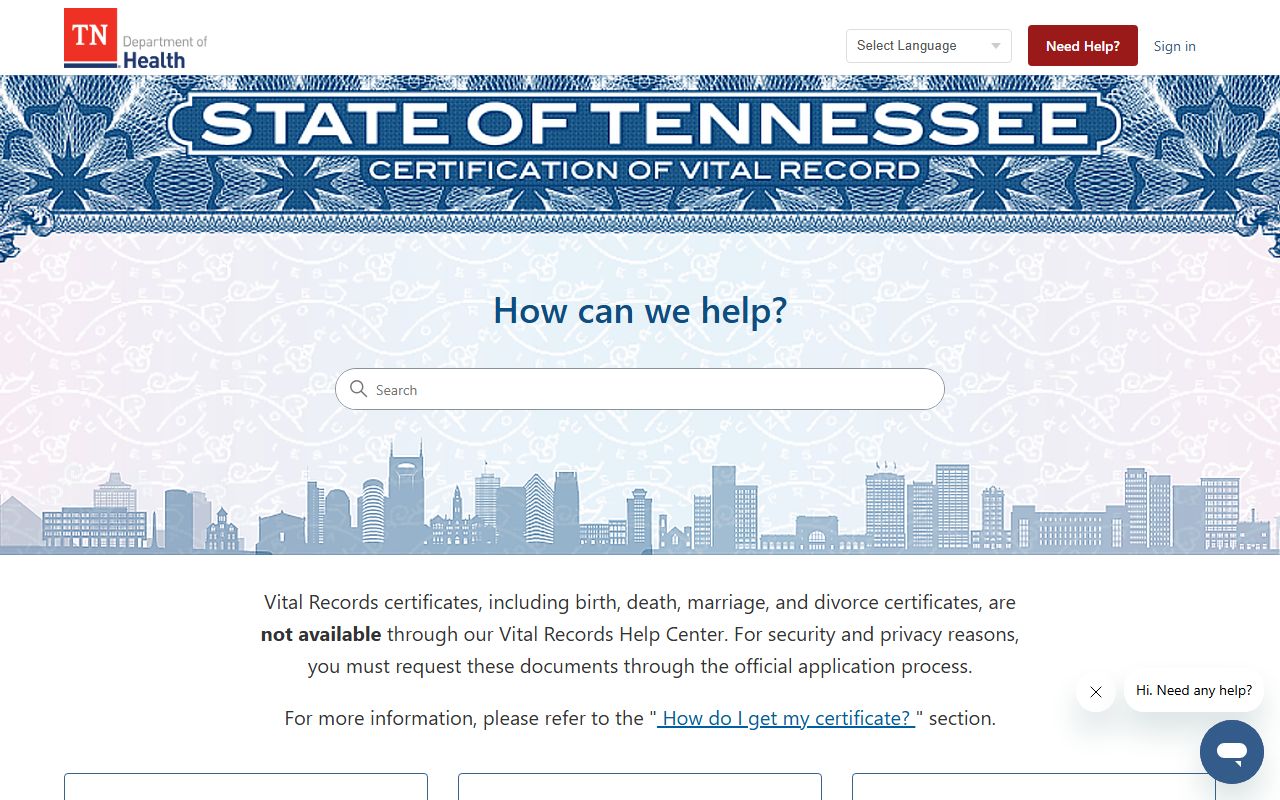
The state office image matches the part of the process that handles the newest certificates. It is the right follow-up once the county search reaches the modern records side.