
Marion County Death Index Lookup
Marion County death index searches often begin in South Pittsburg or Jasper, then move to the county clerk, the health department, or TSLA depending on the age of the record. That matters because Marion County has a fairly simple local structure, but the record you need may still sit in the state system or in the historical archive. Tennessee keeps recent death certificates restricted for 50 years, so a Marion County search usually starts with a name and a year, then branches into either a recent certificate request or an older historical record search.
Marion County Death Index Facts
Marion County gives researchers a straightforward set of local offices. The health department can issue death certificates through Tennessee's electronic vital records system. The county clerk handles county administration. TSLA holds the older public death records after the confidentiality period ends. That makes Marion County useful for both recent and historical death searches because the local offices and the state archive line up cleanly.
Marion County is also one of those places where the county seat and the health department do not have to be the same building for the search to feel local. You can start in South Pittsburg for health records, then move to Jasper for county business, then to TSLA if the record is old. That progression is simple once you know it, but it is easy to miss if you only look for a single office.
The county's death index trail is therefore a mix of current service and older record work. That is useful for family history, estate questions, and any request that needs proof of death but not a full court file.
Search Marion County Death Index
Start with the full name, the county, and a likely death year when you search the Marion County death index. Tennessee historical indexes often give a year, county, or certificate number that makes the next step easier. If the search is too narrow, widen the date range and try again. That is especially important for older records, which may show slight spelling differences or family name changes.
The Tennessee State Library and Archives is the strongest historical source for Marion County death records once they move past the 50-year window. TSLA's public record set helps turn an index entry into a real historical record. For Marion County researchers, that can be the difference between a rough family story and a document you can cite with confidence.
Recent records are a different story. They stay restricted, so the death index may point you toward a certificate request instead of an archive search. That is why Marion County searches work best when you decide early whether the record is modern or historical.
Note: Marion County death index searches are easier when you include a spouse name or place clue. A little more detail can cut the search time fast.
Marion County Health Department
The Marion County Health Department at 4980 S. Cedar Avenue in South Pittsburg can issue death certificates through Tennessee's electronic vital records system. That makes it the local starting point for many recent Marion County requests. If the death occurred in Tennessee and the record is still inside the confidential period, the health department is the place to ask first.
That office is useful because it keeps the request local. You do not need to start with the state archive if the record is recent. The health department can help with the basic request process, the identification rules, and the entitlement questions that come with a restricted death certificate.
The Tennessee Department of Health page at tn.gov/health/health-program-areas/vital-records.html explains how the statewide system works for Marion County and every other county in the state.
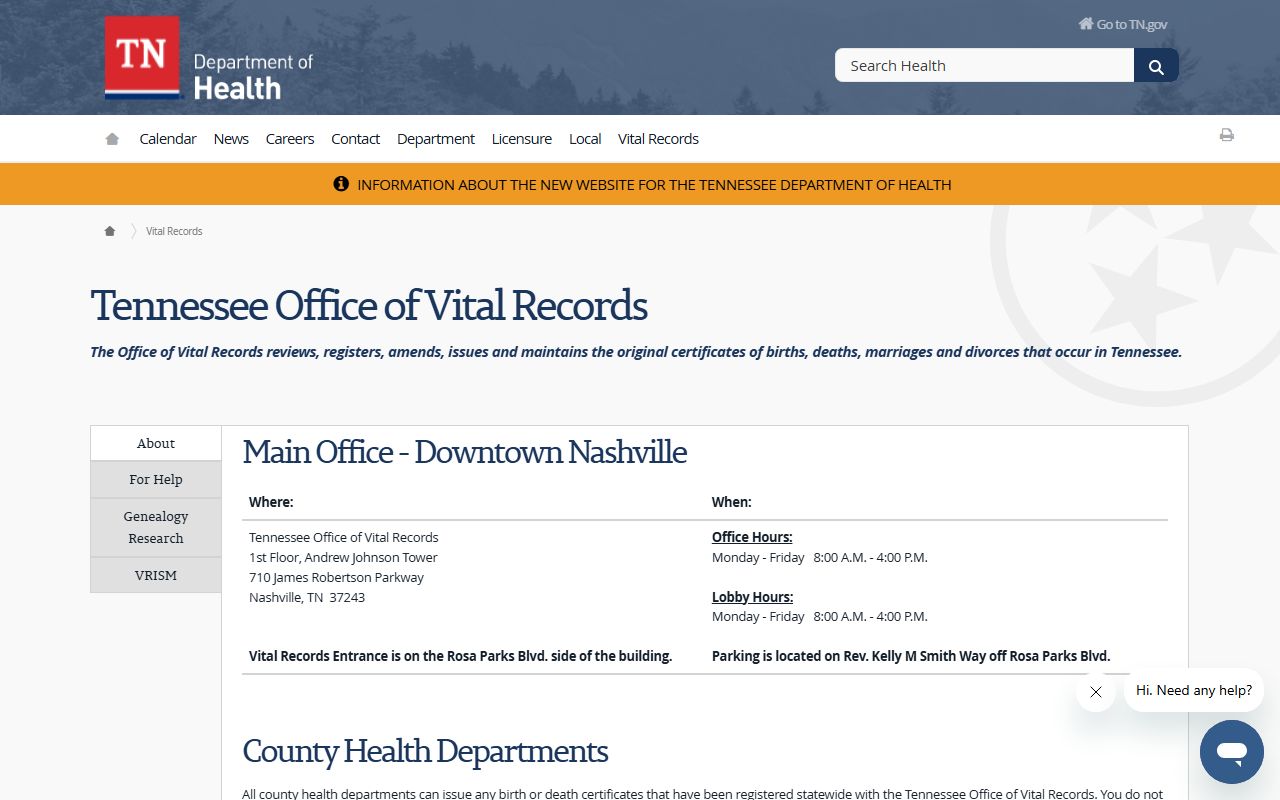
The state health page fits the Marion County process because the local office works inside that statewide system rather than outside it.
Marion County Death Index and Clerk Records
The Marion County Clerk at P.O. Box 789 in Jasper provides administrative services for the county. It does not issue death certificates, but it still matters in a Marion County death index search because county administration often sits beside the family record trail. A clerk office visit can help when you need to confirm a family line, a related license, or another county record that supports the death search.
Marion County researchers often need the clerk office after they find the death index entry. The clerk can help with the county side of the paper trail, while the health department handles the certificate side. Together they make the search more complete.
County administrative records are not a substitute for vital records, but they often fill a gap when the death certificate alone does not tell the full story. That is especially true for estate work and family history research in Marion County.
Marion County Death Index at TSLA
TSLA is the historical home for Marion County death records once they are old enough to be public. The archives hold the 1908-1912 and 1914-1975 records that researchers use for genealogy and family history. For Marion County, that means a death index hit can often be the first clue that leads to the public archive and then to the full record.
The TSLA guide at sos.tn.gov/tsla/guides/vital-records-at-the-library-and-archives explains how to work with historical death records. That is helpful in Marion County because older names can be hard to search if you do not know the exact spelling or exact year. The guide gives you the structure you need to keep the search moving.
Historical records can show a burial clue, a spouse, a parent, or a place of death. Those details often make the difference when the death index alone is not enough.
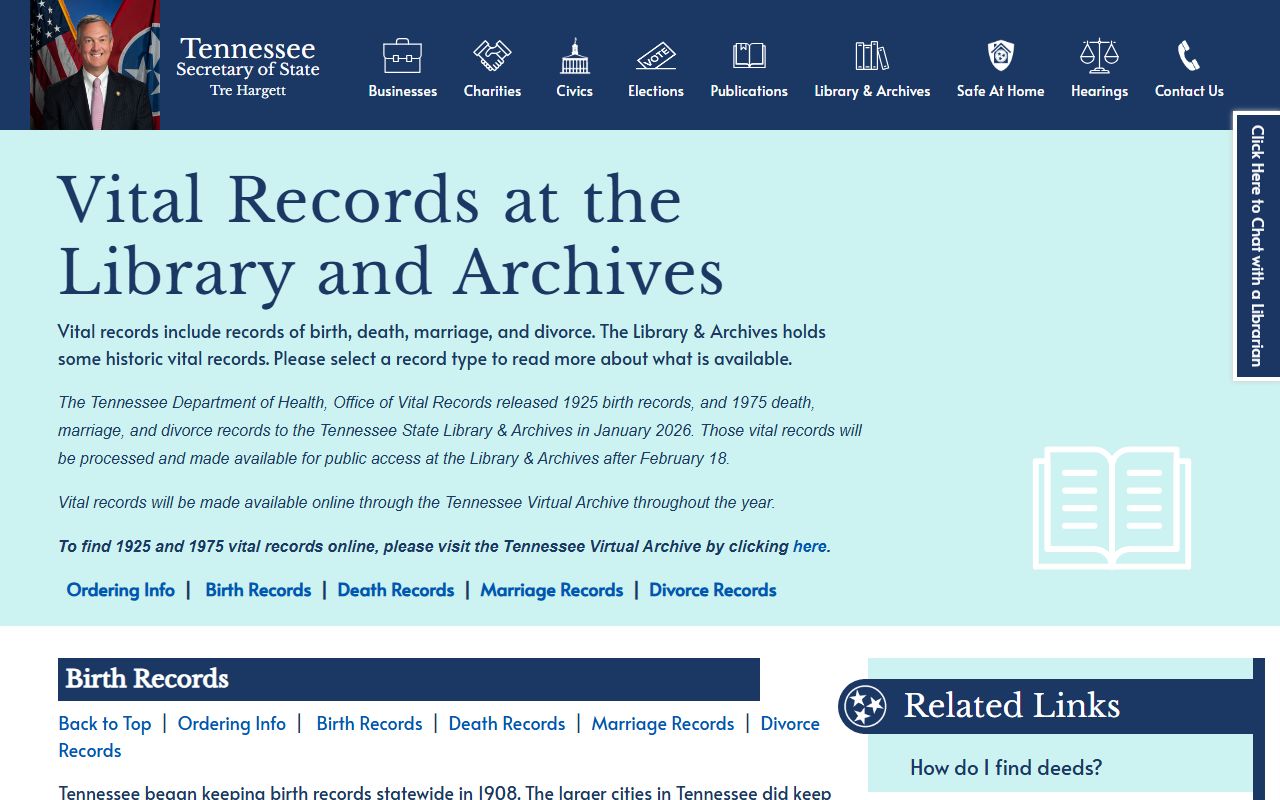
The TSLA guide is the strongest historical follow-up once a Marion County death search ages out of the local office.
Marion County Death Index Certificates
Recent Marion County death certificates are still governed by Tennessee's confidentiality rules. The 50-year period is what separates the recent certificate request from the public historical search. That means Marion County researchers need to know early whether the record is still restricted. If it is, the health department or the Office of Vital Records is the right path. If it is old, TSLA is usually the better fit. The Tennessee vital records chapter at law.justia.com/codes/tennessee/title-68/health/chapter-3/ explains the rule behind that access split.
The Tennessee Office of Vital Records page at vitalrecords.tn.gov/hc/en-us explains how to order a certified copy, and VitalChek is the authorized online vendor. Those are the practical options when a Marion County death index search ends with a modern certificate request instead of an older archive search.
Marion County works best when the search follows the record age. That keeps the request simple and avoids sending a recent certificate request to the archive side by mistake.

The VitalChek image fits the modern request path, which is often where a Marion County search ends for recent records.