
Search Marshall County Death Index
Marshall County Death Index research works best when you start with a name, a rough year, and one local clue. Lewisburg is the county seat, but the record trail can move through the health department, the county clerk, and TSLA depending on how old the death is. The county clerk keeps records going back to 1836, which can help when a death notice is tied to a family line or a probate trail. Use the index as the opening clue, then follow it into the office that fits the date.
Marshall County Death Index Overview
The Marshall County Death Index is a starting map, not the whole road. Recent deaths often begin at the Marshall County Health Department at 1031 War Eagle Drive in Lewisburg, where the office can issue death certificates through Tennessee's electronic vital records system. That matters when you need a recent certificate, not just a reference line in a database. The same statewide system also lets any county health department issue a Tennessee death certificate, so Marshall County is part of a larger network rather than a closed local file.
The Tennessee Office of Vital Records is the next step when the Marshall County Death Index points to a recent death. The state portal explains how in-person, mail, and online requests work, and that helps you decide whether you need a county office or a state office. The main site at vitalrecords.tn.gov is the best broad starting point because it ties the county record to the statewide request process.
That matters in Marshall County because a name in the index is often only one piece of the file. A death can also show up in a probate matter, a family Bible note, or a burial record. The county clerk's older records can help narrow the right person before you order anything.
The Tennessee Office of Vital Records main page at vitalrecords.tn.gov is the best place to start when a Marshall County Death Index search turns up a recent death.
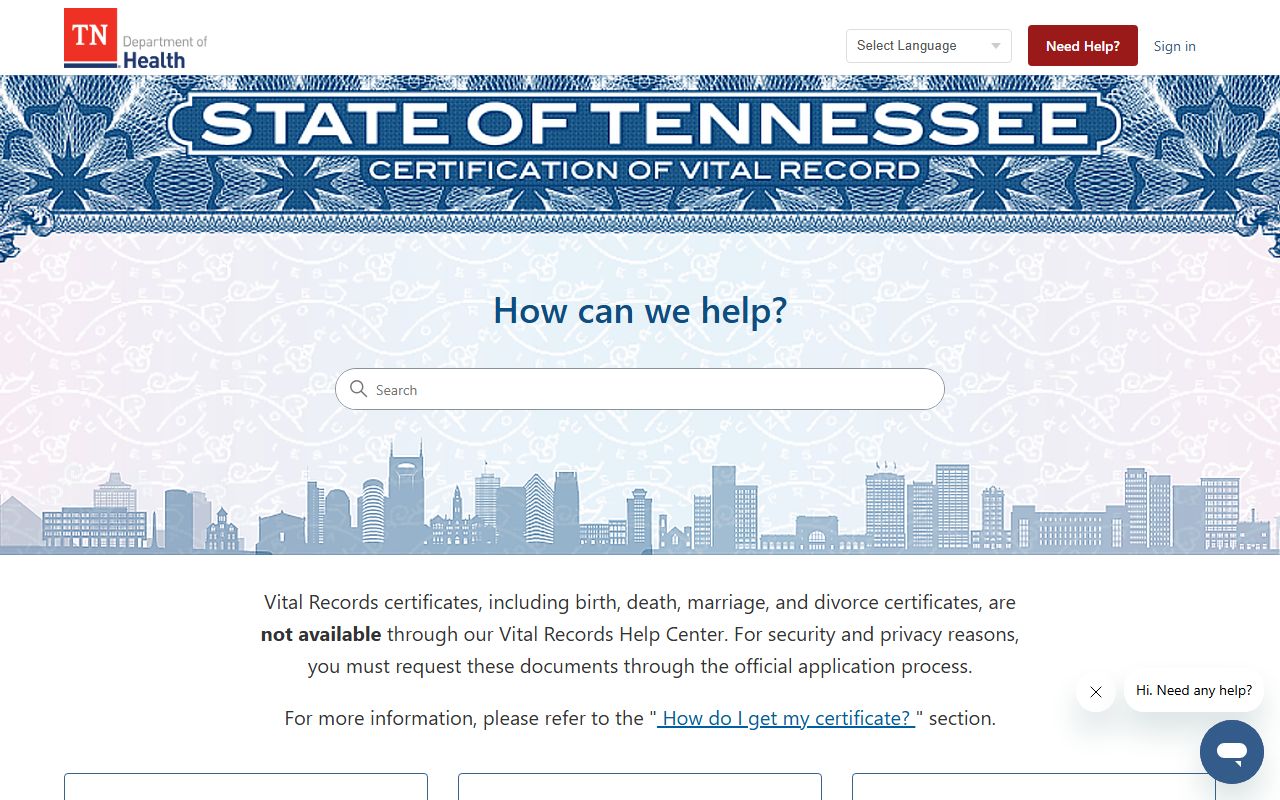
That portal helps you sort out whether the next step is a county request, a mail request, or an online order. It is the cleanest path when the Marshall County Death Index gives you a person but not the copy you need.
How to Search Marshall County
A solid Marshall County Death Index search begins with details that cut down noise. Use the full name if you have it, then add a spouse, child, cemetery, or known town if the name is common. Lewisburg is the county seat, but the death may be tied to a hospital, a church, or a farm community elsewhere in the county. Small details matter because they help you tell one person from another.
If the death is recent, the Tennessee certificate guide at How do I get my certificate explains the in-person, mail, and online paths. That guide applies in Marshall County because Tennessee uses one system for all counties. If the death is old enough to be public, TSLA may have the record already and the county office may not need to be involved.
Before you search, gather the date range, family names, and any burial clue you have. A narrow search beats a wide one every time. It reduces false hits and makes it easier to tell if you need a certificate, an archive reference, or a county file.
The online ordering path through VitalChek is another option when you want a certified copy without making a trip first.
That option is useful when you know the person and the likely county, but not the exact office. It keeps a Marshall County Death Index search moving when time matters.
Marshall County Death Index Offices
The Marshall County Health Department is the first local stop for many recent death certificate requests. It can issue death certificates through Tennessee's electronic vital records system, which means a Marshall County Death Index search can turn into a certificate request without leaving the county. That local access is important when a family needs a copy quickly or when the death is recent enough that county staff can still help.
The Marshall County Clerk at 1103 Courthouse in Lewisburg keeps administrative records and older county records. The office is not the same as the health department, but it can still help you line up names, family ties, and older public records. The fact that the clerk maintains records from 1836 makes it a useful support office when the death index entry is hard to identify.
For older families, those county records can supply the missing link. A marriage record, a land transfer, or an estate paper can confirm that the death index entry belongs to the right person.
Note: A Marshall County Death Index hit is usually the beginning of the search, so keep the health department and clerk in the same workflow when the record is hard to pin down.
Marshall County Death Index at TSLA
Older Marshall County Death Index searches should move to the Tennessee State Library & Archives. The research file says TSLA holds Marshall County death records from 1908 to 1912 and from 1914 to 1975. That range covers the main historic window where county and state records overlap, and it often gives you a better shot at a public record than a local office can provide.
The TSLA vital records guide at Vital Records at the Library and Archives is the best companion source for that search. It explains how the record years work, why some deaths sit with TSLA, and how to move from a county clue to a state record. The TSLA main site at sos.tn.gov/tsla is also worth checking when you need a broader archive search.
Marshall County researchers often need TSLA because a death index entry may not be enough by itself. The archive can place the record in the right year band, which helps you tell whether the death is public, restricted, or missing from the expected search year. That is especially helpful when the same surname appears many times in one family cluster.
A direct link to the Tennessee State Library & Archives guide at the TSLA research guide can save time when the Marshall County Death Index sends you back into older records.
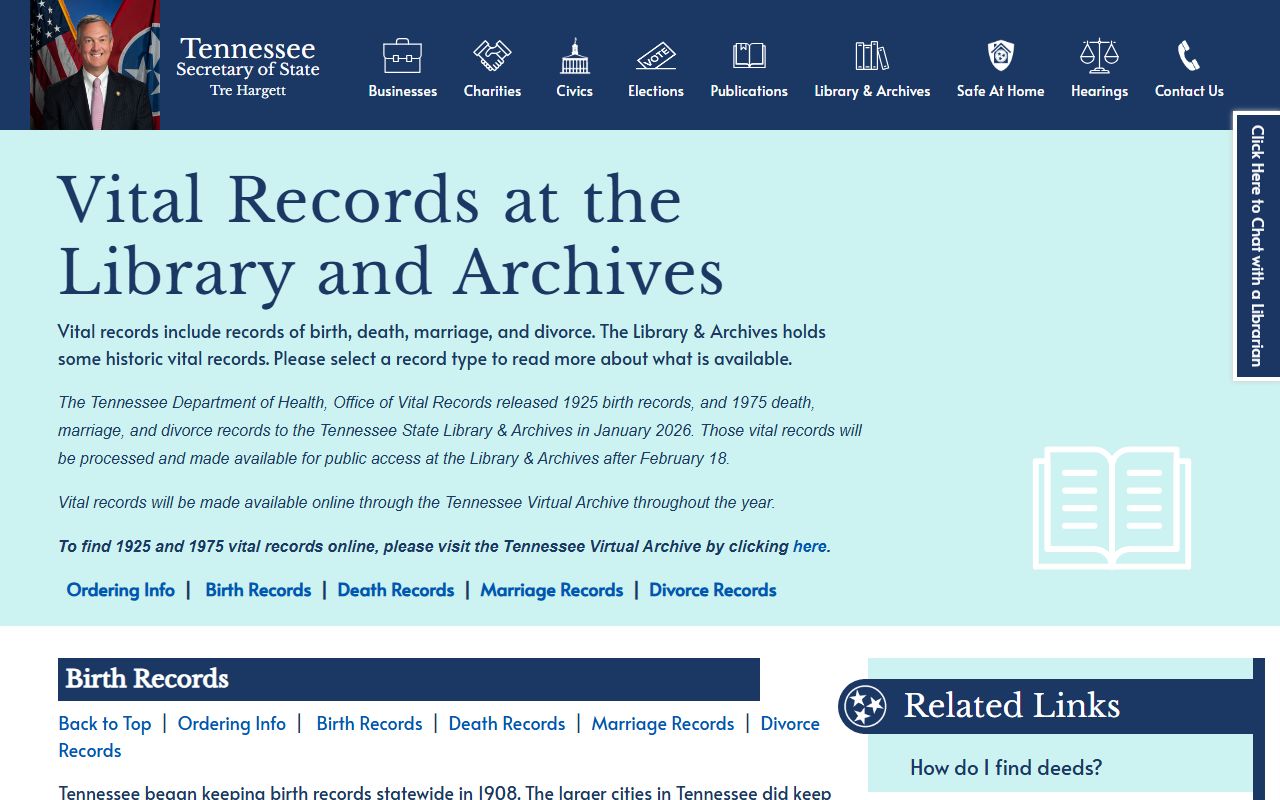
That guide is worth reading before you visit or order. It helps you see whether the record is likely to be indexed, public, or still sitting in a state file set.
Marshall County Death Index Requests
Once you have a Marshall County Death Index hit, the request rules matter. Tennessee death records stay confidential for 50 years from the date of death, so a recent record may only be released to eligible requestors. The state entitlement page at Entitlement Guidelines explains who can request a recent death certificate and what proof may be needed. That helps you avoid a request that is too broad or sent to the wrong office.
The public side of the record changes after the confidentiality window closes. The CTAS summary at Tennessee Public Records Statutes explains the access framework in plain terms. If you want the legal chapter itself, the Tennessee Department of Health's vital records page at tn.gov/health is the better official source to keep open while you search.
The key point is simple. A Marshall County Death Index entry may be public, but the certificate can still be restricted if the death is recent. That difference changes where you go next. For older records, TSLA is usually the right stop. For recent records, the county health department or VitalChek may be the faster route.
Note: Tennessee has a statewide missing year in 1913, so a gap in the Marshall County Death Index can reflect the record system rather than the family line.