
Maury County Death Index
Maury County Death Index searches usually start in Columbia, where the county clerk, archives, and health department sit close enough to work together. That matters because a death may show up in a certificate request, a local archive note, a newspaper clipping, or a chancery file. Maury County is one of the better places to build a search from several record types at once. Start with the person, the year, and the likely family line, then move from the index into the county office that fits the time period.
Maury County Death Index Overview
The Maury County Health Department at 1907 Hampshire Pike in Columbia can issue death certificates through Tennessee's electronic vital records system. That gives a Maury County Death Index search a fast local start when the record is recent. The Maury County Clerk also helps because it provides death certificates, birth certificates, and marriage records from the county seat. If you are trying to verify a family line, those county records can narrow the exact person before you order a copy.
The Tennessee genealogy research page at Tennessee Genealogy Research is useful for Maury County because it explains where older death records fit in the state system. That matters in a county with rich local sources. A death index hit may point to a certificate, but the next clue may come from an archive file or a newspaper reference instead of a county office.
Maury County also has a strong local archive base. The Maury County Archives keeps 19th century government records, marriage records, wills, chancery court papers, and Daily Herald newspaper archives. That makes a Maury County Death Index search deeper than a simple certificate lookup. It can become a family-history search, an estate search, or a newspaper search very quickly.
The Tennessee genealogy research page is a strong companion source when a Maury County Death Index search moves from the index into older family records.
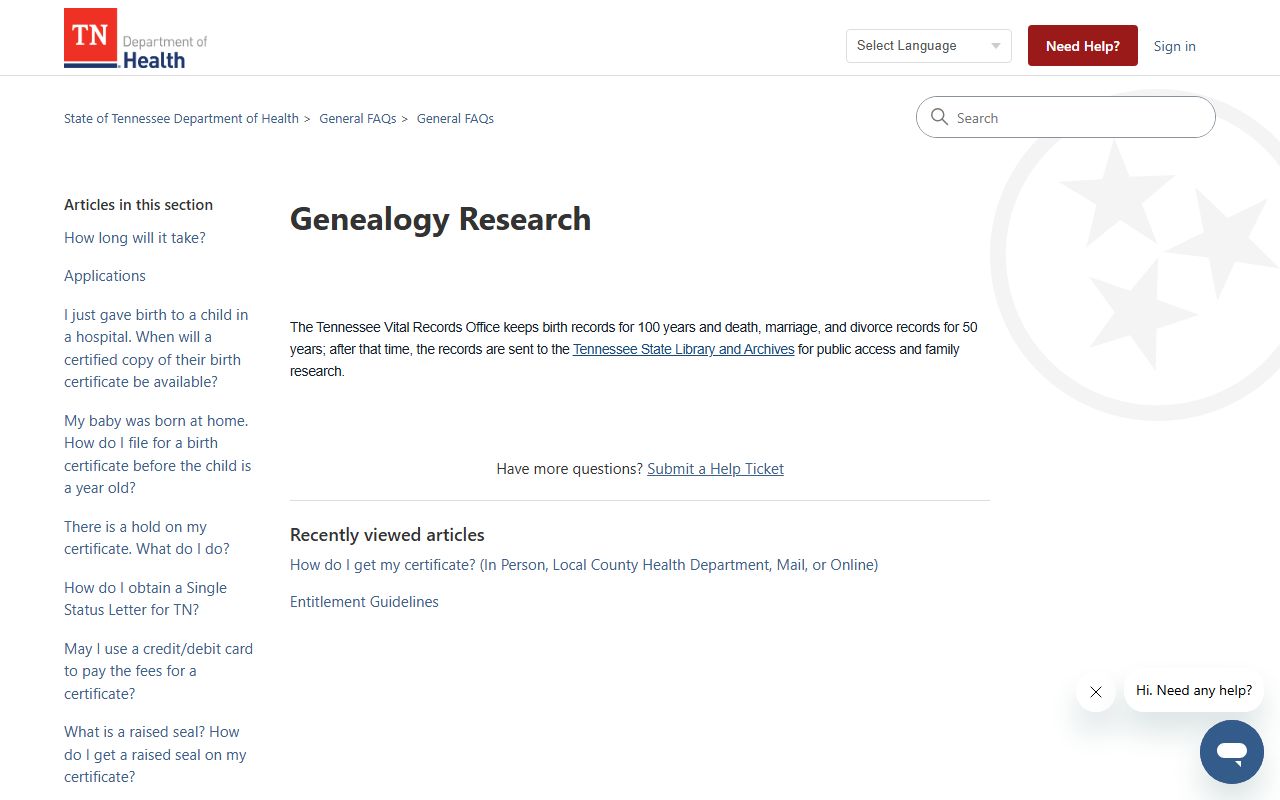
That page is useful because it points you toward older death records without forcing you to guess which office still has them.
How to Search Maury County Death Index
A Maury County Death Index search should begin with the clearest clue you have. Columbia is the county seat, but the death may belong to a smaller town or an older family line that shows up in a paper file first. Use the full name if possible, then add a spouse, child, cemetery, or decade. The more common the surname, the more important that second clue becomes.
The Maury County Locality Guide from the Tennessee Genealogical Society is a useful helper because it maps births, deaths, marriages, probate, and land records. You can use the guide at Maury County Locality Guide when you need a broader view of where the record might live. In a county with several record offices, the guide keeps you from stopping too soon.
If the death is recent, the Tennessee certificate request page at How do I get my certificate explains the in-person, mail, and online paths. That path matters in Maury County because it keeps the search tied to the right record age. If the death is older, TSLA may be the cleaner route.
Keep the first search tight. A narrow date range is easier to test than a broad family guess. It also makes it easier to decide whether the next stop is the archives, the health department, or the clerk.
The online ordering path through VitalChek is another option when you want a certified copy without visiting Columbia first.
That option is practical when the index entry is clear but the paper copy is still needed for legal or family work.
Maury County Death Index Offices
The Maury County Clerk at 10 Public Square in Columbia is one of the most important local offices for a Maury County Death Index search. The clerk provides birth certificates, death certificates, and marriage records, which means the office can help tie a death entry to the family records around it. Columbia is also the county seat, so the office is central to the county's record trail.
The Maury County Archives at 201 East Sixth Street is a major asset. It holds 19th century government records, marriage records, wills, chancery court papers, and Daily Herald newspaper archives. If the death index result is old or uncertain, those sources can confirm the name, the family, and the date. In Maury County, the archive is often as useful as the certificate office.
The Maury County Register of Deeds maintains land records, which can help when a death led to a deed change or an estate transfer. The Maury County Clerk and Master keeps divorce, probate, and court records, so it can also matter when the death record is tied to an estate case. That spread of offices is why Maury County Death Index searches often work best in stages.
Note: A Maury County Death Index entry becomes much more useful when you pair it with archives, court files, and land records from the same county.
The Maury County Locality Guide is especially helpful when you want to map those offices before you request a copy.
Maury County Death Index at TSLA
The Tennessee State Library & Archives is the main state backstop for Maury County Death Index work. The research file says TSLA holds Maury County death records from 1908 to 1912 and from 1914 to 1975. That time span covers a lot of the public death record trail and gives you a state archive path when the county office is not enough.
The TSLA guide at Vital Records at the Library and Archives explains how the record years work and why some older records live at the archive instead of the county office. The TSLA main site at sos.tn.gov/tsla is also useful when you want to move from Maury County into the broader Tennessee record set.
That matters because Maury County has enough local material to make the search feel local, but not every death shows up in one office. The archive can answer the year question when the local search is too broad. It can also help if you are trying to confirm a burial, a marriage, or a line of heirs connected to the death.
The Tennessee certificate request guide at How do I get my certificate is useful when you already know the death is recent and need to choose between in-person, mail, or online ordering.

That request guide is useful when you already know the death is recent and need to choose between in-person, mail, or online ordering.
Maury County Death Index Requests
Request rules matter once you have a Maury County Death Index hit. Tennessee death records stay confidential for 50 years, so the age of the record decides whether you can get a copy right away. The state entitlement page at Entitlement Guidelines explains who can request a recent death certificate and what proof may be needed. That keeps a request grounded in the right level of access.
The Tennessee public-records summary at Tennessee Public Records Statutes helps explain the public side of the record once the 50-year window closes. It is a clean way to tell the difference between a public archive record and a restricted certificate. For newer records, the health department remains the county contact. For older records, TSLA is usually the better stop.
Maury County is one of the counties where the search can move from current certification to historic archive work without changing the county focus. That is why the Maury County Death Index should be read with the office, the year, and the access rule together. If you know all three, the rest of the search becomes much easier.
Note: Tennessee's 1913 death records are missing statewide, so a blank year in the Maury County Death Index can be a system issue rather than a county problem.
The Tennessee death-record rules at tn.gov/health are another useful official reference when you need the statewide framework behind a Maury County request.