
Search Rhea County Death Index
Rhea County Death Index research starts in Dayton, where the health department and county clerk give you a simple path for recent records and family context. The county is not large, but the record trail still changes by age. A modern certificate request belongs with the health department. An older death usually moves to TSLA. If the name is common, the county clerk and local records can help you tell one family from another. That makes Rhea County useful for both short searches and deeper genealogy work. The main advantage is that the county offices are clear, so the search can stay focused from the start.
Rhea County Death Index Sources
The Rhea County Health Department at 720 Rhea County Highway in Dayton is the local place to begin a recent Rhea County Death Index request. Research notes say the office provides public health services and can issue death certificates through Tennessee's electronic vital records system. That makes it the right stop when the death is recent and the requester needs a certified copy. In Tennessee, county health departments can issue a death certificate for any registered death in the state, so the local office often saves a trip to Nashville.
The Rhea County Clerk at P.O. Box 643 gives the county its administrative side. That office does not issue death certificates, but it still matters because it helps with county records and with the family paper that often sits beside a death. In Rhea County Death Index work, the clerk can help you understand where the county stores marriage records or other office files that may support the search. That is especially useful when the same surname appears more than once in the same county.
Because Rhea County has no local county image in the manifest, this page uses a state-level image from the Tennessee State Library and Archives guide. The TSLA vital records guide is the right statewide companion for Rhea County Death Index research.
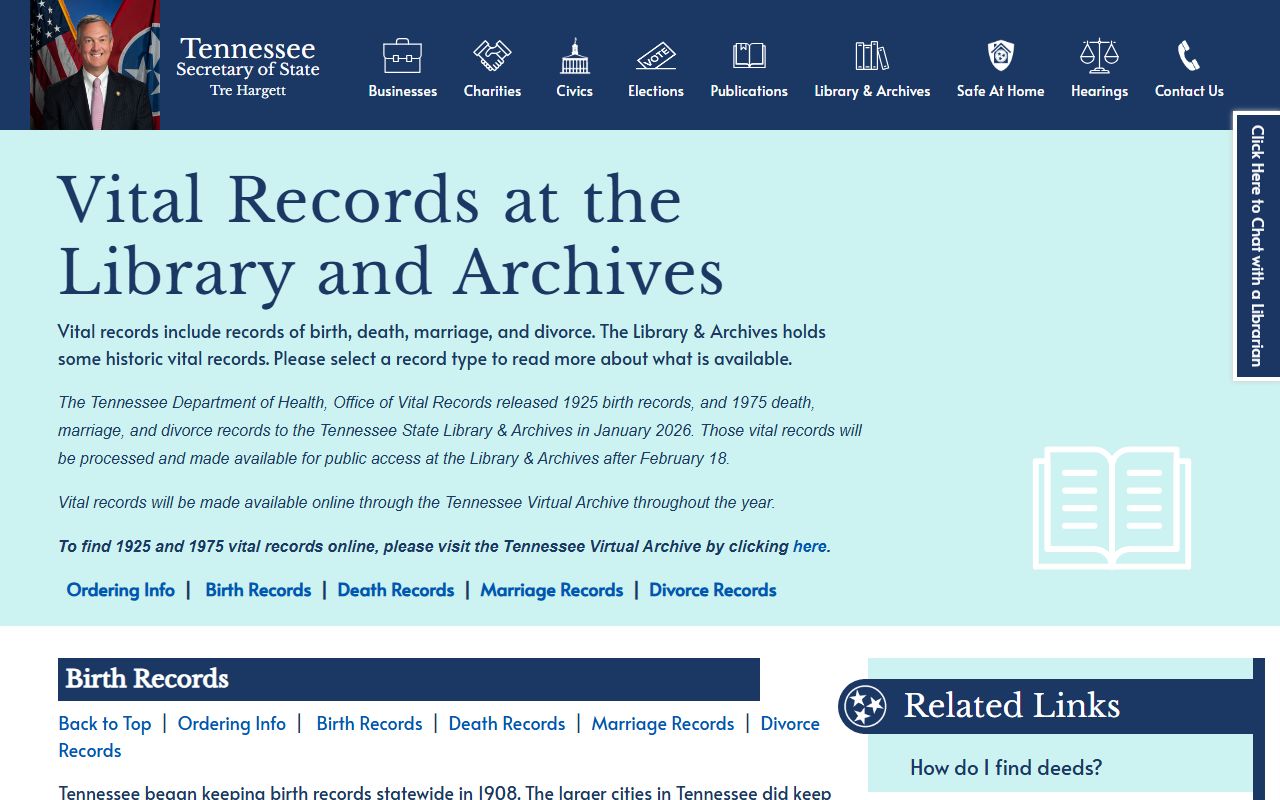
That guide fits Rhea County because older records often move from county use into the public historical set at TSLA.
Rhea County Death Index at TSLA
Historical Rhea County Death Index work belongs with the Tennessee State Library and Archives. TSLA says death records for Rhea County from 1908-1912 and 1914-1975 are available in its holdings. That historical range is the backbone of a public record search when the death is old enough to be public but not easy to pull from a county office. The 1913 gap still applies, so if the death falls in that year, you will need backup sources like cemetery records, newspaper notices, or church books.
The TSLA guide is helpful because it tells you how to keep the search narrow. A Rhea County Death Index query works best when you provide a full name, county, and a short year range. A three-year window is often enough. If you get a certificate number, keep it. That number makes it easier to come back later for a copy or a second check. It also helps when you are comparing one Rhea County family line with another that has a similar name.
Rhea County Death Index Requests
For a recent certificate, the Tennessee Office of Vital Records main portal is the statewide starting point. The state explains the in-person, mail, and online request methods in its certificate guide. Tennessee also lets county health departments issue death certificates through the electronic system, so a Rhea County Death Index request can often be handled locally if the record is recent and the requester is entitled to receive it.
The standard fee is $15.00 per certified copy, and the Office of Vital Records may still ask for proof of entitlement before release. The entitlement guidelines explain who may request a death certificate and what documentation may be needed. That is important in Rhea County because a recent death may also lead to probate or land work, and those records can help show why the certificate is needed. If the record is older than the restricted period, TSLA becomes the better path.
Rhea County Death Index and Public Records
The public records side of a Rhea County Death Index search follows Tennessee law. The CTAS public records guide says county records are generally open during business hours unless another statute makes them confidential. Death certificates are one of the records that stay restricted for a time, so a Rhea County Death Index entry may be public before the full certificate is. That is why the index is such a good first step.
CTAS also says county offices should answer records requests within seven business days. That gives you a practical timeline when you contact the health department or clerk. The office may confirm the record, deny the request, or point you to a better source. For Rhea County Death Index work, that kind of response keeps the search moving and helps you choose between a county office, the state office, and TSLA without guessing.
What Rhea County Death Index Records Show
A Rhea County Death Index entry usually gives you the basic facts first. The name, date of death, county, and certificate number are the main pieces. Once you get the full certificate, the record may add age, sex, residence, place of death, burial details, informant information, and cause of death if you are entitled to it. Those details matter because they help you separate one Rhea County family from another when the surname repeats.
The county clerk's records can make that match stronger. A marriage record can show the spouse or household that belongs with the death certificate, and older county records can point to the same family line in a different way. A Rhea County Death Index search is strongest when you use the certificate, the clerk's records, and the historical archive set together. The index gets you to the record. The county sources tell you why the record matters.
More Rhea County Death Index Clues
Rhea County works well for a narrow search because the office structure is simple. The health department handles recent deaths. The clerk helps with county administration and family context. TSLA handles the historical public record set. That means a Rhea County Death Index search usually becomes easier, not harder, when you move from the county office to the state archive after checking the date.
If the first search does not fit, shift the year slightly and try again. Small county searches often miss by one year or a spelling variation. Keep the county fixed, keep the date range tight, and let the county offices guide the next step. That is usually enough to turn a short death index line into a real record trail.