
Search Wilson County Death Index
Wilson County Death Index searches are centered in Lebanon, where the county clerk, archives, and register of deeds all provide a useful path for both recent and historical records. That makes Wilson County a strong place to search because each office has a different role. The county clerk handles vital records work. The archives preserve older microfilm and research material. The register of deeds keeps death records from 1913 onward. TSLA holds the older historical records. The search usually becomes easier once you decide which office matches the date of death.
Wilson County Death Index Records
The Wilson County Clerk at 228 E Main St in Lebanon provides birth certificates, death certificates, marriage licenses, and divorce records. That makes the clerk the first county stop for many Wilson County Death Index requests. Because Lebanon is the county seat, the clerk's office is usually the easiest place to begin when the record is still recent. If you need a current certificate, the clerk can often point you to the right office or help with the copy itself. That local access is one of Wilson County's strongest record features.
The Wilson County Archives adds a second local layer. The archives maintain historical records on microfilm from 1802-1965 and provide research services for a modest fee. That makes the archives useful when a death search needs older context, especially if the family story reaches back before modern certificates. The Wilson County Register of Deeds is also important because it maintains death records from 1913-present along with marriage and birth records. That gives Wilson County a clear county-side death record system that starts with the year statewide registration stabilized.
The county archive page at the official archives site is the local source that helps tie a Wilson County Death Index search to the older record set.
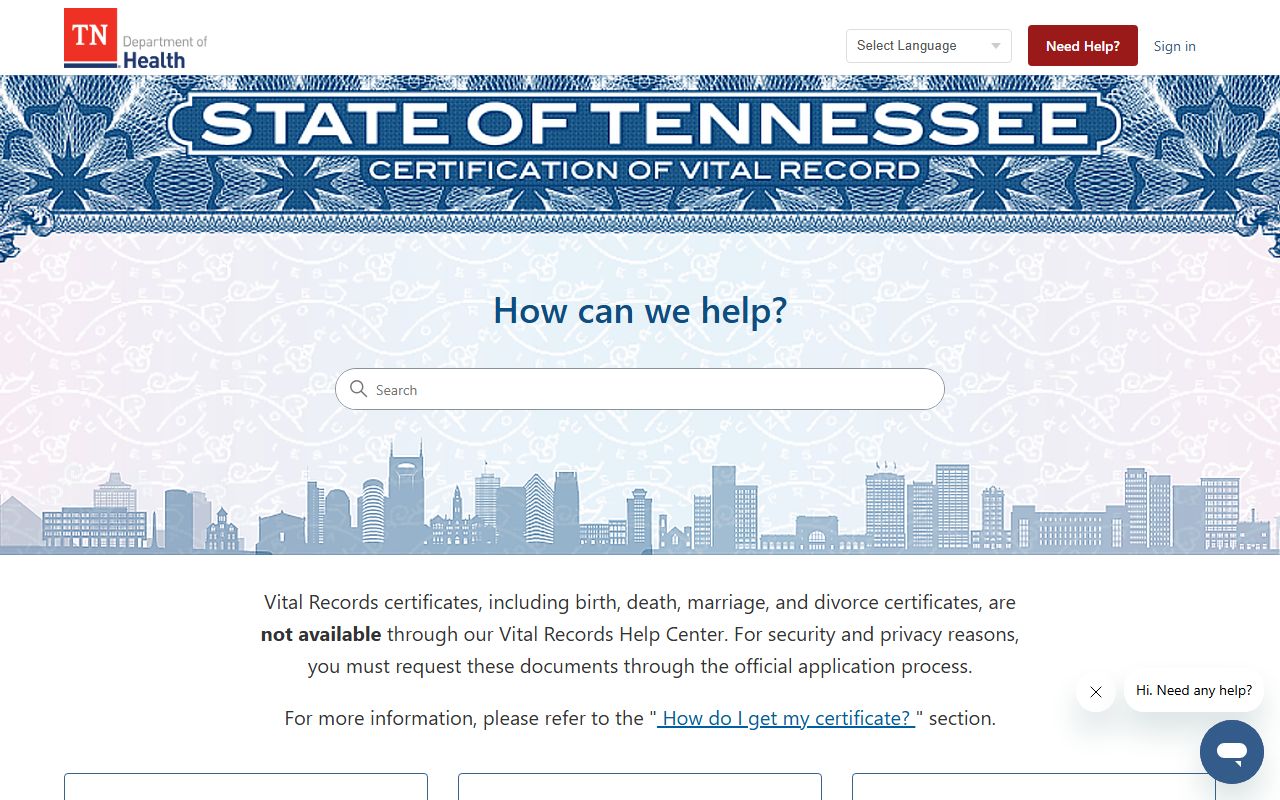
That state image works well here because it marks the statewide certificate path behind the county offices.
How to Request Wilson County Death Index
For a recent Wilson County Death Index request, the county clerk is the most direct local option in Lebanon. The clerk handles birth certificates, death certificates, marriage licenses, and divorce records, so it is a practical one-stop office for many family record needs. Bring a photo ID and the decedent's name. If you know the approximate year, include that as well. That makes the request faster and helps the office decide whether the record belongs in the local issuance system or in a historical search.
If you want to request from home, the Tennessee Office of Vital Records at the state portal and VitalChek are the official routes. The state health department page at the Department of Health explains the request methods. For older Wilson County Death Index work, the archives and TSLA are the better places to look because the county archives keep microfilm from 1802-1965 and TSLA holds the public historical death records for 1908-1912 and 1914-1975.
Wilson County is one of the places where the county office and the archive sit close together in the research flow. The right office still depends on the year, but the search itself is not hard to map.
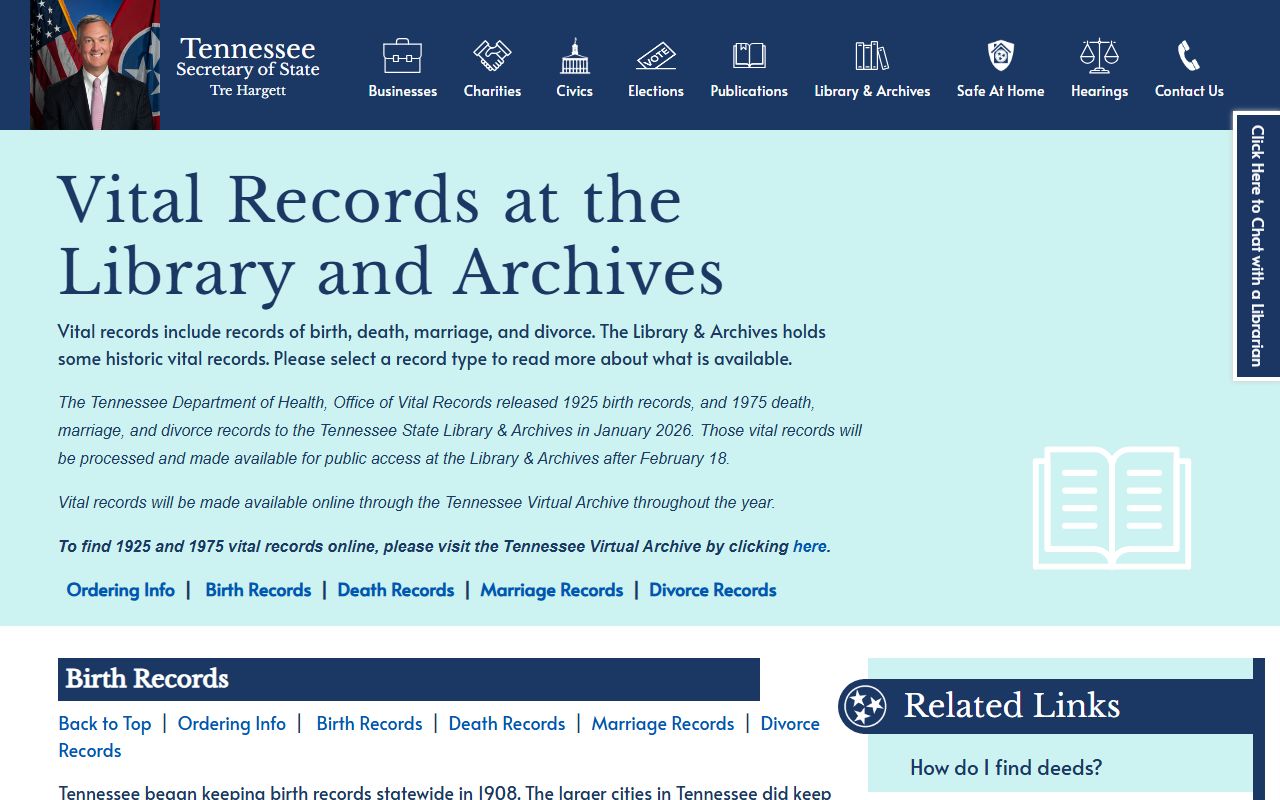
That guide is the best fit when the request moves from Lebanon to the historical public record set.
Wilson County History
Wilson County has a strong historical record structure because the archives maintain microfilm from 1802-1965 and the register of deeds keeps death records from 1913-present. That makes Wilson County Death Index work unusually flexible. A recent record may be available through the county clerk. A public historical record may be waiting in the archives. A more formal public copy may be at TSLA. The county does not force you into one path, which is useful when the family has lived in Lebanon for a long time.
The archives are especially valuable because they support research services. That means a person can often move from a death index clue to a microfilm trail without leaving the county. The register of deeds adds another useful track because death records start in 1913, which gives you a county record run that can bridge the gap between the archives and the state repository. Wilson County is therefore one of the better counties for layered family research.
The TSLA county records page at the Tennessee State Library and Archives is the main historical public source for older Wilson County Death Index records.
Tennessee Death Index Rules
Wilson County Death Index requests still follow Tennessee's statewide confidentiality rules. Recent death records remain restricted for 50 years, so the county clerk may ask for identification or proof of legal interest before releasing a certificate. Once the record is old enough, TSLA becomes the public source. That is why a Wilson County search may begin in Lebanon and end in Nashville. The office you need depends on whether the record is recent, county-level historical, or fully public at the state archive.
That distinction matters in Wilson County because the county has three connected record systems. The clerk handles recent issuance. The archives hold older microfilm. The register of deeds carries death records from 1913 onward. Note: 1913 remains the missing year in Tennessee death records statewide, so Wilson County researchers should always check the adjacent years if the trail seems to stop early.
Wilson County Death Records
Wilson County is one of the few counties where the register of deeds explicitly maintains death records from 1913-present. That gives the county a strong middle layer between the current clerk and the historical archive. For a death search, that means the county can often provide a direct answer without forcing you into the state archive right away. If you need a more detailed family trail, the archives can add microfilm records from 1802-1965. That helps when a death record is only one piece of the story.
Because the county system is so layered, Wilson County Death Index research often works best when you start with the clerk, then check the register of deeds, then use the archives if you need older material. That sequence keeps the search local and uses the strongest county source for each date range.
Wilson County Notes
Wilson County gives researchers a flexible records path. The clerk handles current certificates. The archives preserve older microfilm. The register of deeds keeps death records from 1913 onward. That means a Wilson County Death Index search can be handled in more than one way depending on the date. Lebanon is a good county seat for that reason because it puts the main record offices in one place.
If the first request does not solve the search, move to the next county office instead of starting over. Wilson County Death Index work usually becomes easier once the record age and the right office are matched.